One broadcast shows a crowded table; another has only three balls. Sometimes a player scores without potting anything. Cue sports share equipment ideas, but their objectives differ. We compared eight-ball, three-cushion and snooker using WPA, UMB and WPBSA rules, checked on October 4, 2026. This is desk research, not a lesson review or a ranking of players. The aim is to choose where to look during a first broadcast, then separate watching a sport from finding somewhere to try it.
Eight-ball
WPA eight-ball uses fifteen numbered object balls and a cue ball. Players have solids or stripes and work through their group before legally potting the eight ball. For a first broadcast, I would establish which group belongs to each player and follow the remaining targets. Having visible balls left on the table gives a useful starting question for the next shot. That short explanation is not a substitute for the full rules.
Do not assume familiar local rules match tournament rules. The break, establishment of groups, called shots and fouls have their own provisions. In particular, potting the eight ball is not always a win. When playing with friends, agree on the rules before starting. It is easier to use the same document from the beginning than discover halfway through that everyone brought a different understanding.
Three-cushion
Under UMB rules, the cue ball must contact cushions at least three times before reaching the second object ball. The requirement is three contacts, not necessarily three different rails. Carom billiards uses three balls, so waiting for a pot misses the scoring idea. I would watch the cue ball’s route and its connection with the other two balls. Knowing that objective changes what you are looking for on the screen.
Avoid memorising an oversimplified compulsory sequence around the first object ball. The important condition concerns the cushion contacts completed before the second object ball. Use the official provisions and commentary for particular situations. We have not created angle formulas or success percentages without testing them. If you want to try it, first ask a local venue which discipline and instruction it actually offers.
Snooker
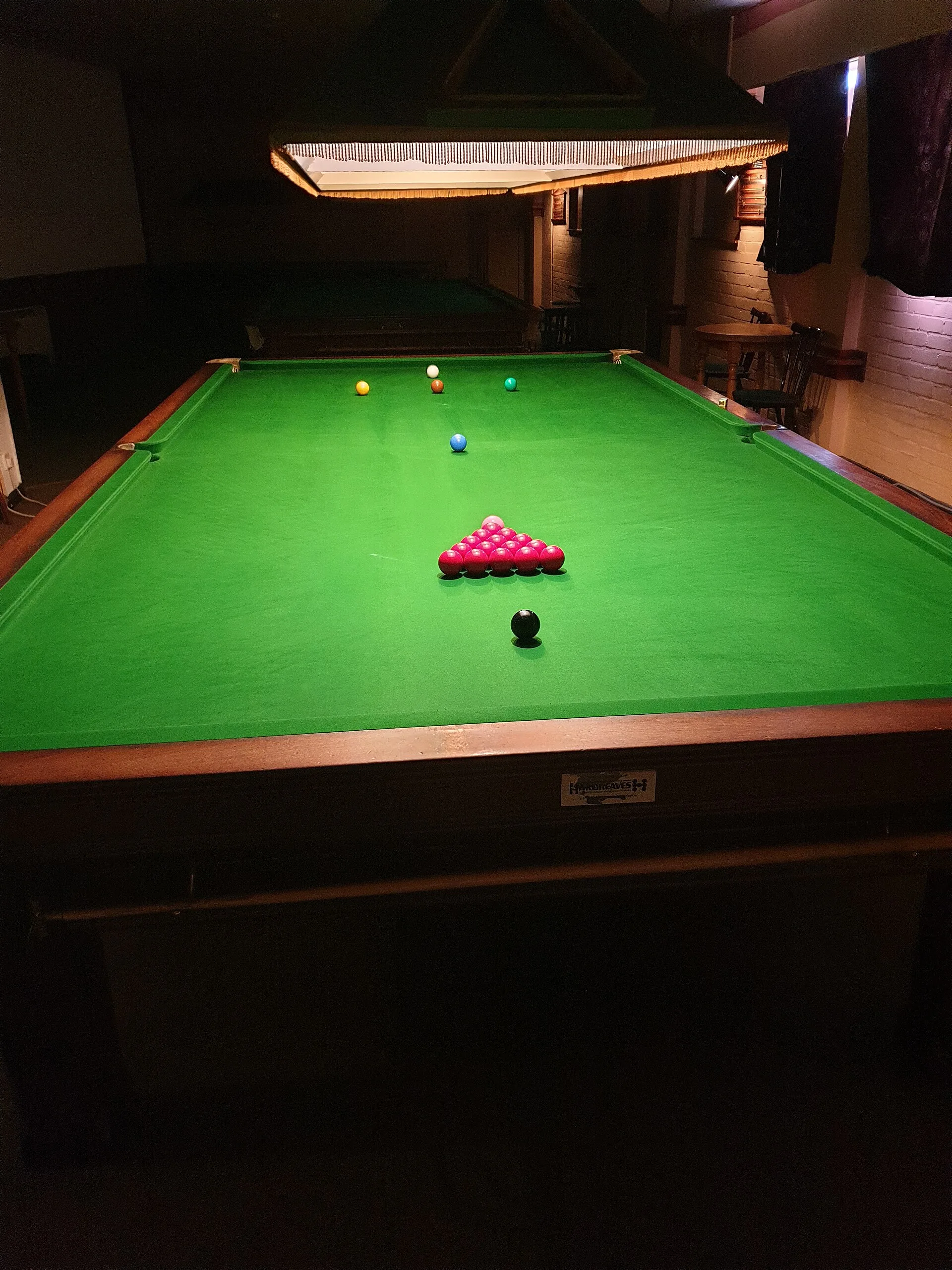
WPBSA snooker uses fifteen reds, six colours and a cue ball. Reds score one point; the colours range from yellow at two to black at seven. While reds remain, the basic sequence alternates a red and a colour, followed later by the specified colour order. Start by identifying the current target and watching the score change. Our photograph shows a snooker table and setup, not the other disciplines.
Scoring alone does not explain every decision. Fouls, defensive choices and the development of a frame add more to watch. You need not memorise every possible situation before enjoying a broadcast. Try one frame with commentary and look up a confusing incident afterwards. We have not assigned a fixed duration to matches or invented a numerical claim that snooker is several times harder than another sport.
Watching and starting are separate choices
The sport you find interesting on screen may not be the one easiest to arrange near home. For watching, I would ask whether its objective holds my attention. For playing, ask about table type, venue rules and instruction. We did not establish national statistics for access to each discipline, so the table does not rank availability. Connecting an interest with an actual venue is its own practical task.
Ask whether equipment is provided before deciding to buy a cue. If rental equipment or lessons are offered, investigate them first. For a purchase, get advice appropriate to the discipline rather than treating all cues as interchangeable. We have not inserted unverified cue prices or hourly fees. Your local operator’s current arrangements matter more than a general recommendation. Learning the game and buying equipment need not happen on the same day.
Follow one question
In eight-ball, follow the group and remaining balls. In three-cushion, watch the route and cushion contacts. In snooker, identify the target and scoring sequence. Rather than learn all three simultaneously, follow one question in one game. This is an editorial entry point, not a judgement on sporting value or player ability. Once a format interests you, you can explore other players within it.
If you play with friends, establish the rules for that session. Practice games and official competition can use different conditions, and this short introduction leaves out many foul provisions. For a disputed situation, consult the rules you agreed to use. The table compares objectives and viewing cues without fictional difficulty ratings, average times or costs. Starting with one broadcast is enough.
Our three picks
- Eight-ballEight-ball
For following groups and remaining targets
- Three-cushionThree-cushion
For following a cue-ball route
- SnookerSnooker
For following targets and scoring sequences
Side by side
| Compare | Eight-ball | Three-cushion | Snooker |
|---|---|---|---|
| Rules body | WPA | UMB | WPBSA |
| Ball setup | 15 object balls and cue ball | Cue ball and two object balls | 15 reds, 6 colours and cue ball |
| Central objective | Own group, then legal eight | Carom with cushion condition | Scoring and frame under rules |
| First viewing cue | Group and remaining targets | Route and cushion contacts | Target and score |
| Avoid assuming | Every eight-ball pot wins | Three different rails required | Any potting order is allowed |
| Before trying | Venue and agreed rules | Discipline and instruction | Table and applicable rules |
| Not established | Costs or average duration | Success rate or national access | Difficulty or average duration |
Our choice
Begin with eight-ball for visible groups, three-cushion for cue-ball routes, or snooker for the target-and-score sequence. For playing, check a real venue and its rules. You can enjoy the first broadcast without learning every discipline at once.
