Most first-time visitors ask the same question before they land: will my card work, or do I need something local? There are three realistic answers. You can rely on the credit or debit card you already carry; you can get a WOWPASS, a prepaid card for foreign visitors that also holds a T-money transit balance; or you can pay by scanning a QR code with a wallet app from home, if Korea’s QR networks accept yours. This comparison is based on official sources checked on 16 October 2026: Korea’s card law, the Korea Tourism Organization’s VisitKorea pages, Seoul Metropolitan Government notices, and the WOWPASS, ZeroPay, Alipay+ and Wise pages. It is research, not a hands-on test. Fees, limits and partner lists change often, so treat every number here as a dated snapshot.
First, list where you will pay
Payments in Korea fall into a few settings, and each method covers them differently. Shops, restaurants, cafés and convenience stores are the easy part. VisitKorea, the Korea Tourism Organization’s official site, says most Korean stores accept credit cards — it names Visa, Mastercard, JCB, American Express and UnionPay — without a purchase limit. The same page flags the exception: traditional markets and street shops may accept only cash, so it advises carrying some. Public transport is a separate system built around stored-value transit cards such as T-money.
Transit is where a foreign card is weakest. In October 2025, Seoul Metropolitan Government itself wrote that foreign tourists still had to buy and top up transit cards with cash and could not pay with an overseas credit card. That changed only partly on 17 March 2026, when 440 new ticket machines in 273 stations on Seoul subway Lines 1–8 began accepting foreign-issued Visa and Mastercard credit and debit cards for Climate Card short-term passes and single-journey tickets, with an average service charge of about 3.7%. Tapping a foreign card at the gate is a later step: the city’s roadmap fits EMV-certified modules to bus readers in 2025–26 and replaces subway readers on Lines 1–8 in 2027, and on 16 October 2026 we found no official notice that tap-to-ride with a foreign card is live.
A foreign credit or debit card: the default for most purchases
For shops and restaurants, the card you already have is the simplest choice, and Korean law helps. The Specialized Credit Finance Business Act defines a credit card to include cards issued by businesses doing equivalent card business abroad. Its Article 19 says a card merchant may not refuse a card payment, or treat the cardholder unfavourably, because the customer is paying by card, and may not make the cardholder bear the merchant fee — in other words, no card surcharge.
That is not a promise that every shop takes every card. The rule applies to card merchants, meaning businesses with a contract with a card company, and the article speaks of credit cards; it does not say every foreign brand or debit card will go through. None of the official sources we checked covers what your own bank charges for spending abroad, either, and that can matter more than anything at the till. Before you fly, check your card’s foreign transaction fee and carry a second card on a different network.
I would make a card the default for restaurants, convenience stores, department stores and hotels. Its gaps are the ones above — cash-only stalls and transit gates — plus online shopping on Korean sites, which the official sources we checked do not address.
WOWPASS: prepaid, offline, with T-money built in
WOWPASS is a prepaid card for foreign visitors run by Orange Square. Its FAQ says the service is not open to South Korean nationals, and the operator’s terms describe it as a prepaid card service for foreigners through unmanned currency-exchange machines, designated as an innovative financial service by the Financial Services Commission. You get one from a self-service machine — the company cites about 446 nationwide, in hotels, subway stations and tourist areas — by scanning your passport and topping up. According to WOWPASS, the machines take cash in 16 foreign currencies as well as won and credit it in won without an extra exchange fee, and the app can be topped up with an overseas card, a mobile wallet or PayPal.
The card pays when you insert its chip at offline merchants that accept local credit and debit cards; WOWPASS says this includes some shops that do not take international cards. It does not work online or inside apps, delivery apps included, it is no help at cash-only stalls, and the FAQ warns that buying on board a KTX train for more than 50,000 won needs a PIN.
As of 16 October 2026 the FAQ lists a one-time membership fee of 6,000 won, which is not refunded, and 1,000 won per cash withdrawal, with no fee for exchange or payments; VisitKorea’s transport-card page still says 5,000 won, so check the machine screen. Foreigners can load up to 1,000,000 won, and app top-ups are capped at 200,000 won per transaction and 1,000,000 won a month. Leftover money comes back only as won cash from a WOWPASS machine: up to 100,000 won at a time, nothing under 1,000 won, and only after you register the card in the app. The machines in Incheon Airport’s CU stores do not exchange cash or pay out withdrawals.
The transit side is a separate T-money balance that you tap for the subway, buses, taxis and convenience stores. It is topped up on its own, with won cash at subway machines or convenience stores, or by moving WOWPASS balance into it with the app’s NFC feature. I would pick WOWPASS if I were arriving with cash in another currency, or wanted travel spending kept apart from my everyday cards. The membership fee, the offline-only limit and the cash-only way out are the price of that convenience.
A QR wallet from home: only if yours is on the list
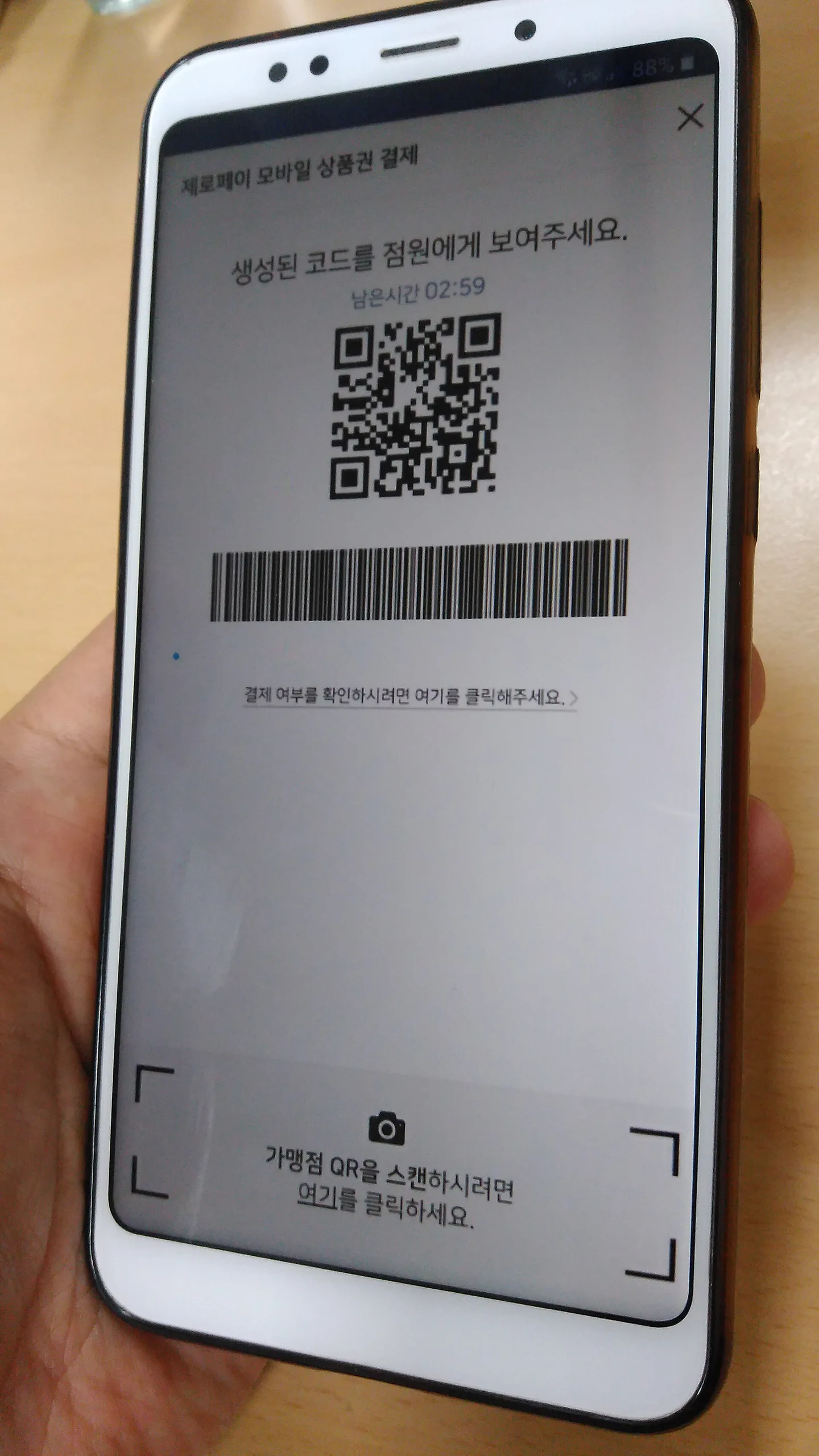
Korea’s QR payment networks accept a growing list of foreign wallets, but whether this works for you depends entirely on the app you already use. ZeroPay, the QR payment scheme run by the Korea Easy Payment Foundation, says foreign tourists can pay at its merchants with the payment app they use at home, and that merchants need no extra terminal. Its list covers WeChat Pay, Alipay, UnionPay partner apps, Indonesia’s QRIS and 37 Alipay+ partner wallets, among them AlipayHK, GCash, Touch ’n Go, TrueMoney, PayPay and Wise. VisitKorea likewise says Alipay, WeChat Pay and UnionPay are accepted at ZeroPay member stores, and that UnionPay QR also works at BC Card Paybooc QR stores.
Alipay+ describes how a payment works: you scan the merchant’s QR code or show a payment code, Alipay+ routes the payment to your home wallet and handles the currency exchange, and you pay in your home currency. Wise’s QR feature works with KakaoPay QR codes in Korea and wherever Alipay+ is accepted, but Wise says it is not available to customers registered in the United States, Canada or Japan, and it may add a payment fee of 1.2% to 2% on top of any conversion.
That is why I treat a QR wallet as a bonus rather than a plan. If you already use one of the listed wallets, it can cover small shops that display the right QR code. If none of your apps is on the list, the option simply does not exist for you. We also found no official page saying short-term visitors can add a foreign card to Korean wallets such as Kakao Pay, Naver Pay or Toss, or explaining how Apple Pay with a foreign-issued card works at Korean terminals, so I would not plan a trip around either.
Cash still has a job
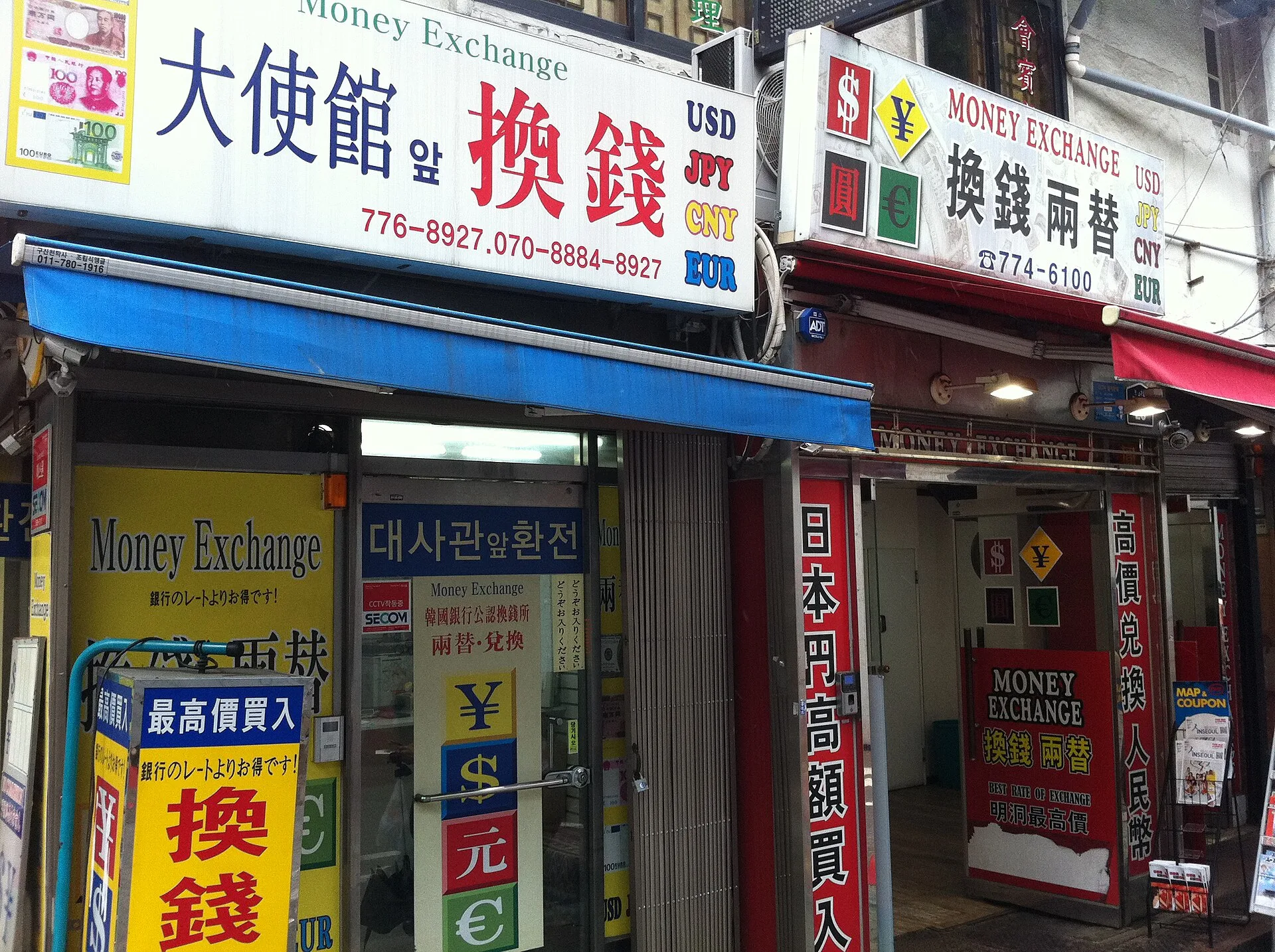
Even with a card and a WOWPASS, some won in your pocket is worth having. VisitKorea notes that traditional markets and street shops may accept only cash, and the WOWPASS FAQ itself says its card cannot help at cash-only stalls. Getting won does not have to mean a bank queue: WOWPASS machines turn foreign cash into a card balance and can pay part of it back out as won, and private money changers operate in tourist areas such as Myeong-dong. Rates and fees at ATMs and exchange counters vary by provider, and the official sources we checked do not compare them, so we do not rank them either.
Putting together a first-trip wallet
The three options fit into one wallet rather than competing for it. Carry a main card and a backup on a different network for shops, restaurants and hotels. For fares, add a T-money card or a WOWPASS, or buy a Climate Card short-term pass with your foreign card at the new Seoul subway machines if you will ride a lot. Keep some won for markets and stalls, and use a QR wallet only if your home app is on ZeroPay’s list. If you are staying longer than a holiday, opening a Korean bank account is a separate question.
Related on Rank Three: for paying taxi fares through an app, see “Kakao T vs Uber Taxi vs TADA: calling a taxi in Seoul”; for the mobile data your wallet app will need, “Internet for a Korea trip: physical SIM, eSIM or pocket Wi-Fi?”; and if you will stay long enough to bank in Korea, “Toss vs KakaoBank vs KB Star Banking: one app does not mean one bank”.
Our three picks
- A foreign credit or debit card: the default for most purchasesForeign credit or debit card
Needs no setup and, according to VisitKorea, works at most stores. Under Article 19 of the Specialized Credit Finance Business Act, card merchants may not refuse card payment or pass their card fee on to you. Carry a card on a second network and check your bank’s foreign fees.
- WOWPASS: prepaid, offline, with T-money built inWOWPASS
Turns foreign cash into a won balance at about 446 machines, pays by chip at offline shops and carries a separate T-money balance for fares. Expect a 6,000-won membership fee, no online payments and won-only withdrawals.
- A QR wallet from home: only if yours is on the listHome-country QR wallet
If your app — Alipay, WeChat Pay, an Alipay+ partner such as GCash or PayPay, or a UnionPay app — is on ZeroPay’s list, you can scan to pay at ZeroPay shops in your home currency. Many travellers will find no supported app.
Side by side
| What to check | Foreign card | WOWPASS | Home QR wallet |
|---|---|---|---|
| Setup | None; check your bank’s foreign fees | Passport scan and top-up at a machine; 6,000-won membership fee | A listed wallet set up at home; Wise QR not for US, Canada or Japan accounts |
| Shops, restaurants, convenience stores | Most stores (VisitKorea); card merchants may not refuse cards or surcharge | Chip payment wherever local cards are accepted | ZeroPay merchants; KakaoPay QR via Wise |
| Markets and street stalls | May be cash-only | Not at cash-only stalls | Only where a supported QR code is shown |
| Subway and bus | No tapping at gates yet; buys Climate Card passes and single tickets at 440 Seoul machines (about 3.7% fee) | Separate T-money balance for tapping | Not covered by the official sources we checked |
| Online and in-app | Not covered by the official sources we checked | Not supported (offline only) | In-store QR only, in the sources we checked |
| Fees named by official sources | No card surcharge allowed; your bank’s fees not covered | 6,000-won membership; 1,000 won per withdrawal | Set by your wallet; Wise 1.2–2% plus conversion |
| Leftover money | Nothing to refund | Won cash at machines, up to 100,000 won each time | Stays in your home wallet |
| Best for | Everyday purchases with no setup | Arriving with foreign cash; one card for fares and shops | Users of a listed wallet |
Where I would start
If I were landing in Korea for the first time, I would bring two cards on different networks, get a modest amount of won in cash, and pick up a T-money card or a WOWPASS for fares. I would choose WOWPASS over plain T-money only if I wanted it to double as a prepaid card in shops or were carrying foreign cash to exchange. A QR wallet belongs in the plan only for travellers whose home app is on ZeroPay’s list. Payment options for visitors are changing quickly — Seoul’s subway machines started taking foreign cards only in March 2026 — so check the WOWPASS, ZeroPay and Seoul pages again shortly before you travel.

