You may need a spelling reference, an unfamiliar regional expression or a definition you can actually understand. One search box need not serve all three questions equally well. We compared three National Institute of Korean Language dictionaries using their official introduction and websites, checked on October 8, 2026. This is a research-based guide to choosing a starting point, not a speed test or an assessment of learning outcomes.
Standard Korean Language Dictionary
The institute describes this dictionary around Korean language conventions. I would put it first when revising a formal piece and checking how a word is written or what it means. Finding a headword is the beginning: read the relevant sense and bring it back to the sentence you are writing.
The limitation is how easily an unsuccessful search becomes an overconfident verdict. A word missing from one dictionary has not thereby been proved nonexistent or forbidden. If you heard a new or regional expression, try another resource. Treat this as a reference for individual words rather than expecting it to certify an entire paragraph as correct.
Urimalsaem
Urimalsaem collects everyday language, emerging words and regional expressions through public participation. That is a reason to open it when an expression you heard does not immediately appear in your first search. Keep the original sentence and, when relevant, the place where you heard it. They can help you decide whether an entry concerns the same usage.
The broad collecting purpose also creates a useful boundary. Inclusion is not a blanket certificate that an expression is standard Korean for a formal document. Read the entry in context and consult any rules that apply to the document. Neither dismissing every participatory entry nor treating every listed expression as a uniform writing rule is a helpful shortcut.
Korean Basic Dictionary
This dictionary is designed for Korean learners and teachers, with explanations in accessible Korean. I would start here when a difficult definition sends you into a chain of further lookups. It is also a reasonable reference for someone trying to explain a familiar word more clearly to another person.
Its learning focus is different from an ambition to collect every specialized or emerging term. The institute also links to Korean–foreign-language learning dictionaries based on its headwords and definitions. Follow the official language links if translated help is useful. A translated sense still needs to fit the sentence; it is not an automatic answer for every context in which the word appears.
Try one real question
Choose a word from something you are writing and state what is unclear. Is it the spelling, the expression’s context or the meaning in simpler language? Those questions give you a practical order: the standard dictionary, Urimalsaem or the basic dictionary. You can change the order without needing the three results to match.
Once you find an entry, return to the sentence. Which sense do you mean, and is that what a reader is likely to understand? Reading the revised sentence aloud can be more useful than collecting several definitions in a note. We have not adjudicated a particular disputed expression here. Individual language questions need their own entry and, when appropriate, official consultation material.
Keep the names visible
Bookmark the dictionaries under their actual names. Standard, participatory and basic are useful reminders of why you opened them. Comparing their purpose is more productive than assuming the biggest collection must always win. You can use several without making every lookup a three-site research project.
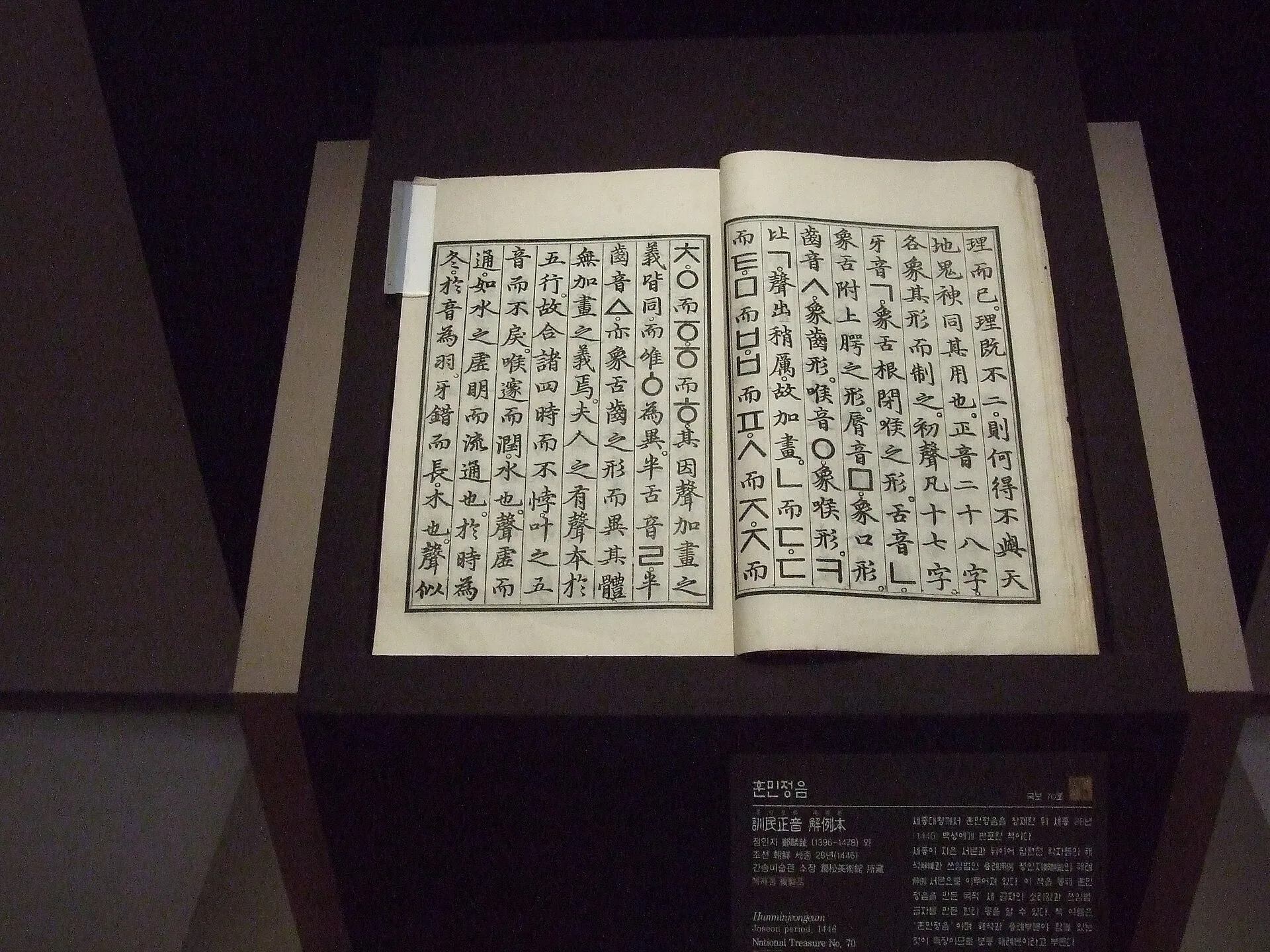
The accompanying photograph is a Hangeul reference image, not a screenshot or a physical copy of any of these dictionaries. We did not exhaustively test accounts, contribution procedures or downloads. The table summarizes an editorial lookup order based on the official purposes. A good Hangeul Day starting point can be one word you have long meant to check and one clearer sentence afterward.
Our three picks
- Standard dictionaryStandard dictionary
Check conventions and meaning
- UrimalsaemUrimalsaem
Explore new and regional language
- Korean Basic DictionaryKorean Basic Dictionary
Start with accessible explanations
Side by side
| Compare | Standard dictionary | Urimalsaem | Korean Basic Dictionary |
|---|---|---|---|
| Official focus | Language conventions | Participatory everyday, new and regional words | Korean learners and teachers |
| First question | How is this written and used? | Is this expression recorded? | How can I understand it simply? |
| Suggested starting point | Revising a piece of writing | Hearing an unfamiliar expression | A definition feels difficult |
| Next step | Match the sense to context | Read the entry’s context | Apply the meaning to a sentence |
| Avoid assuming | No result means no such word | Inclusion certifies standard usage | One translation fits every sentence |
| If insufficient | Try broader resources | Check applicable writing conventions | Try a broader dictionary |
| Scope here | Official purpose checked | Official purpose checked | Official purpose checked |
Our choice
Open the standard dictionary for a convention check, Urimalsaem for unfamiliar expressions and the basic dictionary for accessible explanations. You do not need to memorize a hierarchy. Name the question that stopped you, and the first search box becomes easier to choose.
