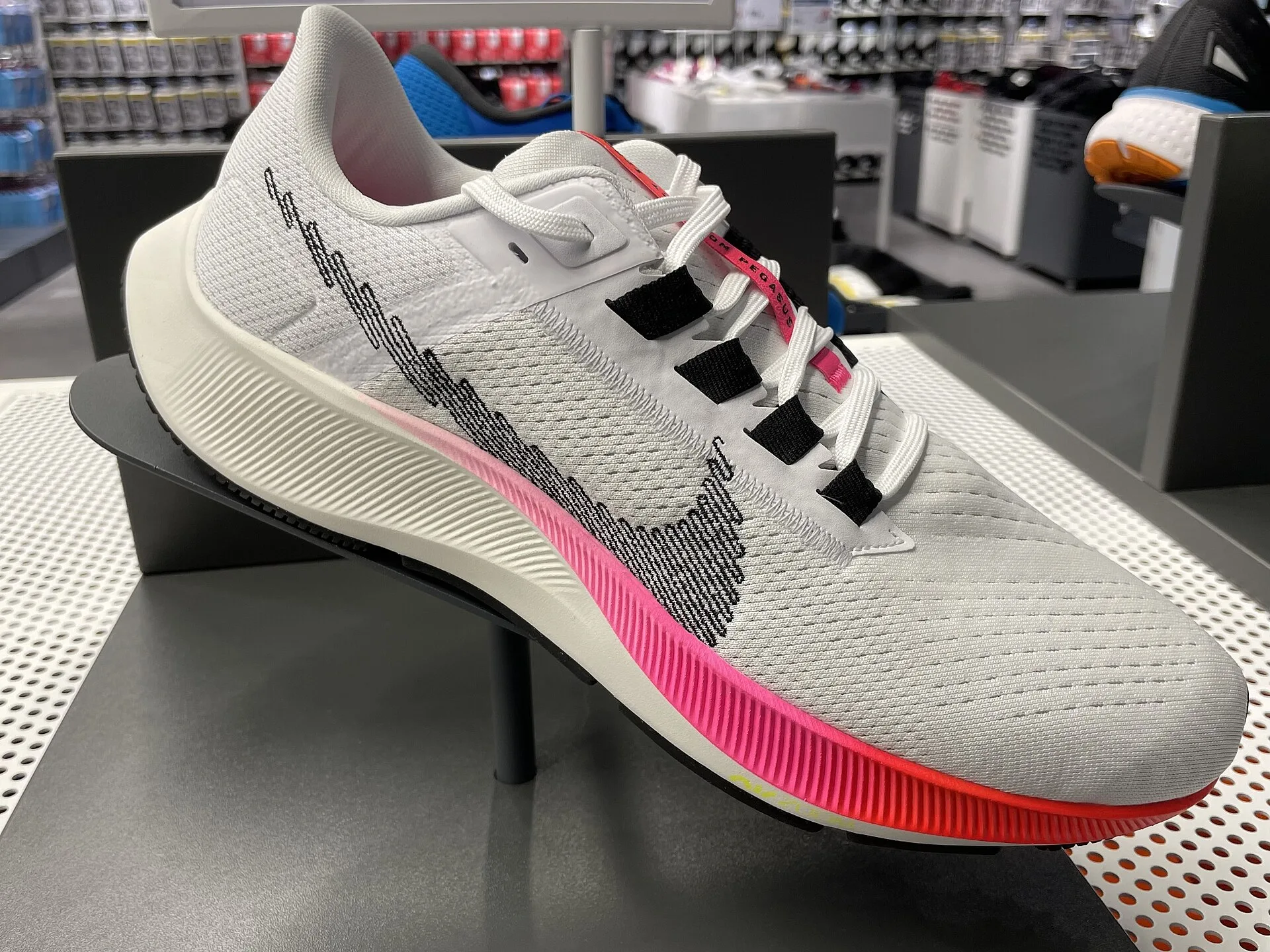
Nike’s running catalog quickly fills with generation numbers, Plus and Premium labels. Before choosing a specific pair, it helps to narrow the families. We compared Pegasus, Vomero and Structure using manufacturer material checked on October 6, 2026. This is desk research, not a wear test. The family framework comes from Nike’s November 2024 announcement; the current catalog was checked separately. The photograph shows an older Pegasus 38, not the latest versions of all three families.
Pegasus
Nike positions Pegasus around responsive cushioning. I would use it as a starting point when I do not yet know which feel I prefer. Try one clearly identified model, then compare the other candidates under similar conditions. The manufacturer’s word responsive explains its intended position; it is not our measurement or proof that your running times will improve.
Familiarity is the drawback. It is easy to buy the recognizable name without noticing the generation or variant. Base, Plus and Premium models should not be treated as color options of an identical shoe. Record the entire product name. Our Pegasus 38 reference photo cannot explain the construction of a current model; use the page for the actual pair you are considering.
Vomero
Nike places Vomero in the maximum-cushioning family. This is where I would start if cushioning is the first thing I want to compare. During a fitting, record more than whether a shoe feels soft: note space around the toes, heel movement and the difference between standing and moving. Those are questions for your own fitting, not sensations we measured for this article.
A cushioning position does not guarantee comfort for every runner. A compelling midsole description can distract from width or heel fit. Generations and variants can differ, too. I would compare a specific Vomero with the other candidates and decide whether the overall fit supports the reason I shortlisted it. A discount is secondary to wanting to wear the exact pair.
Structure
Nike positions Structure around supportive cushioning. I would consider it when I want to explore how a shoe holds my foot. Use concrete fitting notes rather than simply writing more stable. Where does it contact the foot, and does any pressure become distracting when you move?
Support is not a diagnosis or a promise of injury prevention. We have not established a medical effect or prescribed this family for a particular foot type. If the fit is uncomfortable, the product description is not a reason to force it. Structure earns a place here because its design direction is worth comparing, not because we gave it a health score.
Write down the full name
The first row of a shopping comparison should contain the exact generation, variant, size and width. That keeps a discounted older model from being confused with a current one. The manufacturer catalog checked during research included Pegasus 42, Vomero 18 and Structure 26 among other shoes. An overseas listing is not evidence of current Korean stock or pricing.
Read a family overview separately from the specifications of an older pair on sale. A shared name does not make every generation’s materials identical. Include delivery, returns and available sizing when comparing the actual offers. First narrow three families; then narrow three real products. Combining those steps too early creates a list of names instead of a useful decision.
Make the fitting comparable
I would use comparable socks and conditions, then record toe room, width, heel fit and pressure when laced. Move only within what the store allows. For online orders, read the return conditions before outdoor use. Matching the number printed on different shoes is less useful than finding the size that actually fits.
Keep manufacturer positioning and personal impressions in separate notes. Responsive, maximum cushioning and supportive are Nike’s framework; what you enjoy wearing is your assessment. We have not logged mileage, measured durability or tested performance. The table helps choose which pair to investigate first. It is deliberately a shopping shortlist rather than a race-result prediction.
Our three picks
- PegasusPegasus
A responsive-family starting point
- VomeroVomero
Explore cushioning as the main priority
- StructureStructure
Explore supportive fit
Side by side
| Compare | Pegasus | Vomero | Structure |
|---|---|---|---|
| Manufacturer position | Responsive cushioning | Maximum cushioning | Supportive cushioning |
| Reason to start here | A baseline for comparison | Cushioning is your first question | Support is your first question |
| Fitting question | Do I like the overall movement? | Does cushioning come with a good fit? | Does the holding feel suit me? |
| Identify exactly | Generation, variant, size, width | Generation, variant, size, width | Generation, variant, size, width |
| Trade-off | Familiarity can hide model differences | Cushioning does not guarantee comfort | Support can be mistaken for a medical promise |
| Photo coverage | Older Pegasus 38 | Not pictured | Not pictured |
| Not tested here | Running, rebound, durability | Running, feel, durability | Running or injury prevention |
Our choice
I would use Pegasus as a fitting baseline, then ask whether Vomero’s cushioning direction or Structure’s supportive direction changes my choice. If you already know your priority, start there. Family names narrow the search; the exact model and its fit should decide the purchase.
