Plan a stay in Cancún and the question soon becomes what to do with the day you are not on the hotel beach. This comparison looks at three very different answers: Chichén Itzá in inland Yucatán, Tulum on the coast to the south, and Isla Mujeres, a short ferry ride offshore. It draws on official sources checked on October 15, 2026, including UNESCO, Mexico’s National Institute of Anthropology and History (INAH), the Tren Maya railway, the Yucatán and Quintana Roo state governments and South Korea’s foreign ministry travel-safety service. It is not a trip report, a tour comparison or an objective ranking. Fees and hours change often, so check again before you go.
Start with the travel time
The three differ first in distance. Chichén Itzá is the only one outside Quintana Roo, the state Cancún belongs to; it lies in neighbouring Yucatán, 115 km from the state capital, Mérida, according to INAH. Tulum’s ruins are 128 km south of Cancún, at kilometre 230 of the Chetumal–Cancún federal highway. Isla Mujeres sits 15 km off Cancún’s coast, and Caribe Mexicano, the website of Quintana Roo’s tourism promotion board, puts the crossing from Puerto Juárez at about 20 minutes.
The Tren Maya serves both ruins. Its Chichén Itzá station lies on section four, the 239 km double-track electrified line that ends in Cancún, but the official timetable lists only the end points of the Cancún–Mérida Teya runs, a little over three hours each, with no stop time for Chichén Itzá. For Tulum, it shows a 10:46 departure from Cancún arriving at Tulum Aeropuerto at 12:50 and a 16:55 return reaching Cancún at 18:59. Those are the only trains on the page with Tulum Aeropuerto times; Cancún–Chetumal services are listed too, but without intermediate times, so check whether you can board or leave at Tulum when you book. Tulum Aeropuerto is, as the name says, the airport station, so you still need a way to the ruins, where last entry is 15:30; by train alone, that makes a tight day. For Isla Mujeres, the ferry operator Ultramar runs from its Puerto Juárez terminal and from Playa Tortugas (km 6.5) and Playa Caracol (km 9.5) in the Hotel Zone to the APIQROO terminal on the island.
Chichén Itzá: when the ruins are the whole point
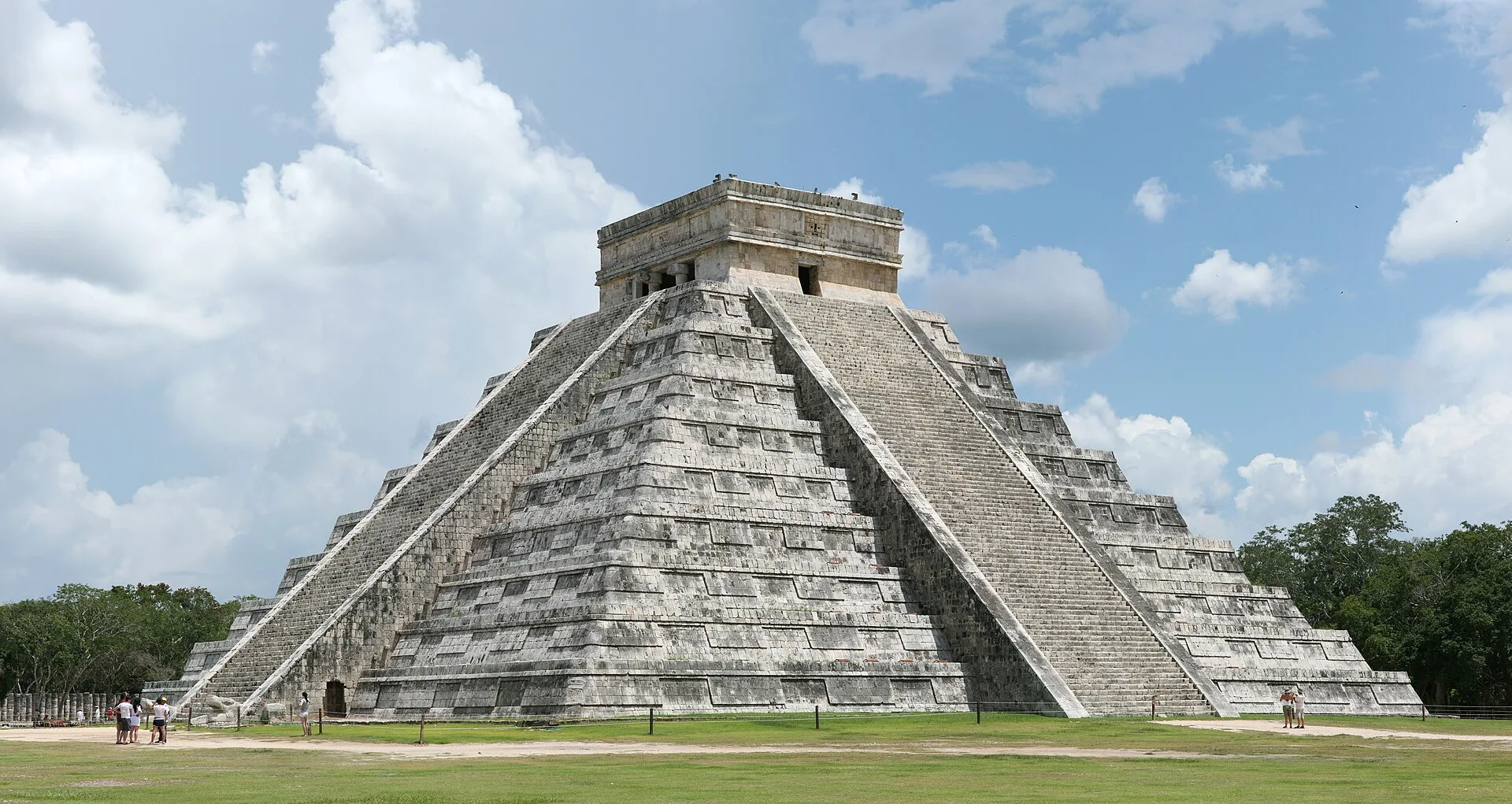
Chichén Itzá was inscribed on UNESCO’s World Heritage List in 1988 as the Pre-Hispanic City of Chichen-Itza. It stands near the village of Pisté in the municipality of Tinum, Yucatán. The stepped pyramid in the photo is the Temple of Kukulcán, usually called El Castillo. You cannot climb it: after an unauthorised ascent in March 2025, INAH said it would not permit climbing on pre-Hispanic structures because such incidents could endanger the monuments.
INAH’s page, updated on October 6, 2026, gives opening hours of 8:00 to 17:00 every day, with last entry at 16:00. Admission is INAH’s general fee of 105 pesos plus an additional state charge collected by Yucatán’s tax agency (AAFY): 592 pesos for foreign visitors and 205 for Mexican nationals. Since March 27, 2026, the state government says both are paid together at a single ticket window in the visitor centre (CATVI), under a “Boleto Único” system. CULTUR, Yucatán’s state cultural and tourism services agency, also lists 697 pesos for foreigners, though it gives the hours as 8:00 to 16:00; both agree on last entry at 16:00.
The Tren Maya says its Chichén Itzá station gives access to the archaeological zone, the museum and Pisté, and the Yucatán government puts the visitor centre 4.8 km from the station, so plan that last stretch too. I would pick Chichén Itzá if seeing one major Maya site properly matters most on this trip. The drawbacks are the time spent getting there and back, and the pressure of the 16:00 last entry if you arrive late in the day.
Tulum: ruins and the Caribbean in one view
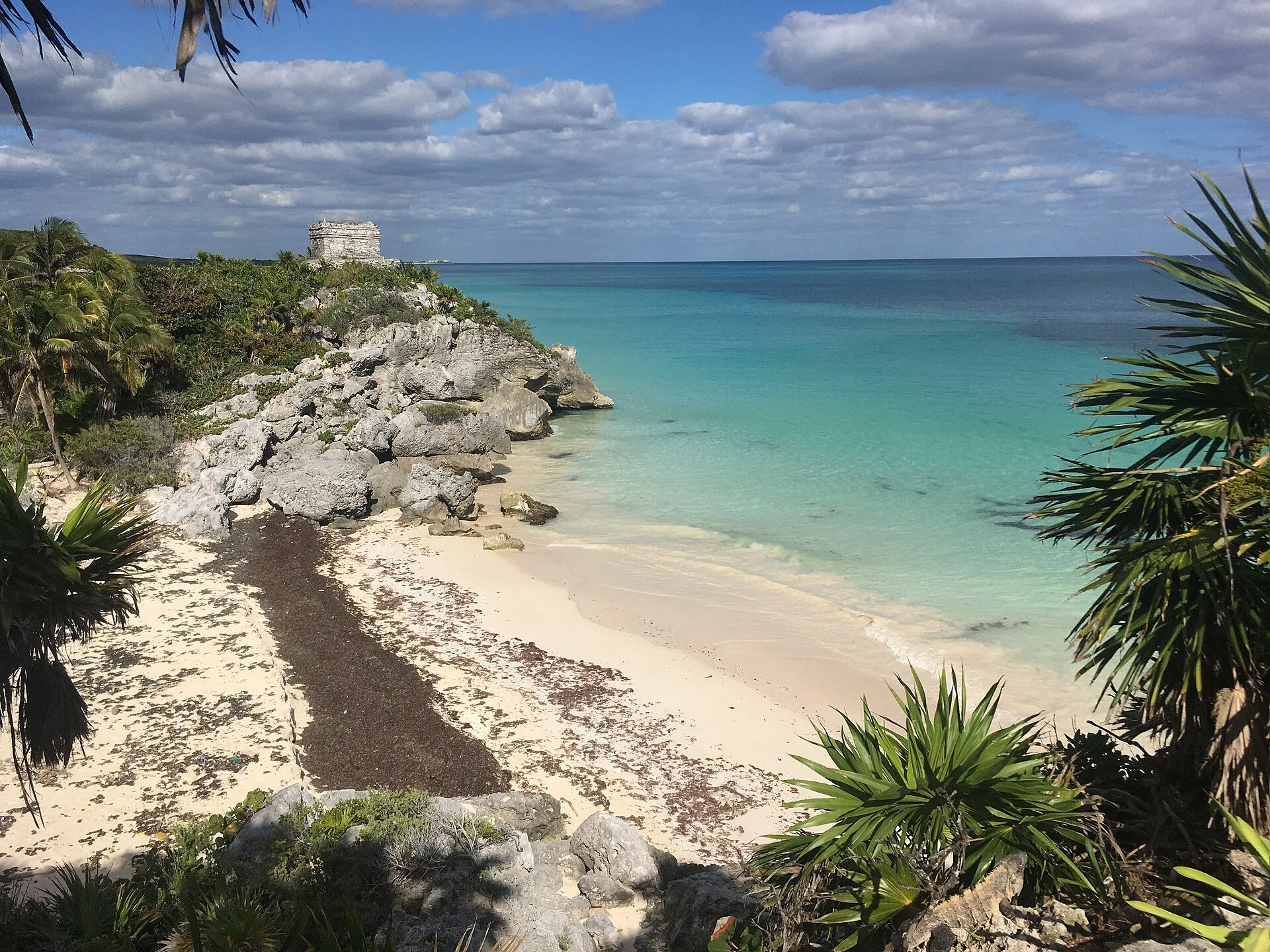
INAH calls Tulum the most emblematic site on the Quintana Roo coast. A wall encloses it on the north, south and west, while the eastern side faces the Caribbean, and that is what sets it apart from Chichén Itzá: the ruins and the sea share the same view. INAH’s page, updated on August 10, 2026, gives hours of 8:00 to 17:00 with last entry at 15:30, half an hour earlier than Chichén Itzá.
Fees changed in July 2026. The ruins lie within the Parque del Jaguar, which brings together Tulum National Park, other protected areas and the archaeological zone, and a presidential decree published in the federal gazette set new charges from July 20. INAH now lists a unified fee of 265 pesos for foreigners and 80 pesos for nationals, which it says includes the charges of CONANP, the national protected-areas commission, and/or Grupo Mundo Maya. On July 23 the Quintana Roo government said entry to the park itself is free for everyone, that the only charge is for the archaeological zone, and that the electric shuttle inside is optional at 20 pesos per adult. The decree, however, lists a 100-peso park fee for foreign visitors, so if you plan to use only the park or its beaches without visiting the ruins, check the rules on site.
I would pick Tulum if I wanted ruins in the morning and the sea in the same day. The drawbacks are the early last entry and a fee system so recently revised that official descriptions still differ in how they present it.
Isla Mujeres: a ferry ride and a slower day
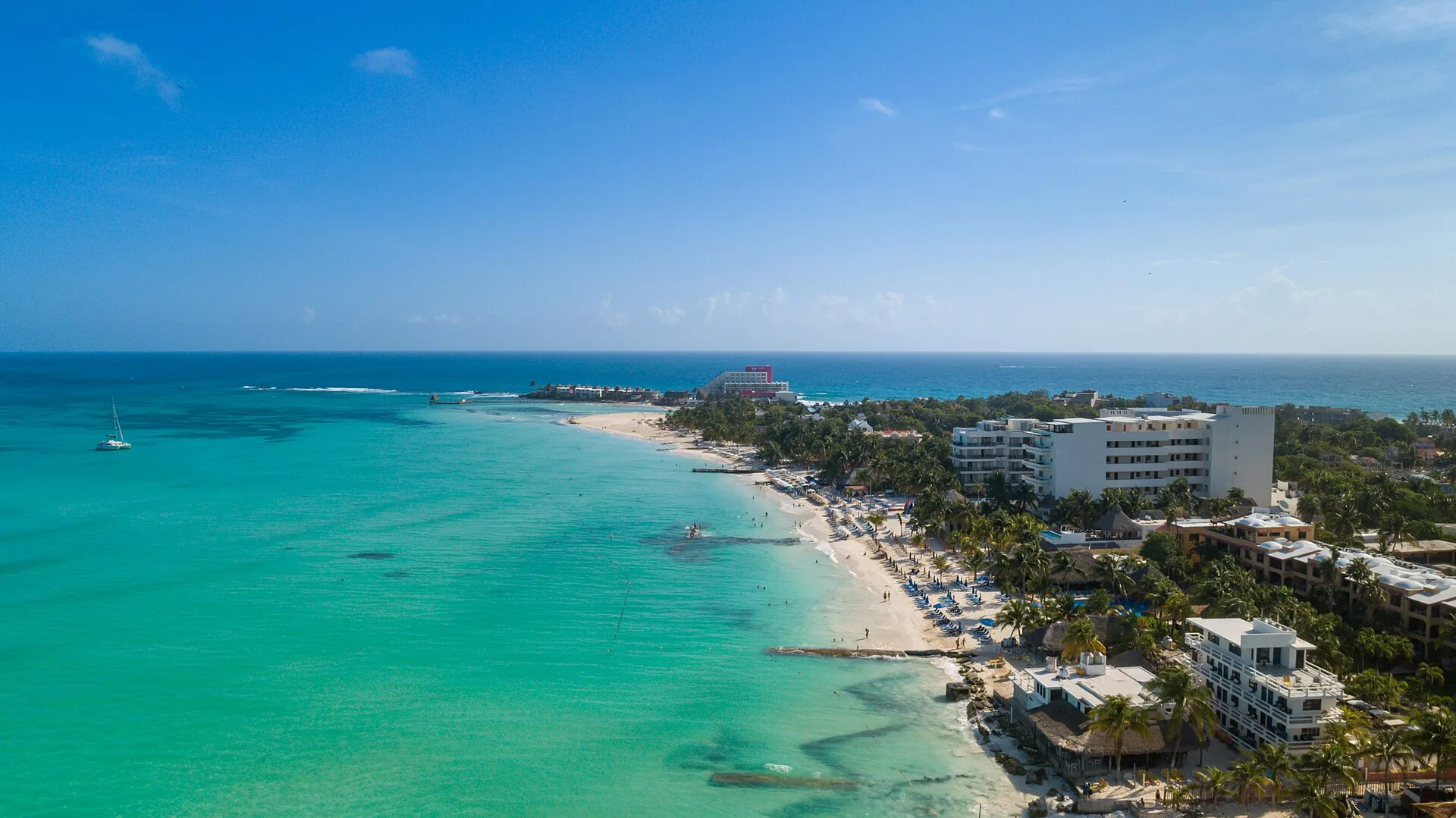
Isla Mujeres is a day built around the sea rather than ruins. Caribe Mexicano describes Playa Norte, at the island’s north end, as fine sand and calm water shallow enough to wade out a long way. Punta Sur, at the south-east tip, is described as Mexico’s easternmost point, with cliffs over the open sea, a sculpture park and the remains of a Maya temple dedicated to the goddess Ixchel. The waters off the island’s west coast belong to a national park, Costa Occidental de Isla Mujeres, Punta Cancún y Punta Nizuc, which CONANP says began as a national marine park in 1996 and was recategorised as a national park in 2000.
Ultramar sails from Puerto Juárez and from two Hotel Zone beaches. Caribe Mexicano also lists El Embarcadero in the Hotel Zone, notes that Hotel Zone departures are less frequent, and gives Puerto Juárez as the shortest crossing at about 20 minutes. Ultramar’s fare tables add a municipal environmental fee (derecho de saneamiento ambiental) to the ticket. I would choose Isla Mujeres for a day off from walking and transfers. The drawbacks: it is not a day for Maya ruins, and because Ultramar publishes its schedules by date, the last boat back is the first thing to check.
Before you go: advisories, VISITAX and hurricane season
As of October 15, 2026, South Korea’s foreign ministry rates Chiapas and Sinaloa at level 3 (leave the area), places Guanajuato under a special advisory and puts the rest of Mexico at level 2, which advises prospective travellers against unnecessary trips. Quintana Roo, home to Cancún, Tulum and Isla Mujeres, and Yucatán, home to Chichén Itzá, are not named separately, so they fall under level 2. Readers from other countries should check their own government’s advice, and everyone should look at the latest notices just before leaving. The ministry also notes that ordinary Korean passport holders can enter Mexico visa-free for tourism, provided they carry a return ticket.
Quintana Roo also charges foreign tourists a state fee called VISITAX. The official site says it is mandatory for all foreign tourists and cites Article 51 octies of the state’s Law of Rights; it does not show the amount up front, so look it up there once your dates are fixed. The US National Hurricane Center puts the Atlantic hurricane season at June 1 to November 30, with most activity between mid-August and mid-October. If you travel then, watch the forecasts and leave room to move your day trip to another date.
Our three picks
- A day centred on Maya ruinsChichén Itzá
The longest journey. Check the early start, the 16:00 last entry and the 697-peso foreigner ticket first.
- Ruins and the Caribbean togetherTulum
Fees changed in July 2026. Confirm the 15:30 last entry and the current 265-peso foreigner fee.
- A ferry ride and a beach dayIsla Mujeres
Puerto Juárez is the shortest crossing. Check the dated timetable for the last boat back first.
Side by side
| Question | Chichén Itzá | Tulum | Isla Mujeres |
|---|---|---|---|
| Kind of day | Inland Maya city ruins | Walled site facing the sea | Island and beaches by ferry |
| Where | Yucatán (115 km from Mérida) | Quintana Roo (128 km south of Cancún) | Quintana Roo (15 km off Cancún) |
| Transport in official sources | Road; Tren Maya Chichén Itzá station | Road; Tren Maya (e.g. Tulum Aeropuerto) | Ferry (about 20 min from Puerto Juárez) |
| Hours and last entry | 8:00–17:00, last 16:00 (INAH) | 8:00–17:00, last 15:30 (INAH) | Set by the ferry timetable |
| Foreigner fee (checked Oct 15) | 105 + 592 = 697 pesos, one ticket | Unified fee of 265 pesos | Ferry fare plus environmental fee |
| Drawback | Longest travel time | Early last entry | Not a day for ruins |
| Not verified here | Crowds, tour prices | Crowds, beach conditions | Sailings on the day, beach conditions |
Where I would start
If Maya ruins are the point of the day, I would start with Chichén Itzá; for ruins and the sea together, Tulum; for a break from walking and transfers, Isla Mujeres. Rather than asking which one is best, line up your departure time, the way back and the last entry time, and the right choice for your day usually becomes clear. Fees and timetables can change, so check the official pages again the day before.


