Buying a first bike can become a vocabulary test: frame materials, drivetrain tiers and unfamiliar model codes. I would begin with two ordinary questions instead. Where will you ride, and where will the bike live afterwards? This comparison uses Trek and Brompton guidance checked on October 4, 2026. It is desk research rather than a test ride or speed trial, and it compares bicycle types rather than pricing individual models.
Road bikes
Trek identifies drop handlebars and road-oriented design among the features of this category. Different hand positions are one reason to investigate it for longer rides. If you already have a paved weekend route in mind, a road bike belongs on the shortlist. Write down that route, the time you can give it and whether you expect to ride alone or with others before comparing premium equipment.
The category contains different designs, including race, endurance and gravel-oriented choices. They do not share one riding position or tyre width. In a shop, check your reach to the brakes with the saddle adjusted appropriately. Paying for a higher component tier cannot settle whether the bike fits you. Our sources explain the designs; they cannot predict your comfort on an untested individual bicycle.
Hybrids
Trek’s city and hybrid range covers commuting, fitness and everyday travel. This is the category I would investigate when a regular destination and errands are part of the plan. Check the actual model for rack and mudguard compatibility. Include the accessories you need in the first quote so a seemingly inexpensive bicycle does not become a surprise shopping list.
Hybrid is a broad label rather than a performance specification. The manufacturer separates fitness, comfort and adventure models within its range. I would not label every hybrid slow or suitable for every surface. Match tyres, gearing and carrying arrangements to the route. If your home involves stairs, handle the complete bicycle rather than choosing from its frame description alone.
Folding bikes
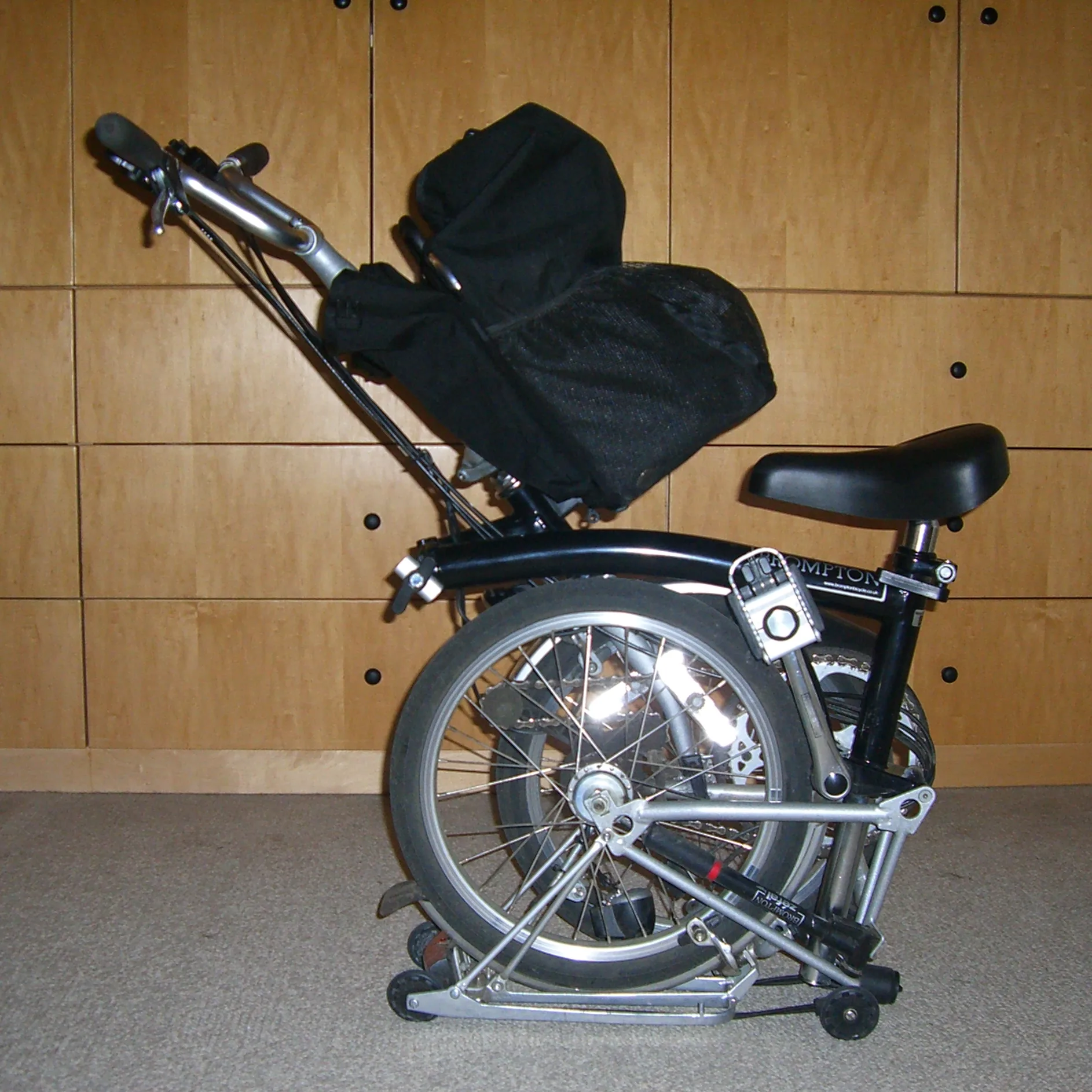
Brompton’s guide makes storage and transport a central reason for choosing a folder. Limited space at home or work, or a journey that mixes cycling and public transport, gives the design a practical purpose. Our reference picture shows an older Brompton partly folded with luggage. It is not a specification photograph of a current model, but it illustrates why the time spent off the bike matters.
Folding does not remove every inconvenience. Practise the actual fold, unfold and lift in a shop, including any bag you plan to use. A railway’s rules remain separate from the manufacturer’s promises about portability. In Korea, check the particular train or bus operator; Brompton’s discussion of UK transport is not permission for another system. If you expect never to fold it, consider whether you are paying for an advantage you will use.
Price the routine, not only the bicycle
The official guides also discuss equipment such as lights and luggage. I would give helmet, lighting, locking, carrying accessories and maintenance their own budget lines. Buy for your actual time of day and storage arrangements. There is no need to make every accessory a premium purchase, but omitting them entirely makes the initial comparison less useful.
With a used bicycle, its condition matters separately from the model name and year. We have not assigned a fair second-hand price or repair bill to an unseen item. Ask whether a local workshop can inspect it and maintain the components. A folding joint deserves an actual condition check, just as a conventional bike does. Availability of repairs is a reasonable consideration for something you hope to use regularly.
Three things to do in the shop
Describe your route, handle an adjusted bicycle and reproduce the storage routine. For a folder, that means folding and lifting it. For a conventional bicycle, try moving and parking it. These small actions are more informative than an invented beginner score. They connect a design to the doorway, stairs and destination you already have.
Start with a manageable familiar route while learning the controls and stopping, rather than buying around an ambitious distance target. No bicycle category guarantees safety; equipment condition and road rules still matter. The table identifies checks to make, not speed rankings. Choose the type you like, then see whether it fits the journey and the place where it will spend most of its time.
Our three picks
- Road bikeRoad bike
Investigate for planned longer road rides
- HybridHybrid
Match everyday routes and carrying equipment
- Folding bikeFolding bike
Choose around transport and storage off the bike
Side by side
| Compare | Road bike | Hybrid | Folding bike |
|---|---|---|---|
| First question | Where will weekend rides go? | What are the regular destinations? | Where will I fold and carry it? |
| Guide’s emphasis | Drop bars and road design | Several everyday and fitness categories | Compact transport and storage |
| Model checks | Position, tyres, gearing | Rack and mudguard compatibility | Folded dimensions and complete weight |
| Shop exercise | Fit and brake reach | Carry and load the bike | Fold, unfold and lift |
| Trade-off | Subtypes differ substantially | Category name is not a performance guarantee | Folding effort and carrying weight |
| Other spending | Lights, helmet, maintenance | Lights, lock, luggage | Lights, bags, storage equipment |
| Our deciding factor | A sustained road-riding plan | The everyday route | Indoor space and combined travel |
Our choice
For an established weekend road plan, start with road bikes. For everyday errands, investigate hybrids. When carrying and indoor storage dominate the decision, try a folder first. Make the final choice with an adjusted bike and a real storage plan. The most useful first bicycle is one you will actually take out.
