A gimbap menu can require more thought than its familiar ingredients suggest. Would you rather order one filled roll, share a bundle of small rolls, or alternate plain rice rolls with separate side dishes? This is a research guide checked against Korea Tourism Organization material on October 11, 2026. It is not a restaurant tasting or a national ranking. The useful comparison is how each format fits the meal you are about to order.
Decide what the order needs to do
Start with the occasion rather than the size of a piece. Are you replacing lunch, sharing food while exploring a market, or adding something to another dish? A small roll does not tell you the size of the whole order. A single large roll is not a universal serving measure either. If other food is coming, compare the complete meal you intend to buy.
Here, regular gimbap means a long filled roll served in slices; mini gimbap means small individual rolls. Those labels do not specify every filling or sauce. Read the actual menu description before assuming a roll is meat-free, mild or identical to one you ate elsewhere.
Regular rolls: a straightforward first order
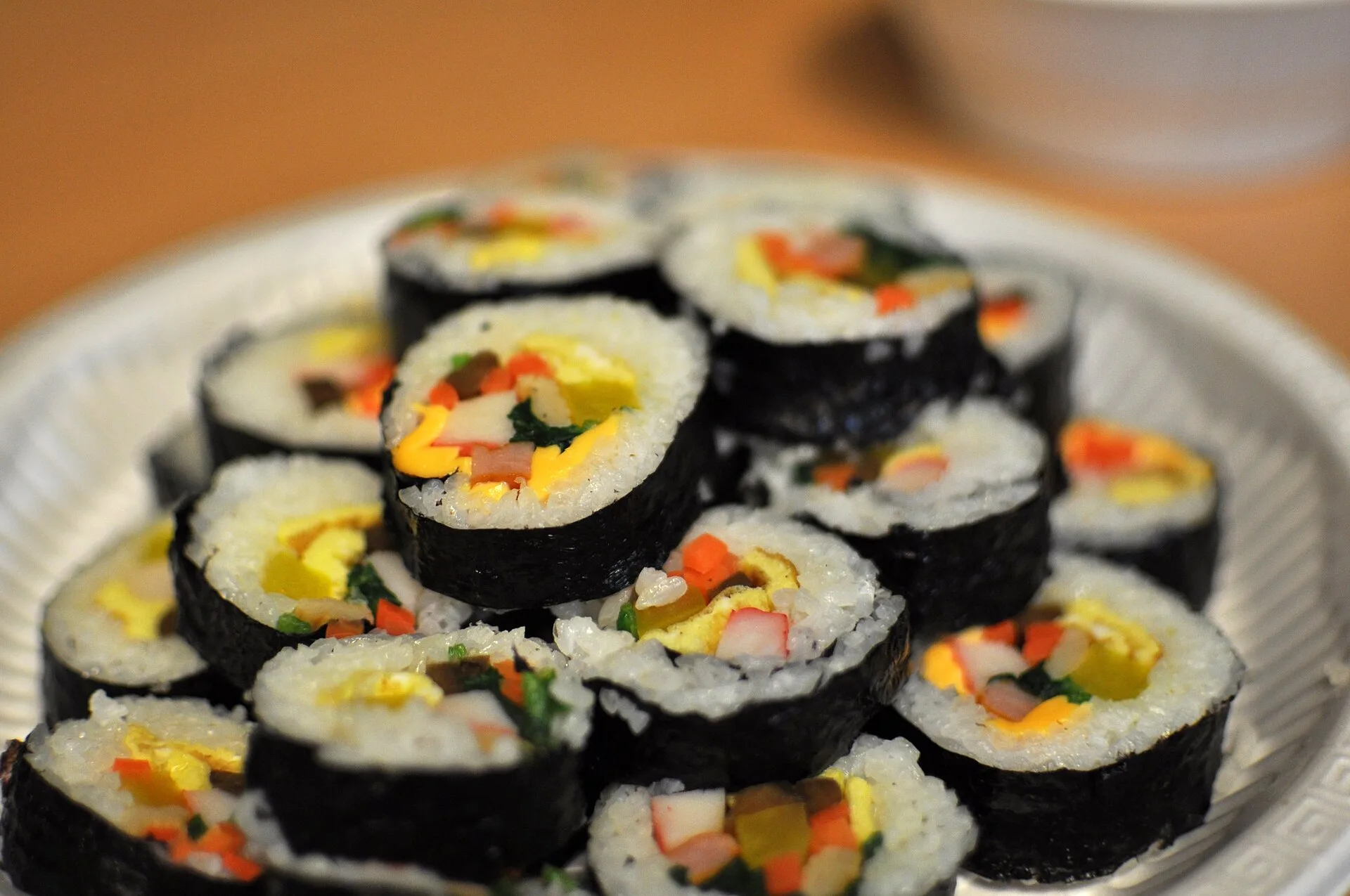
The tourism organization describes familiar gimbap as rice and assorted fillings wrapped in seaweed and cut into pieces. I would begin here when I want the meal to be one clearly described order. The useful information is the filling list, not the length of the menu or the number of fashionable variations.
The limitation is that “one roll” varies between shops. Large slices may be awkward to divide, and a packed container needs utensils and somewhere to rest it. None of that makes the format inferior; it means the convenience belongs to the whole order, not just the name.
Mini rolls: think in bundles
Kkoma gimbap appears in official tourism material as Mini Gimbap. Small individual rolls can be an appealing way to share alongside other food. I would look at this format when everyone wants a little of several dishes rather than committing to a separate full roll.
Check how many rolls make one order and whether a sauce is included. Do not assume every mini roll follows one market recipe or comes with mustard. The small size is a format, not a promise about ingredients, portion weight or value. Those details still belong to the individual seller.
Chungmu: choose the sides as well
Chungmu gimbap takes its name from the former name of Tongyeong. The official food guide describes small seaweed-and-rice rolls served with spicy radish kimchi and squid salad. I would choose it when I want to alternate the rolls with separate sides rather than find every component inside one bite.
Plain-looking rice rolls do not make the whole plate mild. Consider whether you want the accompanying spicy dishes and can eat the squid. Ask about the actual combination and packing arrangement. Refills, substitutions and the precise portion are shop policies, not guarantees attached to the dish.
Compare what you will actually pay for
A regular roll, a bundle of mini rolls and a portion of Chungmu gimbap are different units. Write down how many orders your group wants before comparing totals. Add any soup or other street food you expect to buy. The cheapest isolated roll can be the wrong comparison for the lunch you actually intend to eat.
I have not checked current shop prices or weighed servings, so there is no value-for-money winner here. Look for a composition photo, a stated count or portion, and a clear list of included sides. If the description remains ambiguous, a question to the seller is more useful than guessing from the format.
A practical first choice
I would start with a regular roll for a simple meal, look at mini rolls for sharing, and choose Chungmu for a plate built around separate sides. These are editorial preferences about ordering, not conclusions from a tasting test. You do not need all three on the same day to make a good choice.
If ingredients matter to you, ask about them directly. A photograph cannot disclose every seasoning. The reference image here shows only regular filled gimbap and should not be used to imagine the appearance of the other two. Let the actual menu finish the decision that the name begins.
Our three picks
- One clearly described mealRegular gimbap
Start with a basic roll and its filling list.
- Small units for sharingMini gimbap
Check the bundle size and accompanying food.
- Rolls and separate sidesChungmu gimbap
Choose the radish kimchi and squid salad as part of the plate.
Side by side
| Question | Regular rolls | Mini rolls | Chungmu |
|---|---|---|---|
| Format | Sliced filled roll | Several small rolls | Rice rolls plus sides |
| Read first | Filling list | Number per bundle | Side-dish combination |
| My reason to choose | One-order meal | Sharing | Alternating rolls and sides |
| Trade-off | Roll sizes differ | Small does not define portion | Sides affect the choice |
| Heat level | Check ingredients | Check sauce | Check spicy sides |
| Compare prices by | Rolls plus extras | Bundles plus extras | Portions and included sides |
| Not verified | Shop price or weight | Shop price or weight | Shop price or weight |
Where I would start
For a first order I would choose a regular roll; for sharing, mini rolls; for a meal of rice rolls and separate sides, Chungmu. There is no need to crown a winner. Choose the meal that fits today, and let the shop’s actual ingredients and portion finish the decision.
