New instant noodles keep arriving, but sometimes you still reach for a familiar packet. Knowing what to cook without much thought is part of its appeal. This shortlist covers Korean-market original bagged Shin Ramyun, spicy Jin Ramen, and original Samyang Ramyun. It uses manufacturer information checked on October 1, 2026, rather than a blind taste test. The first comparison is surprisingly simple: make sure you are looking at the actual products you intended to buy.
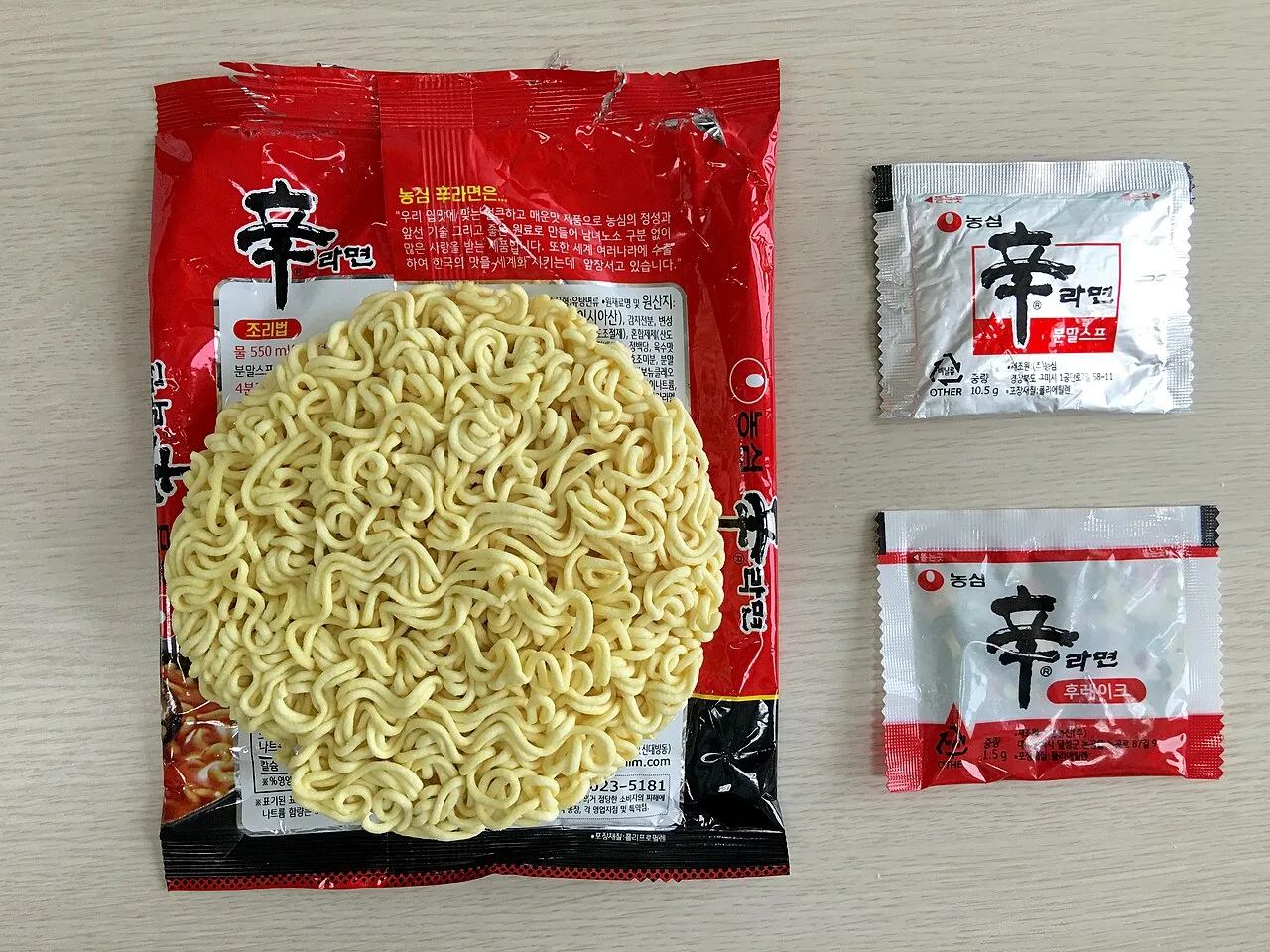
Shin Ramyun: Establish the original product
Nongshim dates Shin Ramyun's launch to October 1986. Its official brand information lists the Korean-market original bag at 120 grams and 500 kilocalories. The brand's history and today's nutrition label are different things to check. A photograph of an old advertisement or an export packet is not a substitute for the relevant listing.
Shin's familiar spicy-soup identity earns it a place on this shortlist. That is not a measurement proving it is the hottest of these three. Shin Black, non-fried noodles, and cups are different products. Read beyond the Shin name on a shopping page and check that you have the original bag; otherwise the comparison changes before you even boil water.
Jin Ramen Spicy: Choose within the brand first
Ottogi's official description places Jin Ramen around a Korean-style broth based on beef bones and brisket. The candidate here is the spicy version. Mild and slightly spicy versions also appear within the brand, so a search for Jin alone can mix products. Ottogi's history dates the mild and spicy bagged versions to 1988.
If that beef-broth direction interests you, the spicy version is a candidate to try. The phrase 'bone broth' does not by itself prove that it tastes heavier or less spicy than another packet. Treat the description as a clue to explore. If you normally buy mild Jin, remember that this article's bag is not the one already in your cupboard.
Samyang Ramyun: Not the same as Samyang 1963
Samyang Foods identifies the September 1963 launch of Samyang Ramyun as Korea's first instant ramen. Its brand page separates original Samyang, a spicy variant, and cup products. This guide chooses the original bag. That history helps explain the brand's place on a shelf; it does not mean the recipe or price has stayed unchanged since 1963.
The premium Samyang 1963 product launched in 2025 is a separate item. A reader attracted by 'original' or '1963' can easily combine information from the two. Do not attach the premium product's ingredients to basic Samyang Ramyun. Check the exact packet name, then use that packet's ingredient and cooking information.
Start with the directions on each bag
Cooking every noodle with identical water and time is not automatically a fair comparison. Begin with each packet's instructions, then adjust to your preference. An egg and spring onions in one pot but nothing in another add another difference to the meal. Keep the first bowls simple if you want to learn about the noodles themselves.
Make a short note about the soup's spicy direction, noodle texture, and dried ingredients. Afterwards you can decide whether to add rice, an egg, or anything else. This article does not borrow a manufacturer's flavour language and present it as my own tasting. There is no basis here for scoring the springiest noodles or deepest broth.
Read a multipack price before calling it cheap
Count the packets and check the weight, rather than comparing multipack totals alone. Five bags for KRW 5,000 would be KRW 1,000 each. That is a calculation example, not a researched selling price for any of these products. Delivery charges and different sizes can change the result. One discount does not establish the cheapest brand for every shop.
For nutrition comparisons, use equivalent serving information from the Korean-market bags you are buying. Export versions, cups, and original bags can differ in weight and labels. This research did not collect all three current nutrition tables on one consistent basis, so Shin's single calorie figure cannot support a health ranking. Put the three actual packet labels together if sodium or calories are your deciding factor.
Our three picks
- A familiar spicy-soup referenceOriginal Shin Ramyun bag
Identify the original bag rather than Shin Black, non-fried noodles, or cups.
- Beef-bone and brisket broth directionJin Ramen Spicy
Choose the spicy version deliberately, rather than mixing it with mild or slightly spicy Jin.
- The long-running basic lineOriginal Samyang Ramyun bag
Keep original Samyang Ramyun separate from the premium Samyang 1963 product.
Side by side
| What matters | Shin Ramyun | Jin Ramen Spicy | Samyang Ramyun |
|---|---|---|---|
| Product covered | Korean-market original bag | Korean-market spicy bag | Korean-market original bag |
| Manufacturer's launch history | October 1986 | Bagged versions launched in 1988 | September 1963 |
| Published direction | Spicy soup noodles | Beef-bone and brisket broth | Long-running original line |
| Easy to confuse with | Black, non-fried, cups | Mild, slightly spicy, cups | Spicy, cups, Samyang 1963 |
| First cooking reference | Water and time on that bag | Water and time on that bag | Water and time on that bag |
| Price comparison | Per bag and weight; include delivery | Per bag and weight; include delivery | Per bag and weight; include delivery |
| Useful tasting note | Start with the unmodified broth | Record broth direction and heat separately | Start with the original product's broth |
Look again at a familiar packet
I would use original Shin as a reference and alternate it with one other bag. Choose Jin's spicy version accurately, and keep Samyang on the original product. One line about whether you remembered the soup or noodles first is enough after each meal. Knowing why a packet returns to your basket is more useful for dinner than memorising a national sales ranking.
