A Korean drinks shelf can be full of appealing names without making the choice easier. Makgeolli may be familiar; yakju and distilled soju deserve a closer look at their production categories. We checked government K-Sool guidance and classification material on October 5, 2026. This is desk research for adults choosing alcohol, not a tasting report or a claim about health benefits or lighter hangovers.
Makgeolli
Government guidance places makgeolli in the cloudy fermented-drink family. Grains such as rice or wheat are fermented with nuruk and water, with the drink left cloudy rather than filtered clear. I would begin here if that style of fermentation interests you. The category does not fix sweetness, acidity or carbonation for every bottle.
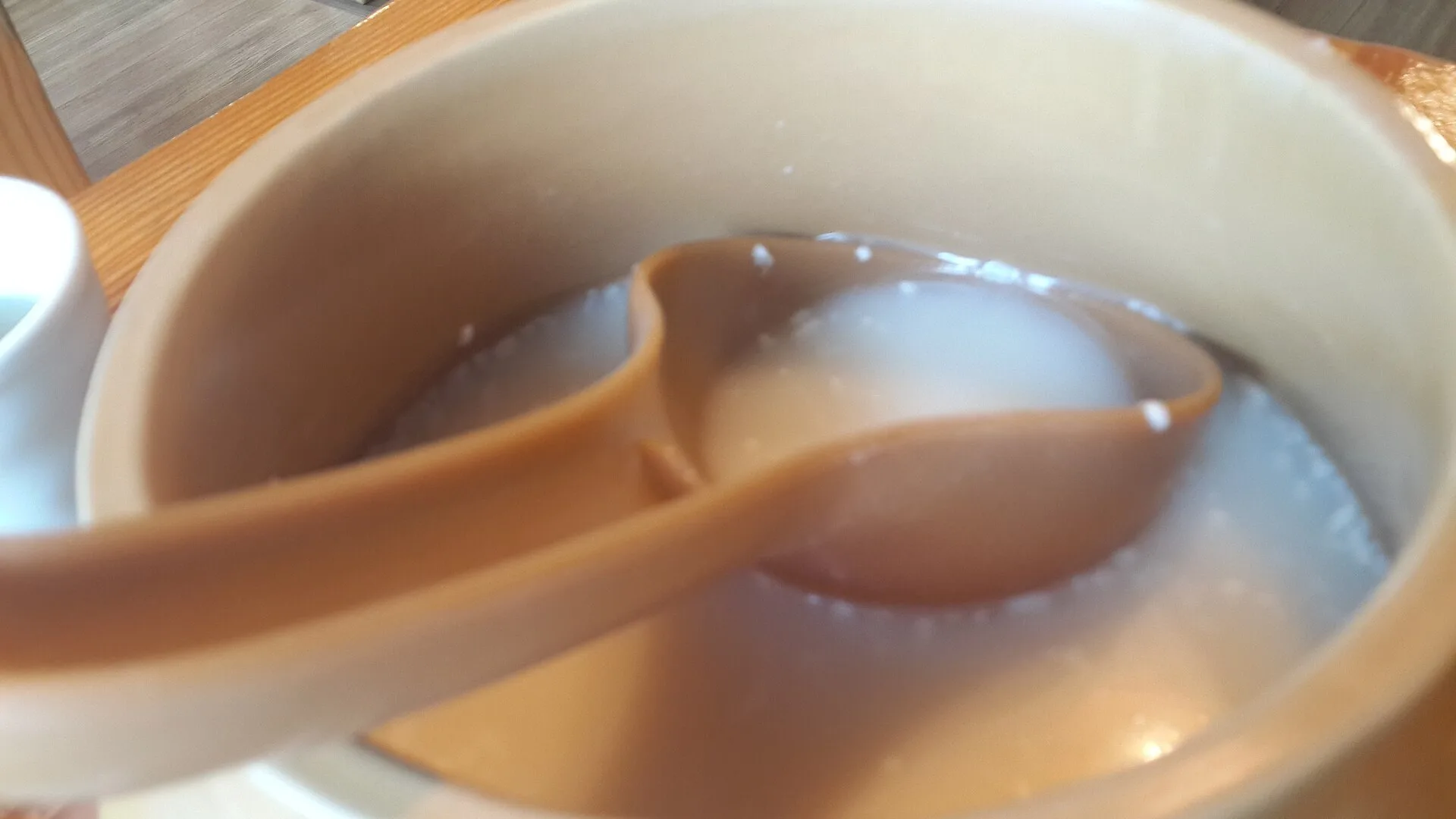
Familiarity can be the drawback: it is easy to skip the details because you recognize the name. Read the actual alcohol content, volume, ingredients and storage instructions. Check whether a chosen bottle needs refrigeration before buying several. Our photograph shows a bowl of makgeolli, but its flavour and producer have not been identified; it is not evidence for a particular brewery recommendation.
Yakju
K-Sool guidance describes yakju as clear filtered fermented liquor. Filtering is the useful initial distinction from cloudy makgeolli. It is the candidate I would investigate for someone curious about a clear fermented drink. Clarity does not tell you that it will lack aroma or sweetness. Use the producer’s description for the actual product.
Some introductory material groups yakju and cheongju together. Read the category printed on the bottle rather than treating those names as legally interchangeable in every setting. We make no such classification claim here. Nor should the name lead you to regard it as a health product. Choose a bottle whose ingredient and serving descriptions interest you, without turning that interest into a medical benefit.
Distilled soju
This family adds distillation after fermentation. Of our three candidates, it provides the clearest change in the production process. I would examine it when the raw ingredients and the distillery’s method are what you want to learn about. Government guidance gives traditional examples, but we are not supplying invented tasting notes for those brands.
A listing that says only soju needs closer inspection if distilled soju is the specific product you want. Read the category and actual ingredients. An expensive small bottle is not automatically more enjoyable. Check its alcohol content and serving quantity rather than assuming equal volumes of all three drinks are interchangeable. Our recommendation is a point of entry into a category, not a verified flavour ranking.
Read the three categories in sequence
Cloudy fermentation, clear filtered fermentation and distillation provide the structure of this comparison. They help identify what you are looking at before the attractive label takes over. They do not imply that all bottles in a category smell or taste alike. After the category, read the exact name, ingredient information, alcohol content and bottle size.
The official material explains production; the suggested reasons for choosing are our editorial judgments. This is not an official list of Korea’s three best drinks. We have not manufactured popularity rankings or price comparisons. If taste is your main concern, current producer and retailer information—and your own preference—will be more useful than a generic category score.
Questions before ordering
For a drink alongside food, ask about the particular product’s ingredients and suggested serving method. A producer’s pairing suggestion is not a pairing we have personally tested. Find out what the bottle is before considering quantity. Someone who does not want alcohol needs no encouragement to choose from these three; water or an alcohol-free drink remains a straightforward option.
For a gift, establish whether the recipient drinks alcohol and can meet the storage instructions. A striking label or award does not settle either question. Read the actual seller’s purchase and delivery conditions. The table records production differences, label checks and limitations rather than taste scores. Its purpose is to make one bottle easier to understand, not to encourage collecting all three.
Our three picks
- MakgeolliMakgeolli
Explore cloudy fermented drinks
- YakjuYakju
Explore clear filtered fermented drinks
- Distilled sojuDistilled soju
Explore a distilled spirit’s ingredients and process
Side by side
| Compare | Makgeolli | Yakju | Distilled soju |
|---|---|---|---|
| Production category | Cloudy fermentation | Clear filtered fermentation | Distillation after fermentation |
| Reason to explore | Cloudy style | Clear fermented style | Distillation and ingredients |
| Taste judgment | Needs product-specific information | Needs product-specific information | Needs product-specific information |
| Read the label | Ingredients, alcohol, volume | Category, ingredients, alcohol | Distilled category, ingredients, alcohol |
| Trade-off | Familiar name can obscure details | Clarity predicts neither preference nor health | Broad soju label can cause confusion |
| Storage reference | Actual product instructions | Actual product instructions | Actual product instructions |
| Not established here | Tasting, hangover or health ranking | Tasting or legal identity with cheongju | Tasting, fixed strength range or price ranking |
Our choice
Begin with makgeolli for cloudy fermentation, yakju for a clear fermented drink, or distilled soju for an interest in distillation. Then read the bottle. Knowing three names is less useful than understanding the ingredients and strength of the one you choose—and whether it suits the person who actually wants it.
