Search for an autumn foliage day trip from Seoul and three names keep coming up: Hwadam Forest, Namhansanseong and the Garden of Morning Calm. All three can be done in a day by public transport, but they are very different outings. Hwadam Forest, in Gwangju just south-east of Seoul, is a forest garden that, in peak season, you can enter only at a time you booked in advance. Namhansanseong is a UNESCO-listed mountain fortress whose walls you can walk for free. The Garden of Morning Calm, in Gapyeong, is a garden where you simply buy a ticket at the gate. This is a research piece, not a trip report: it is built from the places’ own websites and notices, Gyeonggi Province, the Korea Tourism Organization, the Korea Forest Service and the Korea National Arboretum, checked on 24 October 2026 (25 October in Korea). Autumn colours change from year to year with the weather and the trees.
Start with the dates: the 2026 forecasts and each place’s autumn calendar
On 22 September the Korea Forest Service published its 2026 foliage-peak forecast map. It expects the leaves to start turning in the mountains of northern Gangwon in early October and to reach their peak nationwide in late October, “peak” meaning that half the leaves have changed colour. By tree group, it forecasts 31 October for maples and oaks and 30 October for ginkgo; by mountain, Seoraksan is forecast to peak first (20 October), then Songnisan (28 October) and Naejangsan (4 November). That is about 0.8 days later than the average of the past five years.
The Korea National Arboretum also runs a lookup tool that returns a 2026 peak date for any map point. For our three places it gives 30 October for Namhansanseong, 31 October for Hwadam Forest and 1 November for the Garden of Morning Calm. The Arboretum describes these as the output of a weather-based statistical model, for reference only, with a hit rate of about 70%. Colours vary by tree and by the weather each year, so treat the dates as a rough guide to the turn of October and November rather than a promise.
Each place also runs its own autumn calendar. Hwadam Forest treats 23 October to 15 November as its peak season and opens every day during it. The Garden of Morning Calm holds a chrysanthemum exhibition from 17 October to 15 November, alongside events for its 30th anniversary that run until 1 November. Namhansanseong’s autumn festival around the Haenggung palace, held on weekends and public holidays since 5 September, ends on 25 October, and nothing later had been announced when we checked.
Hwadam Forest: a forest garden you enter at a booked time
Hwadam Forest sits inside the Konjiam Resort area in Gwangju, Gyeonggi Province (not the city of Gwangju in the south-west), and is laid out as about 16 themed gardens. Its English pages call it Hwadamsup or Hwadam Botanic Garden. The first thing to know is that entry is by advance booking only. Foreign visitors can book with or without a Korean phone number through the booking button on the English website, which opens NOL World, the global site of the Korean booking platform NOL. The English guide says tickets are not issued on site, so do not travel without one.
During the peak season the garden opens daily from 08:00 to 18:00 (last entry 17:00) until 1 November, and from 08:00 to 17:00 (last entry 16:00) from 2 to 15 November. You enter only in the time slot you booked, and one person can buy at most six tickets for the season. Admission is 11,000 won for adults, 9,000 won for seniors (65 and over) and secondary-school students, 7,000 won for children and free under 24 months; the usual disability, national-merit and membership discounts are not offered in October and November. The Hwadamchae exhibition hall costs 5,000 won extra. Cancelling up to the day before gives a full refund; the English booking guide says there is no refund for same-day cancellations or no-shows. From 16 November the garden returns to Tuesday-to-Sunday opening, 09:00 to 17:00, and the notice lists 23 November as closed.
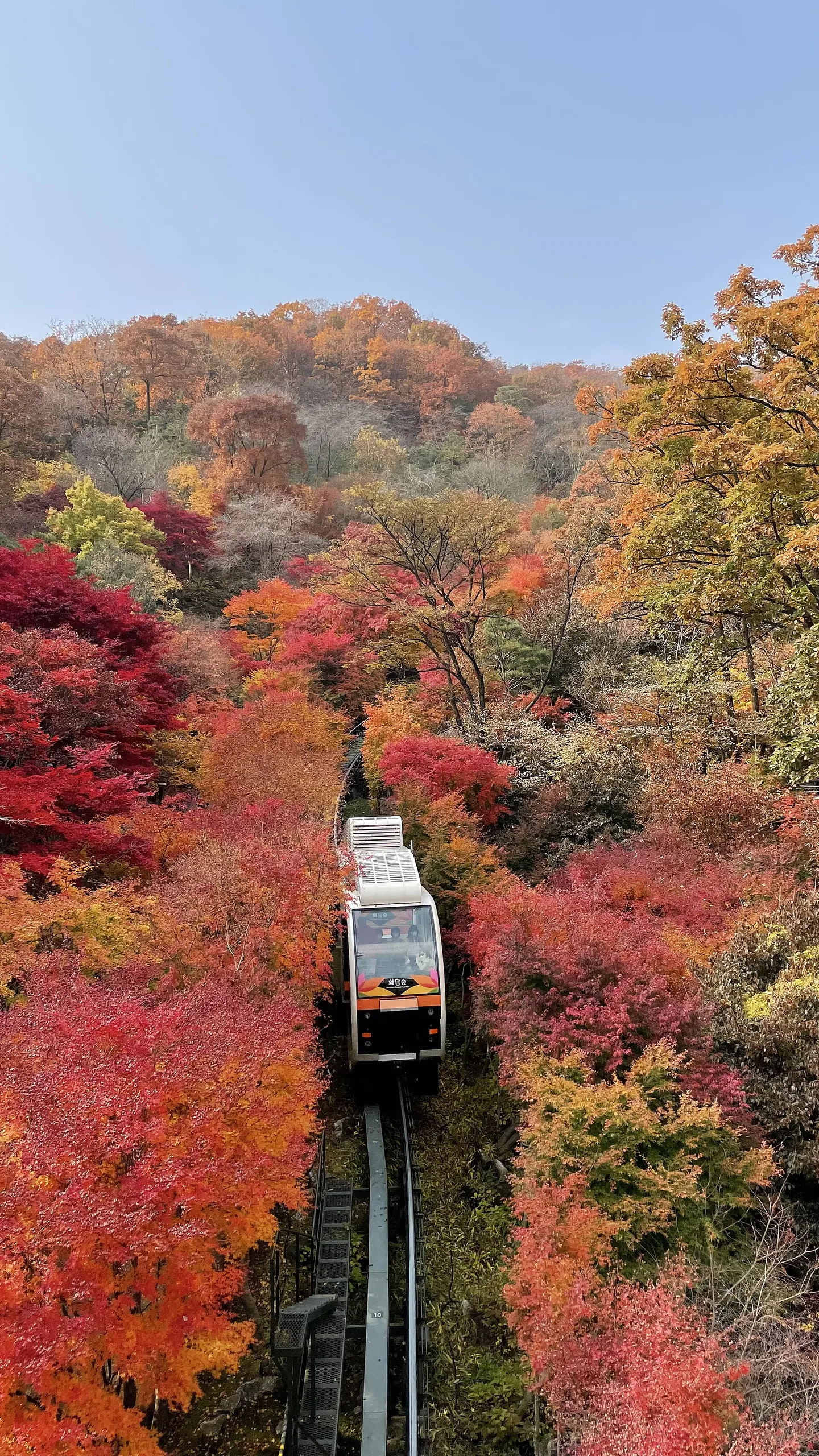
The garden’s signature is its monorail, a 1,213-metre loop from the moss garden up past the summit and down to the bonsai garden, about 20 minutes for the full circuit. Section 1 takes about five minutes and replaces a 40-minute, 1.9 km walk; Section 2 takes about ten minutes and replaces a 70-minute, 3.3 km walk. Fares (adult/child) are 5,000/4,000 won for Section 1, 7,000/6,000 won for Section 2 and 9,000/7,000 won for the loop. Korean-language bookings can add rides from Platform 1; the English guide says monorail tickets are sold at the ticket office and platforms, so expect to buy them there. When we looked at the official timetable on the morning of 25 October (Korea time), almost every Platform 1 departure that day was sold out. That is a single day’s snapshot, but if the monorail matters to you, head for the ticket office or a platform kiosk as soon as you arrive. Be at the platform ten minutes before your ride; missed rides are not refunded. Most passengers stand, and each departure carries up to 28 adults.
Walking all the themed gardens takes adults about two hours, according to the garden. Wheelchair and stroller users can see the whole garden without the monorail, though some paths are sloped or narrow, and neither is lent out. Pets are not allowed, and food, picnic mats, tripods and drones cannot be taken in; packed lunches can be eaten at a designated area beside the ticket plaza or left in a locker (1,000 won). There are no drinking fountains inside; beyond a restaurant and a café just inside the entrance, drinks come from vending machines at a few points such as the observatory.
By public transport, the garden’s directions are to take the Gyeonggang Line (Pangyo to Yeoju) to Gonjiam Station, then a taxi or Gwangju city bus 9, about 30 minutes. Seoul–Gyeonggi red buses (wide-area commuter buses) also run to Gonjiam Terminal: 1113-1 from Gangbyeon Station (about 1 hour 30 minutes), 500-2 from Gangbyeon (about 1 hour 40 minutes) and 500-1 from Jamsil Station (about 1 hour 30 minutes); from there it is again a taxi or bus 9. The official shuttle bus runs only within the resort, between Parking Lot 2, L/EW Village and the garden, so do not count on a shuttle from Seoul or Gonjiam Station.
Namhansanseong: a free walk on UNESCO-listed fortress walls
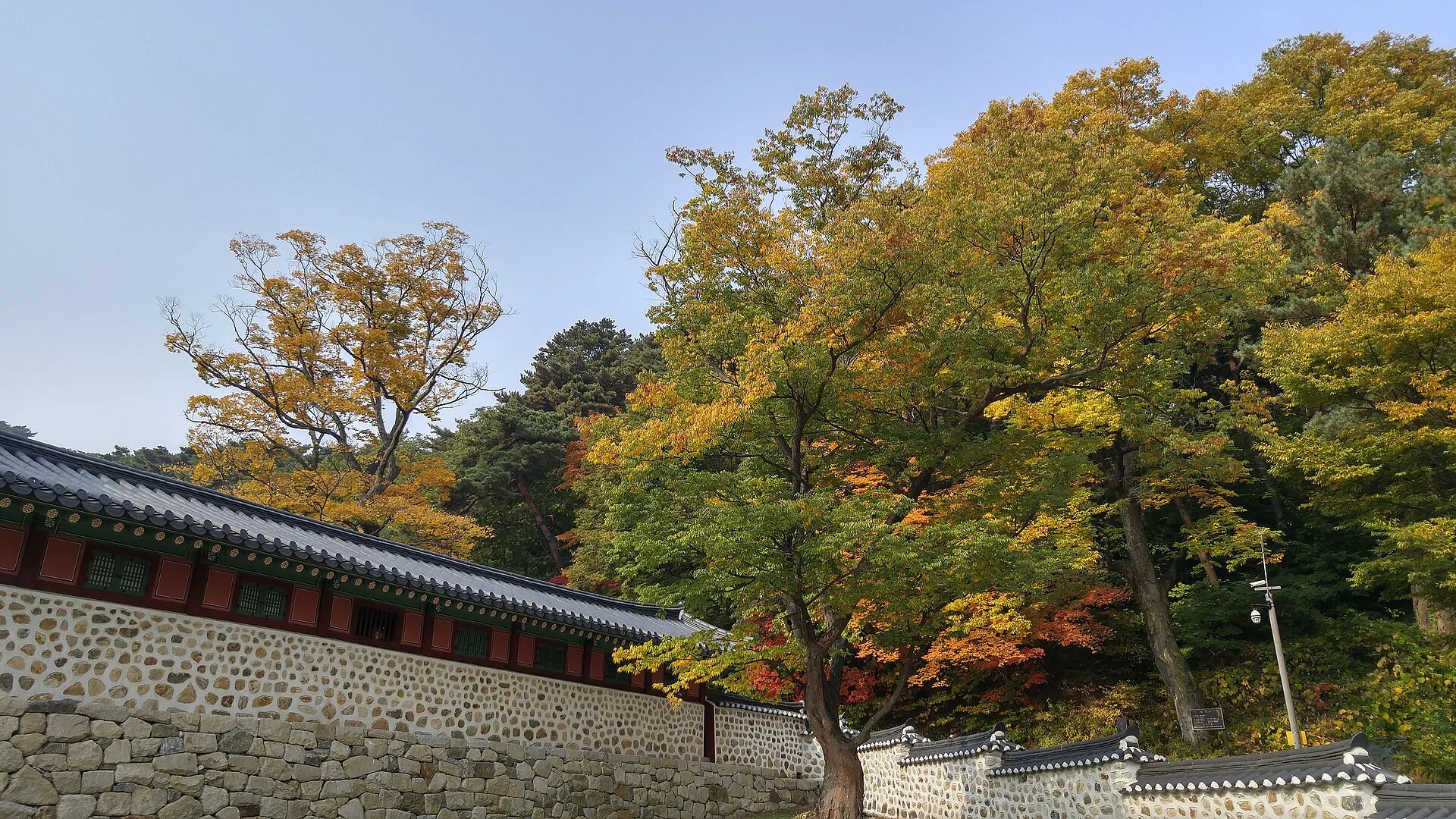
Namhansanseong is a mountain fortress about 25 km south-east of central Seoul, with 12.4 km of walls on ground that averages more than 480 metres above sea level. It was added to the UNESCO World Heritage List in June 2014. Entry to the fortress has been free since 1 January 2007, so walking the walls costs nothing. Only the Haenggung, the temporary royal palace inside the fortress, charges: 2,000 won for adults aged 19 to 64 and 1,000 won for those aged 7 to 18, with free entry for children aged 6 and under, people aged 65 and over and anyone wearing hanbok or other traditional dress. The palace opens 10:00 to 18:00 from April to October and 10:00 to 17:00 from November to March, closes on Mondays except public holidays, and sells tickets until 30 minutes before closing, so from November the last tickets are sold at 4.30 p.m. and the palace shuts at 5.
The Namhansanseong World Heritage Center sets out five walking courses. The shortest, Course 2, is about 3 km and an hour, looping from the Sanseong Rotary past Sueojangdae, the command post, and the West Gate. Courses 1 and 4, which take in the North, West and South Gates or the South and East Gates, are about 3.8 km and 1 hour 20 minutes each; Course 3 is about 5.7 km and two hours; and Course 5, a loop of the main wall (about 7.5 km of the 12.4 km total), is about 7.7 km and 3 hours 20 minutes. The park warns that some sections are steep, and asks walkers to pick a route that suits their age and fitness and to check the weather and sunset time before setting out. The center’s 2026 repair list (as of 7 April) also shows parapet repairs on the stretch between the South and East Gates until 2 November; it says nothing about closures, so follow any signs on site if you walk Course 4 or 5.
Getting there is the simplest of the three. From Jamsil, Seoul Subway Line 8 reaches Sanseong Station in 19 minutes; from there, bus 52 or 9 (and 9-1 on holidays) takes about 25 minutes to the Namhansanseong terminus. From central Seoul, the center gives 61 minutes from Euljiro 1-ga on Line 2, changing to Line 8 at Jamsil, plus 26 to 43 minutes by bus. In its autumn festival notice, the center warned that weekend crowds make parking and traffic difficult for drivers, which is a good reason to come by subway and bus at weekends.
Inside the open heritage areas, such as the Haenggung and the gate pavilions, staff may refuse entry to visitors with pets (assistance dogs excepted), packed lunches may be eaten only in designated spots, and the whole heritage area is non-smoking. There are accessible parking spaces and toilets, but we found no official information on using the wall trails with a wheelchair or stroller. And Namhansanseong is a fortress, not a garden: even in foliage season, the day is about walls, a palace and paths that climb and drop.
The Garden of Morning Calm: walk-up tickets in Gapyeong
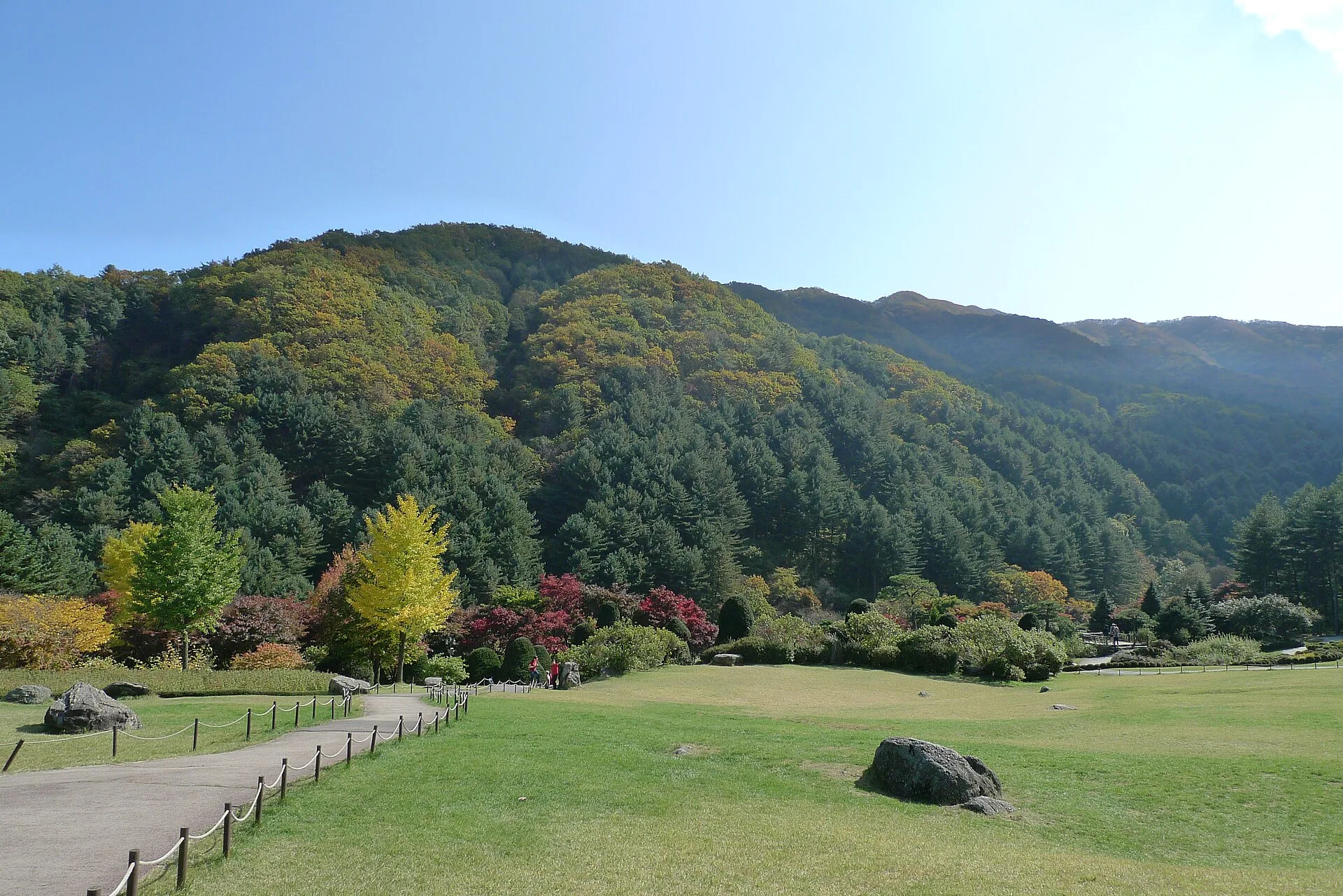
The Garden of Morning Calm lies at the foot of Chungnyeongsan mountain in Gapyeong County. According to the Korea Tourism Organization it opened in May 1996, was designed by horticulture professor Han Sang-kyeong and has twenty themed gardens with more than 5,000 plant species. Its biggest difference from Hwadam is that there is nothing to book: the garden sells tickets only at its own ticket office and tells visitors to come without an online reservation. It is open every day of the year, 08:30 to 19:00, with last entry at 18:00.
Admission is 11,000 won for adults, 8,500 won for youth and 7,500 won for children (from 36 months to the end of elementary school); seniors aged 65 and over, persons of national merit and people with disabilities pay 9,000 won with ID. Tickets are not refunded because of rain, there is no re-entry, and pets are not allowed. Unlike Hwadam, the garden lends wheelchairs (1,000-won deposit) and strollers (2,000 won, including a 1,000-won deposit) at the ticket check. Smoking, alcohol, cooking and drones are not allowed anywhere in the garden.
This autumn several events overlap. The garden’s events page lists a chrysanthemum exhibition from 17 October to 15 November and 30th-anniversary events from 3 October to 1 November. Its winter light festival, the Lighting Festival (오색별빛정원전), runs each year from early December to mid-March, when the garden opens 10:00 to 21:00 (to 23:00 on Saturdays), but the 2026–27 dates had not been posted when we checked.
Getting there means getting to Cheongpyeong first. The garden suggests the ITX-Cheongchun train from Yongsan or Cheongnyangni to Cheongpyeong Station, the Gyeongchun Line metro to the same station, or an intercity bus from Dong Seoul and other terminals to Cheongpyeong Terminal. From Cheongpyeong, city bus 30-6 runs from the terminal via Cheongpyeong Station to the garden. On the timetable the garden publishes, it leaves Cheongpyeong Terminal 17 times a day between 09:00 and 19:30, and the last bus back leaves the garden at 20:00. The Gapyeong City Tour Bus, a loop of local sights with an 8,000-won adult day pass, does not run on Wednesdays, and its last departure from the garden is 18:25. A taxi from central Cheongpyeong takes about 20 minutes without traffic, the garden says.
How to choose: booking, getting there and how much you want to walk
The first thing that separates the three is booking. If you can fix a date and a time and have a ticket, Hwadam Forest is an option; if you would rather decide on the morning after checking the weather, Namhansanseong and the Garden of Morning Calm need no booking at all. The second is the journey. Namhansanseong is the easiest to reach, by Line 8 and one bus. Hwadam needs the Gyeonggang Line or a red bus and then a taxi or bus from Gonjiam, and the Garden of Morning Calm means reaching Cheongpyeong and fitting in with a bus timetable.
The third is how much you want to walk. Even the shortest Namhansanseong course is about 3 km with steep stretches. Hwadam’s monorail can cut the walking, and its paths work for wheelchairs and strollers; the Garden of Morning Calm lends both. Check the day of the week as well: the Haenggung closes on Mondays, the Gapyeong City Tour Bus does not run on Wednesdays, and from 16 November Hwadam switches to Tuesday-to-Sunday opening (its notice lists Monday 23 November as closed). Weather matters too. Hwadam stops its monorail for thunder and lightning (with a full refund), while the Garden of Morning Calm does not refund admission for rain.
Times and prices here were checked on 24 October 2026. Hours, shuttles and bus times can change during the foliage season, so look at each place’s notices again the day before you go.
Related on Rank Three: for autumn walks inside the city, see Three Seoul autumn walks: Seoul Forest, Haneul and Olympic Park; for more day trips from Seoul in any season, Suwon Hwaseong vs DMZ tour vs Nami Island: which day trip from Seoul?; and for silver grass on mountains further afield, Autumn silver grass: Hwangmaesan, Mindungsan or Ganwoljae?.
Our three picks
- Hwadam Forest: a forest garden you enter at a booked timeHwadam Forest
For a landscaped forest garden and a monorail ride through the leaves, if you can book ahead. From 23 October to 15 November it opens every day, but entry is by advance booking only and only in your time slot; foreign visitors book through the English website’s button. Adult admission is 11,000 won, and the monorail costs 5,000 to 9,000 won extra and can sell out.
- Namhansanseong: a free walk on UNESCO-listed fortress wallsNamhansanseong
For a free, flexible walk you can decide on the day. There is no fee for the fortress, and it is Line 8 to Sanseong Station plus about 25 minutes by bus. Routes run from 3 km (about an hour) to the 7.7 km loop of the main wall, with steep stretches; the Haenggung palace (2,000 won) closes on Mondays and at 17:00 from November.
- The Garden of Morning Calm: walk-up tickets in GapyeongThe Garden of Morning Calm
For gardens and an autumn flower show with nothing to book. Tickets are sold only at the gate, it opens 08:30 to 19:00 every day, the chrysanthemum exhibition runs to 15 November, and it lends wheelchairs and strollers. The catch is the trip: ITX-Cheongchun or the Gyeongchun Line to Cheongpyeong, then bus 30-6 or the Gapyeong City Tour Bus.
Side by side
| What to check | Hwadam Forest | Namhansanseong | Garden of Morning Calm |
|---|---|---|---|
| What it is | Forest garden in Gwangju, Gyeonggi; about 16 themed gardens | UNESCO-listed fortress; 12.4 km of walls | Garden in Gapyeong; 20 themed gardens |
| From Seoul by public transport | Gyeonggang Line to Gonjiam, then taxi or bus 9 (about 30 min) | Line 8 to Sanseong, then bus 52 or 9 (also 9-1 on holidays), about 25 min | ITX-Cheongchun or Gyeongchun Line to Cheongpyeong, then bus 30-6 or city tour bus |
| Booking | Advance booking only; entry in your time slot | Not needed | Not needed (tickets at the gate only) |
| Admission (adult / youth / child) | 11,000 / 9,000 / 7,000 won; usual discounts suspended in Oct–Nov | Walls free; Haenggung 2,000 / 1,000 won | 11,000 / 8,500 / 7,500 won |
| Paid extras | Monorail 5,000–9,000 won; Hwadamchae 5,000 won | Haenggung only (free for 65+ and 6 and under) | Wheelchair deposit 1,000 won; stroller 2,000 won |
| Hours, late Oct to mid Nov | Daily 08:00–18:00; to 17:00 from 2 Nov (last entry an hour before) | Walls: no official hours; Haenggung 10:00–18:00 (to 17:00 from Nov) | Daily 08:30–19:00 (last entry 18:00) |
| Closed | None to 15 Nov; closed Mon 23 Nov (per notice) | Haenggung on Mondays (except holidays) | Open all year |
| Walking | About 2 hours on foot; monorail loop about 20 min | Courses of about 3 km (1 h) to 7.7 km (3 h 20); steep parts | No official distances given |
| Wheelchairs and strollers | Whole garden without the monorail; none lent | No official trail information; accessible parking and toilets | Lent at the ticket check |
| Pets | Not allowed | May be refused in heritage areas | Not allowed |
| Autumn 2026 events | Peak season 23 Oct–15 Nov | Autumn festival ends 25 Oct | Chrysanthemum exhibition 17 Oct–15 Nov |
| Peak forecast (Arboretum model, for reference) | 31 Oct | 30 Oct | 1 Nov |
Where I would go first
For a first foliage day trip from Seoul I would start with Namhansanseong. It is free, it is a subway ride and one bus away, and you can choose anything from an hour’s loop to a circuit of the main wall on the day, depending on how you feel. If you don’t mind sticking to a booked time slot and want to see a forest of colour with the help of a monorail, choose Hwadam Forest, but book your entry first and buy a monorail ride as soon as you arrive. If you would rather turn up without a booking and see the gardens and the chrysanthemum show together, the Garden of Morning Calm is the one; just check the bus times from Cheongpyeong. Wherever you go, peak dates are forecasts, so look at the notices and the weather again the day before.


