Give yourself one free day outside Seoul and three names come up again and again: Suwon Hwaseong Fortress, the DMZ and Nami Island. All three can be reached by public transport, but they are very different days. In Suwon you walk an 18th-century royal fortress at your own pace; the DMZ tour is a fixed, ID-checked visit to the edge of the line that divides the Korean peninsula; Nami Island is a river island you reach by ferry for an unhurried walk under the trees. This comparison is built from official pages—UNESCO, the Suwon Cultural Foundation, Suwon and Paju city governments, the Ministry of Unification, the Korea Tourism Organization and Nami Island’s operator—checked on 18 October 2026 (19 October in Korea). It is a research piece, not a trip report, and prices and rules change, so check again before you go.
Check the day of the week and your passport first
Two practical filters narrow the choice before taste comes into it. The first is the day of the week. Paju City’s DMZ Peace Tour is closed every Monday, on public holidays that fall on weekdays, and on the days of Seollal and Chuseok themselves. Suwon’s fortress trolley also takes Mondays off. By contrast, the Hwaseong walls are open all day, every day; Hwaseong Haenggung palace has no closing day; and Nami Island admits visitors 365 days a year. If Monday is your only free day, leave the DMZ out.
The second is paperwork and flexibility. For the DMZ tour, foreign visitors must show an original passport or alien registration card to buy a ticket; copies, phone photos and expired passports are refused. Tickets are sold at Imjingak from 09:00 to 14:30, only once your whole group has arrived, and you move on a shuttle bus with fixed departure times, so the day is hard to stretch or shorten. Suwon and Nami need no booking: you turn up, walk as long as you like and leave when you are done.
Once you are past those filters, decide what you want to see. Choose Suwon for Joseon-era architecture and the story of King Jeongjo, the DMZ to stand at the edge of the divided peninsula, and Nami for a river, trees and a slower pace. The sections below take them in turn.
Suwon Hwaseong: King Jeongjo’s fortress, open to walk any time
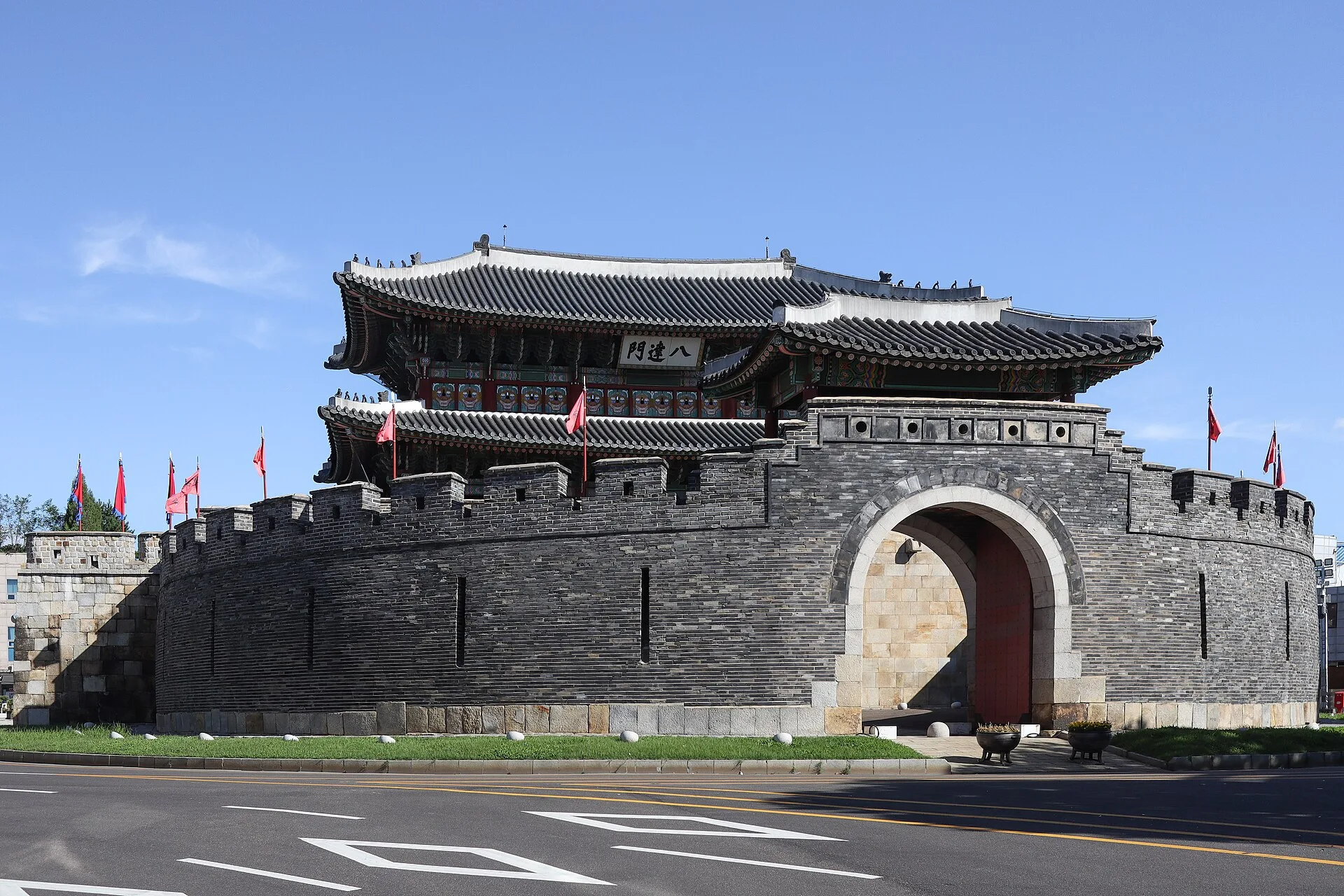
Hwaseong is the fortress King Jeongjo of the Joseon dynasty began in January 1794 and completed in September 1796. UNESCO, which inscribed it as a World Heritage site in 1997, says Jeongjo built it after moving the tomb of his father, Crown Prince Jangheon, to Suwon, to house his remains, for defence and as a new political base; the design was by the scholar Jeong Yakyong. The walls run for 5.74 km around 130 hectares, over flat ground in the east and up Paldalsan hill in the west. Paldalmun in the south and Janganmun in the north are big two-storey gatehouses; Hwaseomun in the west and Changnyongmun in the east complete the four main gates.
The best thing about Suwon is how little it asks of you. According to the Suwon Cultural Foundation, the fortress is open-access: the walls are free, open all year and can be walked at night. Inside them, Hwaseong Haenggung is the temporary palace where Jeongjo stayed when he visited his father’s tomb, and where in 1795 he held a banquet for his mother Lady Hyegyeong’s 60th birthday. All but two of its buildings were torn down in the early 20th century, and it has been rebuilt since 1996. The palace opens 09:00–18:00 every day (last entry an hour before closing) and costs 2,000 won for adults. Visitors in hanbok, including modernised hanbok, get in free, as do people aged 65 or over with ID (the page does not say whether this covers foreign visitors) and children aged six or under; a combined ticket that adds two Suwon museums costs 4,000 won.
If you would rather not walk the whole circuit, there are other ways to see it. The Hwaseong Eocha trolley leaves from Yeonmudae Tuesday to Sunday, 09:40–17:00, and loops past Hwahongmun, Janganmun, Hwaseomun and Maehyanggyo before returning; adults pay 6,000 won. You can get off at some stops but cannot re-board, and it does not run in rain or snow. At Yeonmudae you can also try traditional archery, 10 arrows for 3,000 won (age seven and up). The foundation’s official guides lead tours in English, Japanese and Chinese; individual visitors need at least four people and sign up at a tourist information booth. The Korea Tourism Organization’s Odii app also has audio guides for the fortress and palace (check the languages in the app). For walkers, VisitKorea describes a 5.1 km route of two to three hours from Hwaseomun past Janganmun, Hwahongmun and Changnyongmun, through the traditional markets around Paldalmun and over Paldalsan to the palace.
Getting there is straightforward. Suwon City’s directions start from Suwon Station, on subway Line 1 and the Suin–Bundang Line: from the Maesan Market stop by exit 9, city buses including 2-2, 36, 39, 400 and 999 run to the Paldalmun stop. From Gangnam Station, express bus 3000 leaves from outside the Nara Building by Line 2 exit 7 and stops at Paldalmun. The tourist information centre near Suwon Station exit 4 is open 09:00–18:00 with English, Chinese and Japanese interpretation.
The drawbacks are mostly about legs and timing. The western side climbs over Paldalsan, so a full lap involves hills. This year’s 63rd Suwon Hwaseong Cultural Festival ran from 3 to 11 October and is already over; instead, the palace’s ‘Dalbit Hwadam’ night opening continues until 1 November on Fridays to Sundays and public holidays, 18:00–21:30 (last entry 21:00). K-drama fans can add Haengnidan-gil, the streets running from Hwaseo Park to Hwahongmun, which VisitKorea says has appeared in Our Beloved Summer (2021), Extraordinary Attorney Woo (2022) and Lovely Runner (2024).
Paju DMZ Peace Tour: a fixed three hours at the border
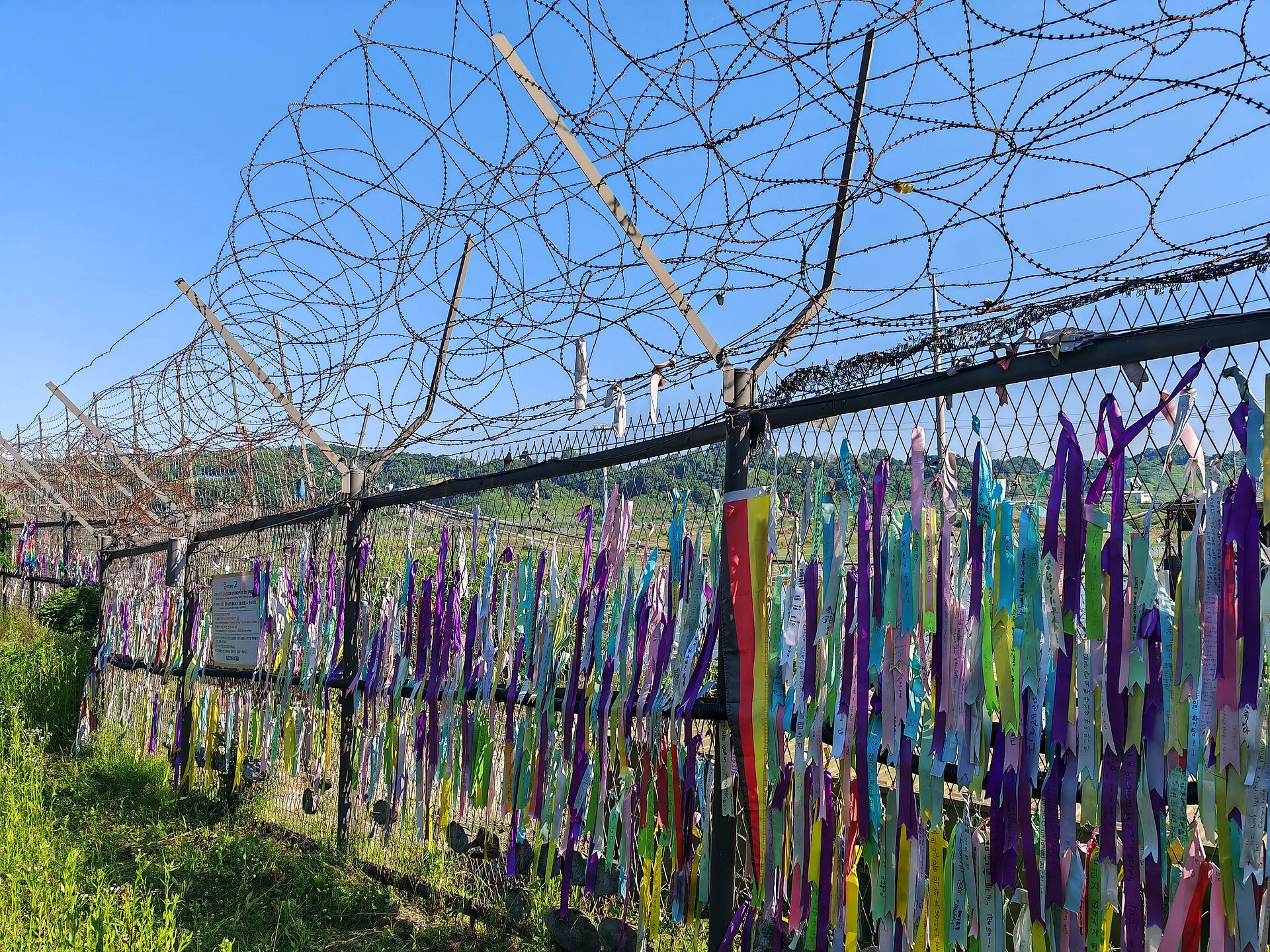
Of the public DMZ programmes I checked, the one a foreign visitor can buy a ticket for on their own is Paju City’s DMZ Peace Tour, which the city has run since 2002. The individual A course takes about three hours: a shuttle bus from Imjingak to the Third Infiltration Tunnel, Dora Observatory and Tongilchon village, and back. Imjingak itself lies south of the Civilian Control Line, so anyone can visit it, but crossing the Imjin River needs military permission, which is what the tour provides. To reach Imjingak, take the Gyeongui–Jungang Line to Imjingang Station, then walk about 20 minutes or take village bus 058A or 058B; check the train timetable to Imjingang Station before you set out.
Paju City describes the Third Tunnel, discovered in 1978, as 1,635 m long and 2 m high and wide, 52 km from Seoul, and big enough to move 30,000 soldiers an hour. You can walk down or, on the 9:20, 10:30, 11:30, 13:00 and 14:00 departures, ride the tunnel monorail, which has been running again since 29 September 2026. Dora Observatory is the northernmost South Korean observatory for looking into the North; it moved into a new building in October 2018, and from it you can see Kaesong and, on clear days, the Kaesong Industrial Complex.
Adults pay 9,200 won walking into the tunnel or 12,200 won with the monorail; both include the 4,200-won shuttle bus. School students pay 7,000 won (9,500 with the monorail), and people aged 65 or over 6,200 won (7,700). Under the city’s ordinance, foreigners are not eligible for reductions, so ask at the ticket office whether a student or senior fare applies to you. On weekdays (Tuesday to Friday) there are ten individual departures between 9:20 and 14:40, and fourteen at weekends. Only part of each departure can be booked online; the rest is sold at Imjingak on the day, and Paju warns that sessions often sell out early. The booking site is in Korean, and its English service is listed as in preparation.
The rules are strict. Photography and video, drones included, are banned throughout the tour course, and the city provides no guide. The tunnel is narrow and steep, so wheelchair users, people with limited mobility, people with blood pressure or breathing problems and anyone who has been drinking may be turned away. Above all, every session can be stopped without notice for security threats or bad weather, and bookings can be cancelled. When I checked on 18 October there was no suspension notice on Paju City’s site; the latest notice was dated 23 September.
If you were hoping for Panmunjom and the Joint Security Area, adjust your plans. The Ministry of Unification says its Panmunjom tours have been suspended since a US soldier crossed into the North on 18 July 2023 and that dates will be announced when they resume. Even when running, its general tours are open only to South Korean nationals aged eight and over, not to groups or foreigners. The DMZ Peace Trail walks booked through the Korea Tourism Organization’s Durunubi site are also limited to South Korean nationals aged eight and over. I did not assess commercial tour packages.
Nami Island: five minutes by ferry, then an easy riverside walk
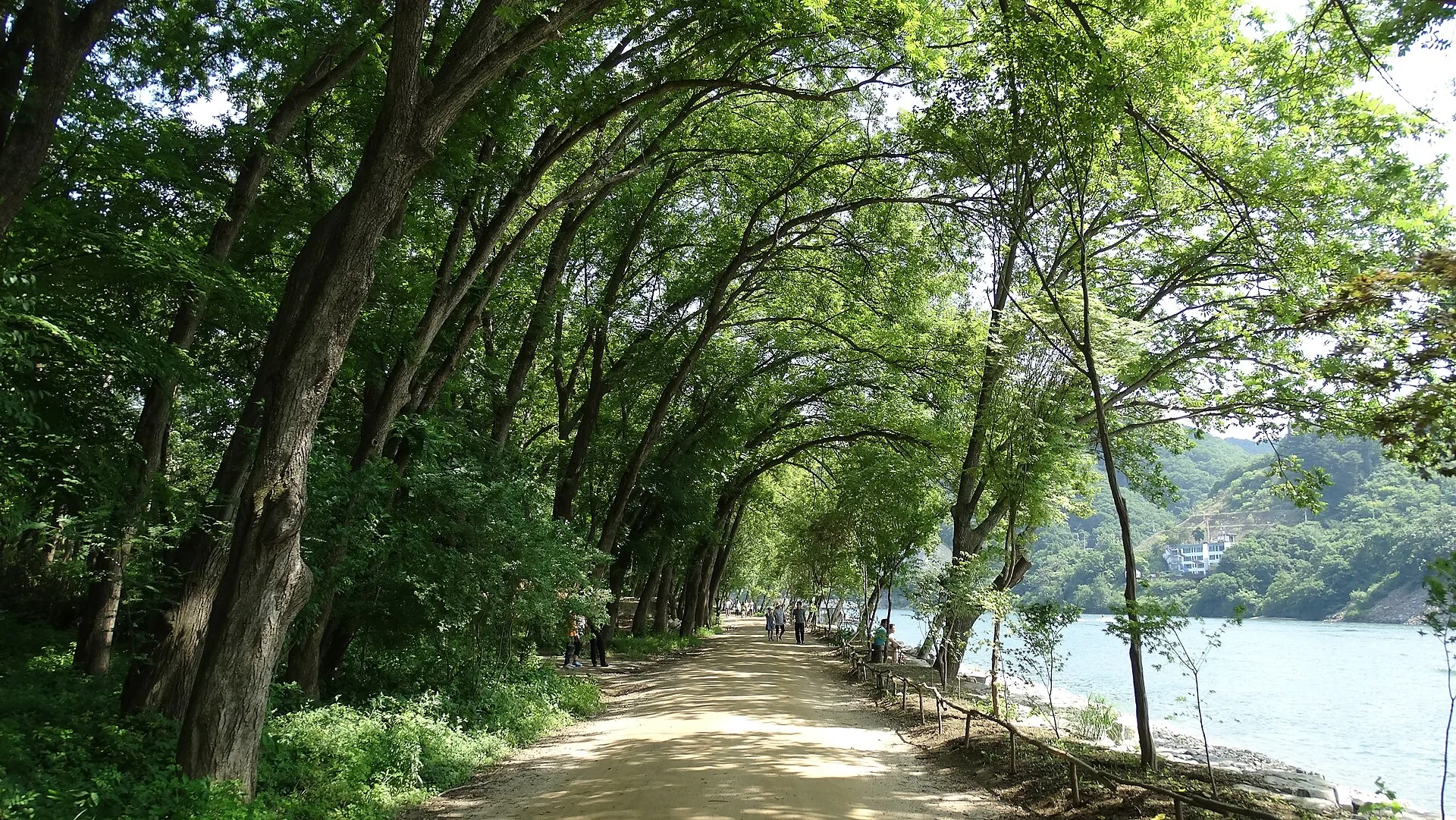
Nami Island sits in the Bukhan River. It officially belongs to Chuncheon in Gangwon Province, but you board the ferry at the Nami Island wharf in Gapyeong, Gyeonggi Province, and the crossing takes about five minutes. According to the operator’s history page, the founder, Min Byeong-do, began planting trees on the island in 1965, and in 2006 the company declared it the “Naminara Republic”, a playful theme that still runs through the place. VisitKorea notes that the island first became popular as a drama filming location before becoming one of Korea’s best-loved destinations.
Admission includes the return ferry: 19,000 won for adults; 16,000 won for middle and high school students and people aged 70 or over, among others; and 13,000 won for children from 36 months to elementary school age. Under-36-month-olds with a guardian go free, and there is no separate price for foreigners. Tickets bought before 08:00, or after 18:31 from April to November, are charged at 13,000 won. The island is open 365 days a year and ferries normally run from 08:00 to 21:00. This autumn, from 18 September to 22 November 2026, the first boat leaves at 07:30 every day and the last runs at 21:30 on Fridays, weekends and public holidays. A July 2024 notice on the operator’s board says ferries run as normal in rain; for other weather, check the notices on the day.
The train is the simple way there. Nami Island’s directions give about 60 minutes by ITX-Cheongchun from Yongsan to Gapyeong, about 42 minutes from Cheongnyangni, or about 50 minutes on the Gyeongchun Line from Sangbong. Gapyeong Station is about 1.5 km from the wharf: roughly 20 minutes on foot, or about five minutes by city bus 10-4 or taxi. A designated operator, Ktourstory, also runs a daily shuttle from Seoul, leaving Hongik Univ. Station exit 4 at 9:00, Namsan Yejang (Myeong-dong) at 9:40 and Dongdaemun History & Culture Park Station exit 9 at 9:50, arriving at 11:30 and returning from the island at 16:30. I did not check its fare.
The trade-off is that Nami is a place to unwind rather than to learn. If you want history, it can feel thin, and how good the day is depends heavily on the weather and the season. If you are chasing autumn colour, watch the operator’s notice board, where it posts colour updates; the official site gives no peak date. You can also arrive by zip wire (55,000–58,000 won, return ferry included); official pages list different hours, so check before you go.
Planning the day, and what to check before you go
By day of the week: on a Monday, choose between Suwon (minus the trolley) and Nami. From Tuesday to Sunday (except weekday public holidays and Seollal or Chuseok day), with your original passport, all three are possible. For the DMZ, aim to reach Imjingak early, because ticket sales end at 14:30 and sessions sell out. Suwon works well as an afternoon: walk the walls, then finish at the palace night opening, which runs on Fridays to Sundays and public holidays up to and including 1 November. At Nami during the autumn extension (to 22 November), the first boat is at 07:30, and tickets bought before 08:00 cost 13,000 won.
On the morning you travel, check the official page again—especially for the DMZ, which can be stopped on the day. If you need help in English, the Korea Tourism Organization’s 1330 Korea Travel Helpline (+82-2-1330) answers questions, with text chat in several languages. Transit cards for the subway and buses, and the difference between KTX and ITX trains, are covered in the links below.
Related on Rank Three: for a palace day inside Seoul, see Which Seoul palace first? Gyeongbokgung, Changdeokgung or Deoksugung; trains are compared in KTX vs SRT vs ITX: SRT is now KTX, so which Korean train should you book?, and transit cards in T-money vs WOWPASS vs Climate Card: which transit card for Korea?.
Our three picks
- Suwon Hwaseong: King Jeongjo’s fortress, open to walk any timeSuwon Hwaseong Fortress
No booking and no ID check; the walls are free and open every day of the year. Take subway Line 1 or the Suin–Bundang Line to Suwon Station, then a city bus to Paldalmun. Hwaseong Haenggung costs 2,000 won (free in hanbok), with a Friday-to-Sunday night opening until 1 November. The western side climbs Paldalsan, and the trolley stops on Mondays and in rain or snow.
- Paju DMZ Peace Tour: a fixed three hours at the borderPaju DMZ Peace Tour
About three hours from Imjingak to the Third Tunnel and Dora Observatory for 9,200 won (12,200 won with the tunnel monorail). Bring your original passport or alien registration card; tickets are sold at Imjingak 09:00–14:30 and often sell out. Closed on Mondays and weekday public holidays, no photos on the course, and the Ministry of Unification’s Panmunjom tours have been suspended since July 2023.
- Nami Island: five minutes by ferry, then an easy riverside walkNami Island
19,000 won including the return ferry, open 365 days. About 60 minutes by ITX-Cheongchun from Yongsan to Gapyeong, then about five minutes by bus or taxi to the wharf. In the autumn extension to 22 November the first boat is at 07:30. Best for a scenic, easy day rather than a history lesson.
Side by side
| Item | Suwon Hwaseong | Paju DMZ Peace Tour | Nami Island |
|---|---|---|---|
| What you see | Fortress walls built 1794–1796 (5.74 km), four main gates, Hwaseong Haenggung palace | Imjingak, the Third Tunnel (1,635 m), Dora Observatory, Tongilchon village | A river island with tree-lined paths, five minutes by ferry |
| Adult ticket (Oct 2026) | Walls free; palace 2,000 won (4,000 won combined ticket) | 9,200 won walking, 12,200 won with monorail (shuttle bus included) | 19,000 won including the return ferry |
| Hours and closed days | Walls always open; palace 09:00–18:00 daily, last entry 17:00 | Tickets 09:00–14:30; closed Mondays, weekday public holidays, Seollal and Chuseok day | Open 365 days; ferries 08:00–21:00 (autumn extension: from 07:30, to 21:30 Fri–Sun and holidays) |
| Booking and ID | None needed (trolley seats can be booked online) | Original passport or alien registration card required; tickets issued once the whole group arrives; only part of each session online | Buy at the wharf or online; no ID rule listed |
| From Seoul | Line 1 or Suin–Bundang Line to Suwon Station, exit 9, city bus to Paldalmun; or bus 3000 from Gangnam | Gyeongui–Jungang Line to Imjingang Station, then about 20 min on foot or village bus 058A/058B | ITX-Cheongchun Yongsan–Gapyeong about 60 min, then about 5 min by bus 10-4 or taxi |
| Can it be called off? | Walls and palace open daily; trolley and archery stop in rain or snow | Yes: any session can stop without notice for security or weather | Ferries run in rain (operator notice, July 2024); check notices on the day for other weather |
| Help in English | Guided tours in English, Japanese, Chinese (four or more people); Odii audio guide (check languages in the app) | No guide from the city; English website in preparation | Official English website |
| Best for | History and architecture at your own pace | Seeing the divided peninsula up close | A scenic, unhurried day |
Where I would go first
For a first day trip from Seoul I would pick Suwon Hwaseong. It is the most forgiving of the three: the walls are free and open every day, you need no booking or passport, the subway and a city bus get you there, and the UNESCO-listed fortress shows a different side of Joseon from Seoul’s palaces. Choose the Paju DMZ tour if the divided peninsula is the reason you came, and plan for it: a Tuesday-to-Sunday date, your original passport, an early start for Imjingak and a day without photos. Choose Nami Island for an easy, scenic day by train and ferry, especially in the autumn colour season. Whichever you pick, check the official page on the morning you go.


