After the train or plane ticket, the next decision for a first trip to Busan is where to sleep, and the same three names keep coming up: Haeundae, Seomyeon and Nampo-dong. Google’s own suggestions put the question exactly that way, from “where to stay in busan first time” to “seomyeon or haeundae”. All three are on the metro, but they sit in very different places: Haeundae by the beach in the east, Seomyeon in the middle where the two main lines cross, and Nampo-dong by the old harbour, two stops from KTX Busan Station. This guide compares the areas, not hotels, so there are no hotel names or prices. It is a research piece built from official sources (Visit Busan, the Busan city government, Busan Transportation Corporation, the Korea Tourism Organization, Korea Airports Corporation, Korail, the Haeundae-gu district office and the festival organisers), checked on 23 October 2026 (24 October in Korea), not a stay report. Where no official journey time exists, the times are worked out from the metro’s station timetables.
Start with how you arrive: Busan Station, Gimhae Airport or Bujeon
Start with where you arrive. KTX trains on the Gyeongbu Line from Seoul end at Busan Station, and Busan city’s directions put metro Line 1 two minutes away on foot, underground in front of the station plaza. From there, Nampo is two stops south, four minutes by the timetable. Seomyeon is six stops north, 10 to 12 minutes. There is no direct metro line to Haeundae: you ride Line 1 to Seomyeon, change to Line 2 and go 16 more stops (30 to 33 minutes), so allow roughly 45 to 55 minutes including the change. These riding times are our own sums from the station timetables of Busan Transportation Corporation (Humetro), which runs the metro, not an official journey time.
From Gimhae International Airport, the Busan–Gimhae Light Rail takes you to Sasang, where you change to Line 2. The Korea Tourism Organization (VisitKorea) gives about 30 minutes to Seomyeon, 50 to Gwangalli and 70 to Haeundae this way, and about 40 minutes to Seomyeon or Bujeon and 70 to Gwangalli or Haeundae by taxi. Korea Airports Corporation lists two airport limousine routes. The Seomyeon and Bujeon bus costs 6,000 won and runs from 07:20 to 21:30, about every 70 minutes. The Haeundae and Gijang bus costs 9,500 won, runs from 07:10 to 21:40 and stops at Shinsegae Centum City, BEXCO, the Dongbaekseom entrance and Haeundae Beach, among others. Both take credit cards only; cash and transit cards are not accepted. No limousine goes to Busan Station or Nampo-dong, so reaching Nampo from the airport by rail means two changes, at Sasang and at Seomyeon.
There is a third way in as well. Korail’s timetable from 1 November lists nine KTX-Eum trains a day (ten at weekends) from Seoul and Cheongnyangni along the Jungang Line to Bujeon; four of them also stop at Sinhaeundae and one at Centum, both Korail stations rather than the metro’s Haeundae and Centum City stations. Metro Line 1 has a Bujeon Station too, one stop north of Seomyeon, but it is a different station from Korail’s, and we could not confirm the walk between the two. Whichever way you come, decide how you will arrive before you pick an area: the trip from the train or plane to your room, with luggage, is where the three differ most.
Haeundae: the beach on your doorstep, the station a long ride away
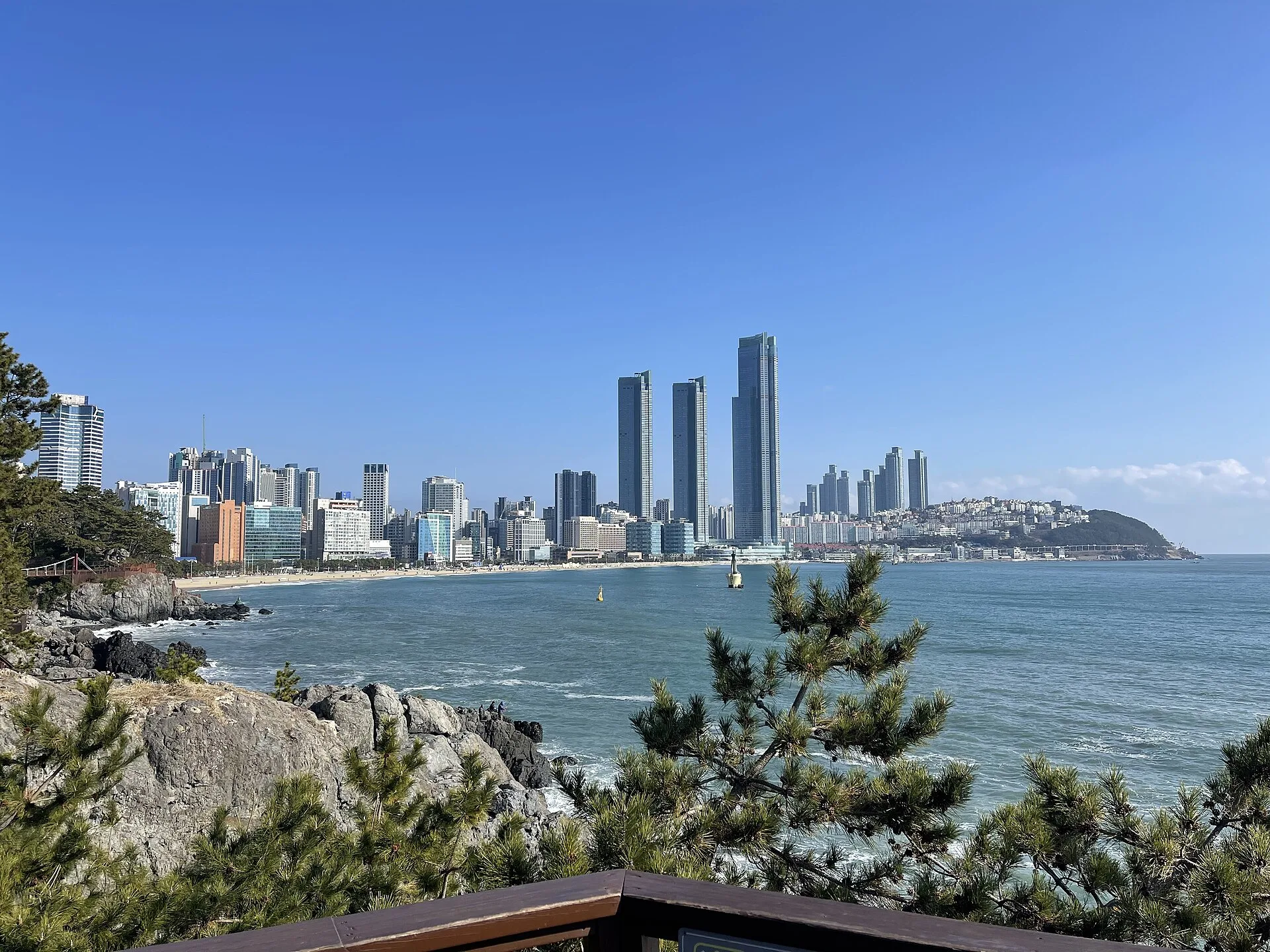
Visit Busan, the city’s official tourism site, calls Haeundae Beach Busan’s best-known beach: 1.5 km of white sand that is busy all year, not only in summer. Walk to the end of the beach and you reach Dongbaekseom, a wooded former island with a coastal trail. The metro stop Visit Busan points to is Haeundae Station on Line 2, a 15-minute walk from exit 5 to the beach, and about 5 minutes from exit 3 to Haeundae Traditional Market, which is also 5 minutes from the sand, is open from 09:00 to 22:00 and is known, Visit Busan says, for affordable gukbap (rice soup). Visit Busan also mentions performances and events at Gunam-ro Culture Square every weekend.
There is more to do beyond the sand. Haeundae Blueline Park runs small “sky capsule” cars over the 2 km from Mipo to Cheongsapo and a beach train along 4.8 km of the old Donghae Nambu railway, from Mipo at the east end of Haeundae via Cheongsapo to Songjeong. Three stops west on Line 2, Centum City is home to Shinsegae Centum City and the Busan Cinema Center, which hosted this year’s Busan International Film Festival events. Gwangalli Beach is six stops away at Gwangan Station, though it belongs to Suyeong-gu rather than Haeundae-gu. A tourist information centre stands by the beach, open from 08:30 to 19:00.
The drawbacks are distance and season. Seomyeon is 30 to 33 minutes away, Busan Station is 40 to 45 minutes of riding plus a change, and the airport is about 70 minutes by rail. The swimming season is short: Haeundae-gu set the 2026 season at 26 June to 15 September, from 09:00 to 18:00, so for most of the year this is a beach for walking. Mind the last trains too. The last Line 2 train towards Haeundae leaves Seomyeon at 00:00 and reaches Haeundae at 00:32, but the last train from Haeundae through Seomyeon leaves at 23:29; a 23:46 departure goes only as far as Gwangan.
Seomyeon: the crossroads in the middle
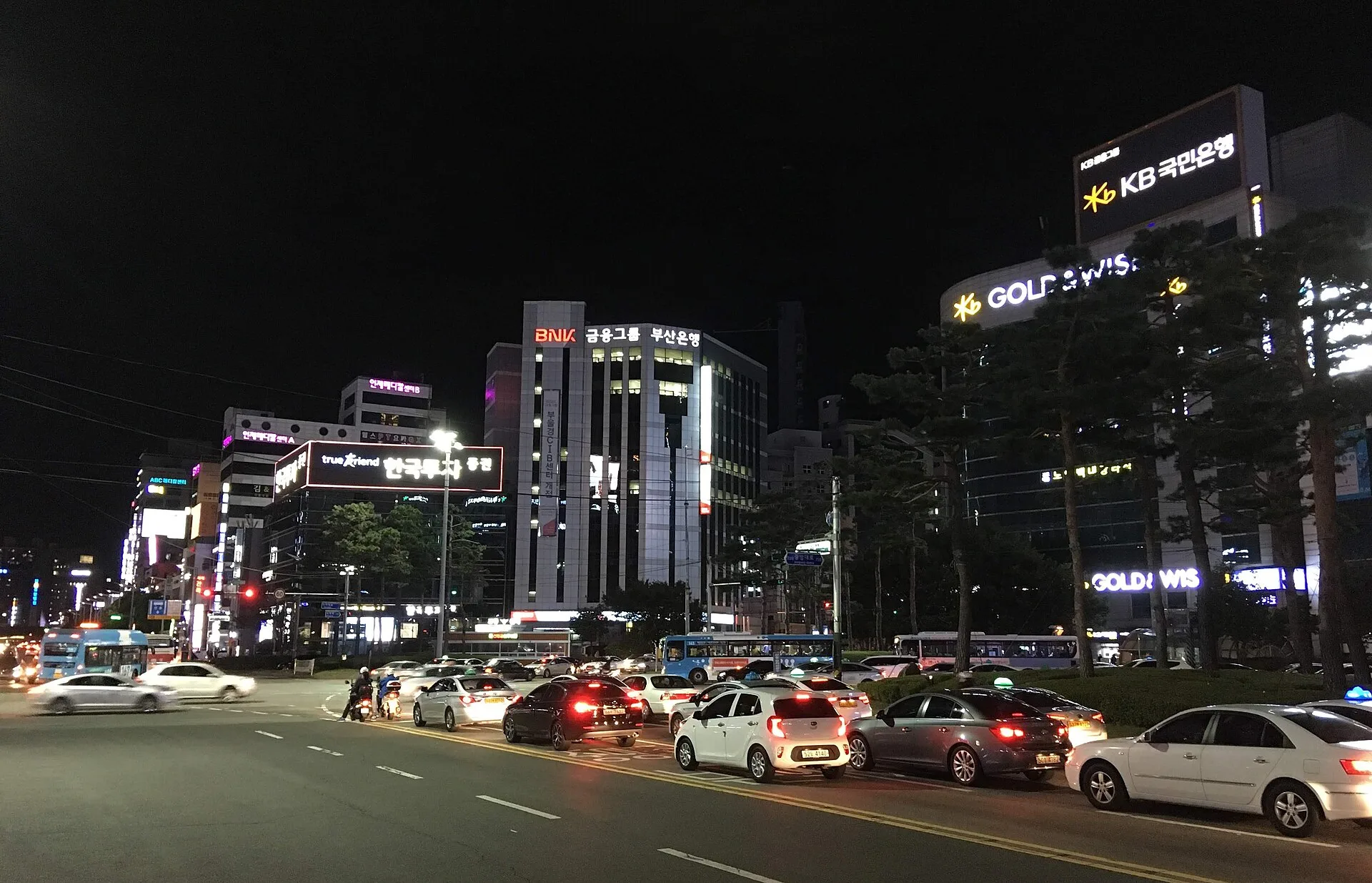
“The largest downtown in Busan is no doubt Seomyeon,” says Visit Busan, adding that its streets are so busy, day and night, that you have to take care not to bump into people. Seomyeon Station is the interchange between Line 1 (station 119) and Line 2 (219), and that makes it the most even base of the three. By the station timetables it is 10 to 12 minutes to Busan Station (six stops), 14 to 16 minutes to Nampo (eight) and 30 to 33 minutes to Haeundae (sixteen). From the airport it is about 30 minutes by rail, and the 6,000-won airport limousine stops at Seomyeon Station.
Food and sights are close by. Visit Busan describes Seomyeon Market, nearly 60 years old, as always crowded with people who come to its food alley for noodle soup, old-fashioned fried chicken and pork and rice soup. One stop along Line 2, a six-minute walk from exit 7 of Jeonpo Station, is Jeonpo Café Street, and next to it Jeonpogonggu-gil, alleys of old tool shops turned into cafés and boutiques; Visit Busan notes that the café street was picked for The New York Times’ list of 52 destinations of the year in 2017. One stop north on Line 1, three minutes from exit 1 of Bujeon Station, is Bujeon Market, which Visit Busan describes as a lifeline for refugees after the Korean War; it opens from 07:00 to 19:00, depending on the shop.
The drawbacks are the lack of sea and the crowds that Visit Busan itself warns about. Its list of tourist information centres does include one in Busanjin-gu, the district Seomyeon belongs to: the Busanjin Travel Lounge at 787 Gaya-daero, but it opens only on weekdays, from 10:00 to 18:00 (closed 12:00 to 13:00 and on public holidays). On the other hand, getting back at night is simple: from Haeundae or Nampo you ride straight back to Seomyeon without changing. Just note your own last trains, 23:29 from Haeundae and 23:45 from Nampo; the midnight departures from Seomyeon towards Nampo and Haeundae are the last trains home for people staying there.
Nampo-dong: the old harbour downtown two stops from Busan Station
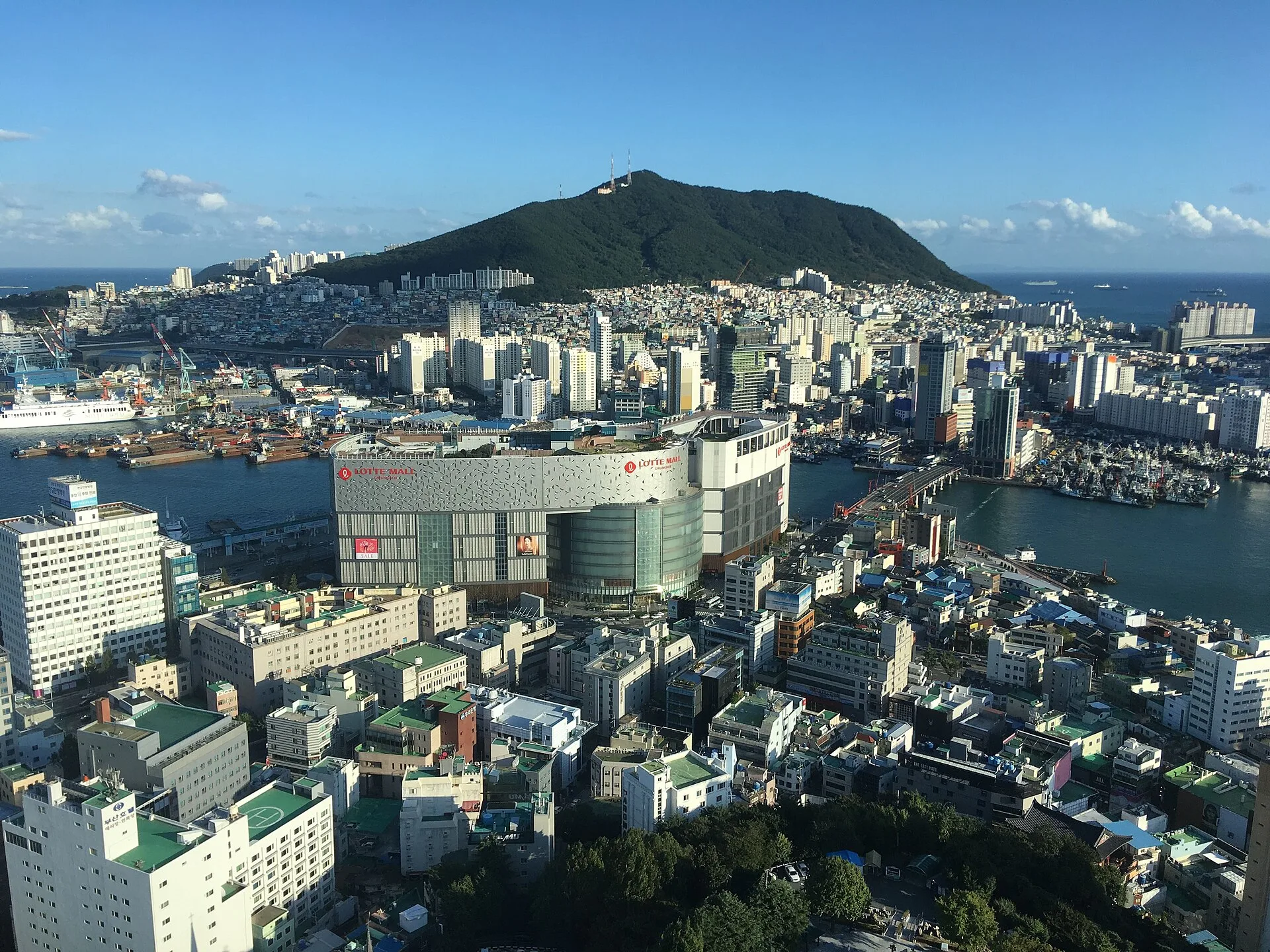
Visit Busan presents Nampo-dong and Jagalchi as Busan’s historic downtown. Its walking route links Jagalchi Market on the South Port, the Yeongdo Bridge (Yeongdodaegyo) to Yeongdo island, BIFF Square, the Gwangbok-ro shopping street and Yongdusan Park, and it notes that all the stops are within walking distance of one another. Nampo Station on Line 1 is two stops (four minutes) from Busan Station, with Jagalchi Station right next to it. If you arrive by KTX and want to drop your bags and start sightseeing, this is the closest of the three.
At Jagalchi Market you choose live fish from the tanks on the first floor of the market building and have it prepared at a second-floor restaurant; from the seventh floor, one more flight of stairs takes you to an open observation deck. The market opens from 05:00 to 22:00, but Visit Busan’s two pages disagree on which Tuesdays it closes (the first and third, or the first, third and fifth), so check before a Tuesday visit. BIFF Square is where the Busan International Film Festival began; its stalls sell seed hotteok, tteokbokki and fish cakes, generally from about 10:00 to 22:00. An escalator from Gwangbok-ro climbs to Yongdusan Park, where Busan Tower opens from 10:00 to 22:00. And Bupyeong Kkangtong Market, next to Gukje Market, became Korea’s first permanent night market in 2013; the night market runs from 19:30 to midnight every day except traditional holidays.
Help and day trips are close at hand. The Busan Tourist Information Center at 31 Gudeok-ro (09:00 to 18:00) has English-, Chinese- and Japanese-speaking staff and lends strollers and wheelchairs free of charge. For Gamcheon Culture Village, ride two stops to Toseong, take village bus Saha 1-1, Seo-gu 2 or Seo-gu 2-2 from exit 6 to Gamjeong Elementary School and walk five minutes; Visit Busan lists hours of 09:00 to 18:00 from March to October and 09:00 to 17:00 from November to February. People live there, so keep your voice down and leave the drone at home. For Taejongdae on Yeongdo, buses 17, 88 and 101 go from exit 7 of Busan Station; the park’s Danubi train does not run on Mondays.
The drawbacks are the distance to the eastern beaches and the airport, and the slopes at the sights nearby. Getting to Haeundae takes 14 to 16 minutes to Seomyeon and then another 30 to 33, and no airport limousine comes this way. Gamcheon grew up on a hillside that refugees cultivated during the Korean War, and Yongdusan Park sits on a hill you reach by escalator, so expect slopes. Coming back late, the last train from Seomyeon leaves at 00:00 and reaches Nampo at 00:16.
Before you book: the station, the calendar and the last train
Area names in listings can stretch. A “Haeundae” room may be near Jung-dong, Jangsan or Centum City; a “Seomyeon” one may be over by Jeonpo or Bujeon; a “Nampo-dong” one may be nearer Jungang or Jagalchi Station. Before you book, find the nearest metro station and exit on a map: that tells you more about your days than the name of the neighbourhood.
Know the fares. According to Humetro, an adult pays 1,600 won (zone 1) or 1,800 won (zone 2, for longer trips) with a transit card or the metro app, and 1,700 or 1,900 won for a QR single ticket; children aged 6 to 12 ride free on a transit card once their date of birth is registered (at a convenience store or on the card issuer’s website). The “부산도시철도” (Busan Metro) app sells one-day (6,000 won) and three-day (13,000 won) passes for unlimited metro rides, which are not valid on buses, the Donghae Line or the Busan–Gimhae Light Rail. Foreign visitors can use the app as non-members with an email address and a verification code, but non-members pay the adult fare.
Check your dates as well. The swimming season ended on 15 September, and this year’s Busan International Film Festival (6 to 15 October) is over. The 21st Busan Fireworks Festival takes place on Saturday 7 November 2026 at Gwangalli Beach, Igidae and around Dongbaekseom, so if you are staying in Haeundae or near Gwangalli that weekend, look up the travel notices for the day in advance.
Related on Rank Three: for the noodles to try while you are here, see Where to eat milmyeon in Busan: Naeho Naengmyeon, Gaegeum Milmyeon or Halmae Gaya Milmyeon?; for getting to Busan in the first place, Seoul to Busan by KTX, express bus or flight: which should you take?; and for walks by the sea, Three Busan waterfront walks: North Port, Gwangalli and Dadaepo.
Our three picks
- Haeundae: the beach on your doorstep, the station a long ride awayHaeundae
For a trip built around the sea: the 1.5 km beach, Dongbaekseom, Haeundae Traditional Market and the Blueline Park beach train are on your doorstep, with a tourist information centre at the beach. Busan Station means a change at Seomyeon and roughly 45 to 55 minutes including the change (our estimate from the timetables), and the swimming season (26 June to 15 September in 2026) is short.
- Seomyeon: the crossroads in the middleSeomyeon
For the most even base: Lines 1 and 2 cross here, so Busan Station is 10 to 12 minutes away, Nampo 14 to 16 and Haeundae 30 to 33, and both the airport rail link (with a change at Sasang) and a limousine reach it. Coming back at night needs no change: the last trains leave Haeundae at 23:29 and Nampo at 23:45. Expect crowds and no sea, and the district’s tourist information point, the Busanjin Travel Lounge, opens on weekdays only.
- Nampo-dong: the old harbour downtown two stops from Busan StationNampo-dong
For markets and the old harbour after a KTX arrival: Jagalchi Market, BIFF Square, Gukje Market, the Bupyeong Kkangtong night market and Yongdusan Park are all within walking distance, Busan Station is two stops (four minutes) away, and Gamcheon and Taejongdae are close. The eastern beaches and the airport are far, and no airport limousine comes here.
Side by side
| What to check | Haeundae | Seomyeon | Nampo-dong |
|---|---|---|---|
| How Visit Busan describes it | Busan’s best-known beach, busy all year | The largest downtown in Busan | The historic downtown, explored on foot |
| Nearest metro | Haeundae (Line 2) | Seomyeon (Lines 1 and 2) | Nampo and Jagalchi (Line 1) |
| From KTX Busan Station | Change at Seomyeon; about 45–55 min including the change (our estimate) | Line 1, six stops, 10–12 min | Line 1, two stops, 4 min |
| From Gimhae Airport | About 70 min by rail; limousine 9,500 won (credit card only) | About 30 min by rail; limousine 6,000 won (credit card only) | No limousine; by rail, change at Sasang and Seomyeon |
| To the other two areas | Seomyeon 30–33 min; Nampo via Seomyeon | Busan Station 10–12, Nampo 14–16, Haeundae 30–33 min | Seomyeon 14–16 min; Haeundae via Seomyeon |
| Last train back (timetables) | From Seomyeon at 00:00, arriving 00:32 | From Haeundae at 23:29, from Nampo at 23:45 (no change) | From Seomyeon at 00:00, arriving 00:16 |
| Sea and beach | 1.5 km beach; 2026 swimming season 26 Jun–15 Sep | None | The South Port and the Jagalchi Market deck |
| Markets and food | Haeundae Traditional Market (09:00–22:00) | Seomyeon Market food alley, Bujeon Market | Jagalchi Market, BIFF Square stalls, Bupyeong Kkangtong night market |
| Tourist information | By the beach (08:30–19:00) | Busanjin Travel Lounge, 787 Gaya-daero (weekdays 10:00–18:00) | Busan Tourist Information Center (09:00–18:00; English, Chinese, Japanese) |
| Easy outings | Blueline Park (Mipo–Songjeong), Centum City, Gwangalli | Jeonpo Café Street, Bujeon Market | Gamcheon Culture Village, Taejongdae, Yongdusan Park |
| Main drawback | Far from Busan Station and the airport; short swimming season | No sea, and crowded | Far from the eastern beaches and the airport; slopes at nearby sights |
Where I would stay first
For a first trip of two or three nights I would stay in Seomyeon. With Lines 1 and 2 crossing under it, Busan Station, Nampo-dong and Haeundae are all within about half an hour, the airport rail link and limousine both come here (by rail with one change, at Sasang), and from Haeundae or Nampo you ride back at night without changing trains. If the sea is the point of the trip, choose Haeundae: walking the beach morning and evening makes up for the long ride to Busan Station. If you are coming by KTX for a short stay and want Jagalchi, the night market and Gamcheon, Nampo-dong is the lightest choice. Wherever you book, check the nearest station, the exit and the last train first.


