There are three ways to get from Seoul to Busan: the KTX high-speed train, an express bus, or a domestic flight from Gimpo to Gimhae. This guide compares them for first-time visitors. It is a research piece built from official pages checked on 21 October 2026 (22 October in Korea): Korail, the bus terminals, Korea Airports Corporation, Korean Air, the Korea Tourism Organization and Busan city. It is not a ride report. It uses the names and fares that apply since SRT was merged into KTX on 1 September 2026. Fares and timetables change, so check them again when you book.
Start from where you are staying, not from the timetable
Search suggestions such as “Seoul to Busan train vs flight” and “train vs bus” show that people often compare these, but the honest answer starts with an address. Seoul and Busan are both big cities, and each option leaves from a different place and arrives somewhere else. The time it takes to reach the station, terminal or airport, wait there, and get from the other end to your hotel can matter as much as the time on board.
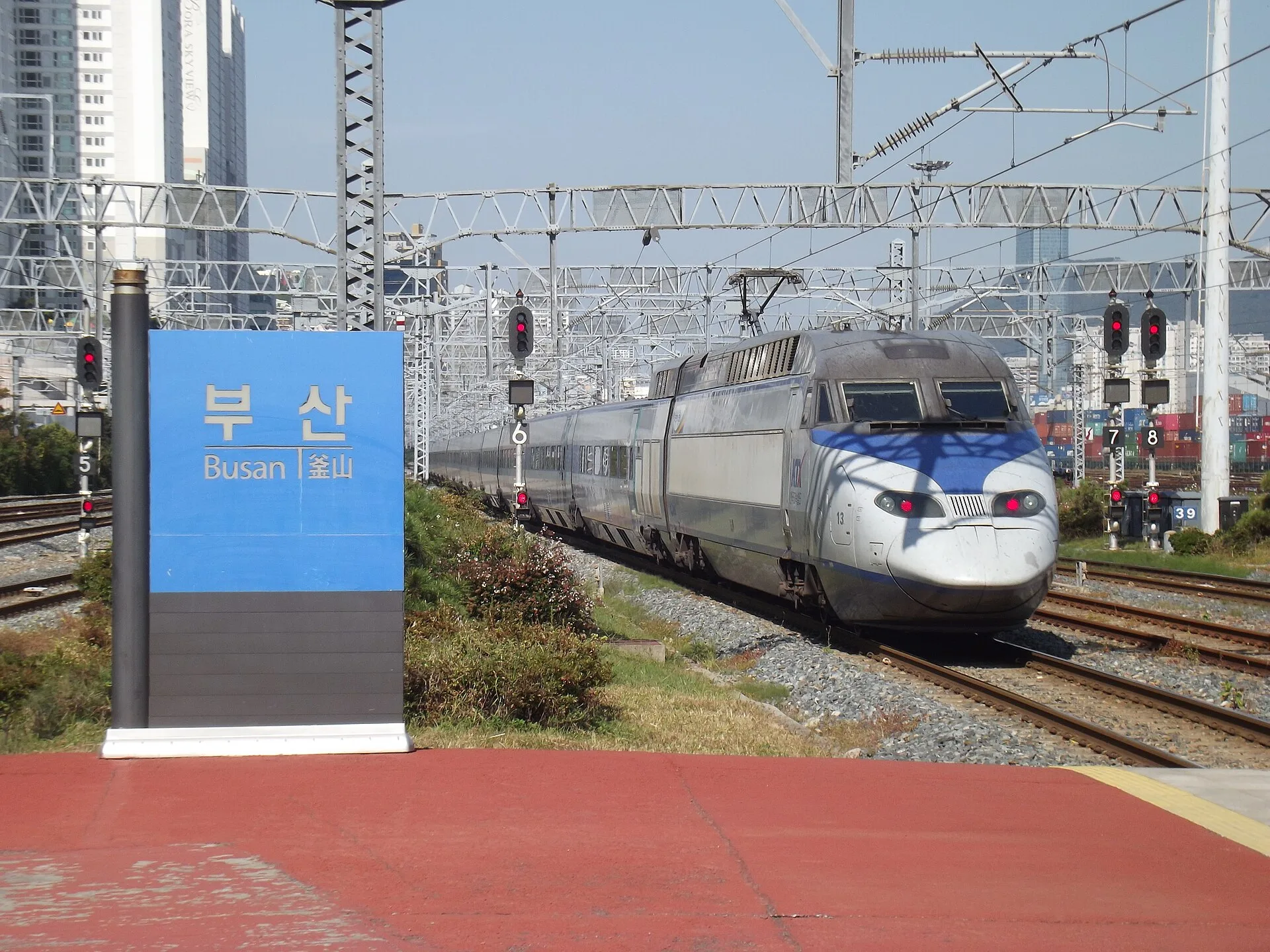
In Seoul, Gyeongbu-line KTX trains to Busan Station leave from Seoul Station in the city centre and from Suseo on the Gangnam side, and some also stop at Gwangmyeong and Haengsin. In Korail’s timetable from 1 November 2026, there is no Busan KTX from Yongsan. Express buses to Busan leave from the Gyeongbu side of the Seoul Express Bus Terminal in Seocho-gu and from Dong Seoul Terminal. Flights leave from Gimpo Airport, which Seoul Subway Lines 5 and 9, the AREX airport railway and the Gimpo Goldline all serve; VisitKorea, the Korea Tourism Organization’s site, says the AREX all-stop train takes about 23 minutes from Gimpo to Seoul Station.
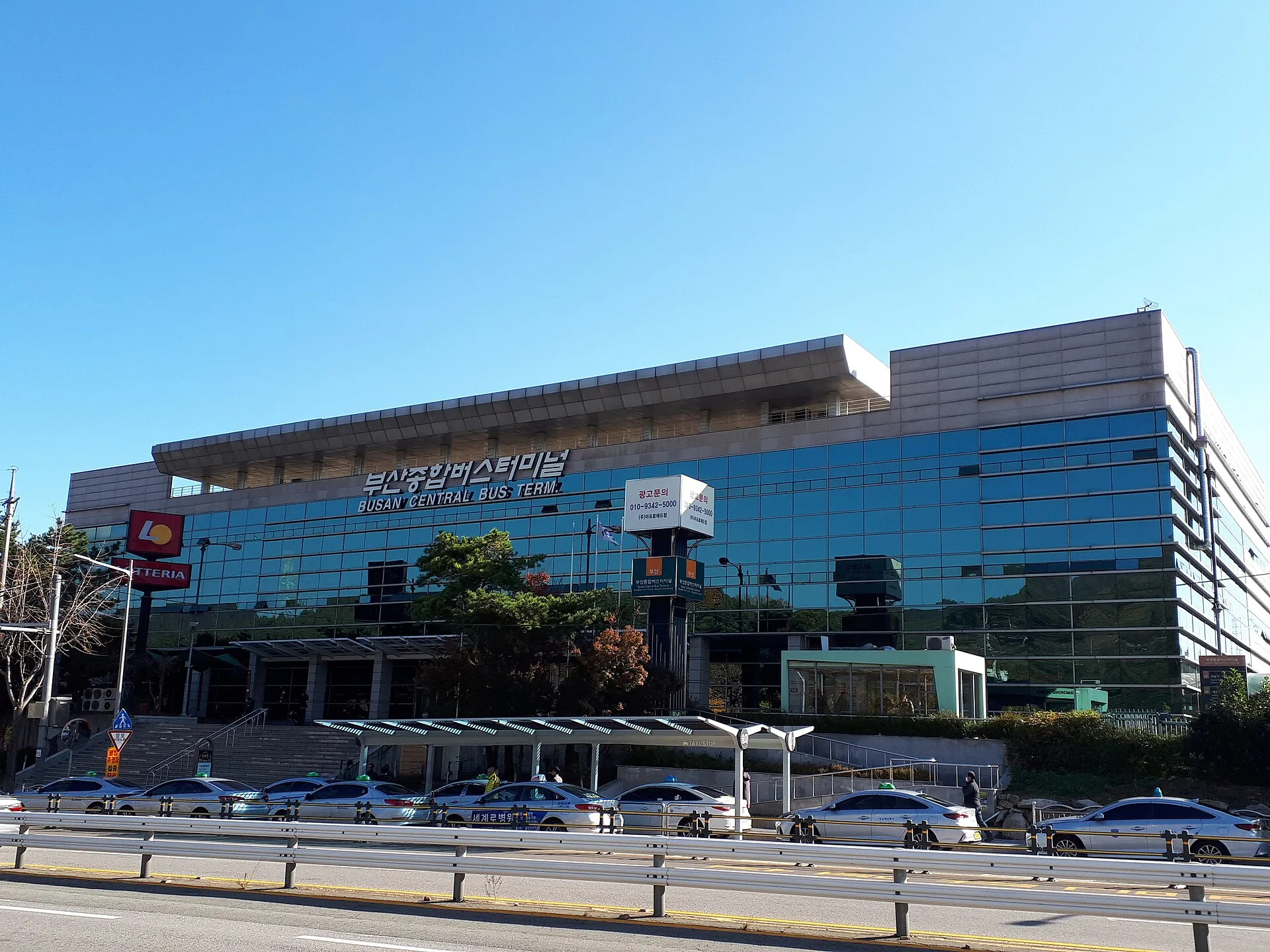
In Busan each option arrives somewhere different. Gyeongbu-line KTX trains from Seoul Station and Suseo end at Busan Station, and Busan city says Metro Line 1 is a two-minute walk away, under the station plaza. Express buses from the Seoul Express Bus Terminal and Dong Seoul arrive at Busan Central Bus Terminal in Nopo-dong, next to Nopo Station (exit 3), the northern end of Line 1; the Seoul terminal also lists a separate route to Seobusan, the West Busan terminal in Sasang. Planes land at Gimhae International Airport, west of the city centre, where the Busan–Gimhae Light Rail connects with Line 2 at Sasang. VisitKorea puts that trip at about 30 minutes to Seomyeon, 50 minutes to Gwangalli and 70 minutes to Haeundae, and limousine buses also run to Seomyeon and Haeundae.
KTX: city centre to city centre in just over two and a half hours
Since 1 September 2026, the trains once sold as SRT run as KTX from Suseo, so there is now one high-speed brand and one booking system. Korail says the SRT trains were renamed KTX-Sancheon and that existing KTX benefits now apply to trains to and from Suseo. Our guide to Korean train types, linked below, covers that change; here is what it means for the Busan trip.
In Korail’s timetable from 1 November 2026, the fastest Seoul Station–Busan train is scheduled at 2 hours 18 minutes (a KTX-Cheongryong leaving at 08:58), and the median journey is about 2 hours 44 minutes. There are 49 daily departures from Seoul Station between 05:13 and 22:28, with extra trains on some days. From Suseo there are 29 daily departures between 05:30 and 22:40; the fastest daily train takes 2 hours 19 minutes and the median is about 2 hours 36 minutes. We worked out these durations and counts from Korail’s timetable file. The same timetable also has nine daily KTX-Eum trains from Seoul Station or Cheongnyangni to Bujeon in Busan via the Jungang line, but they take 3 h 44 min to 4 h 28 min, and only four stop at Sinhaeundae in the Haeundae area.
Korail’s fare table, in force since 1 September 2026, puts the adult standard fare from Seoul to Busan at 54,400 won and first class at 78,900 won; from Suseo it is 52,900 and 76,700 won. Korail notes that the average cut of about 10% that came with the merger was set for three years and may be adjusted later.
Booking is where the KTX is easiest for visitors. Korail’s English website, korail.com, takes credit cards, and you retrieve tickets with the email address and password you used when buying; the KORAIL+ app is the other official channel. Since 1 October 2026, sales open at 07:00 two months before the travel date, and you can buy online up to departure (ticket machines stop 10 minutes before). Korail warns that screenshots are not valid tickets and that unauthorised resellers such as RailNinja and RailMonster may charge extra fees. Refunds are free until three hours before departure from Monday to Thursday; on Fridays, weekends and holidays a flat 400-won fee (Korail’s minimum penalty) applies until two days before, rising to 5–20% as departure gets closer.
If you plan to use a KORAIL PASS (two to five travel days chosen within 10 days, from 131,000 won for an adult two-day pass), one point is unsettled. The current pass page lists only metropolitan railway and temporary tourist trains as exclusions, but two 2024 notices still on Korail’s English board say SRT trains cannot be used, and Korail had published nothing newer on whether the pass covers Suseo trains by 21 October 2026, as far as we could find. Pass holders are safest booking from Seoul Station or asking Korail’s customer centre (+82-1599-7777) first.
Express bus: three seat classes and a longer road trip
Express buses to Busan leave from the Gyeongbu side of the Seoul Express Bus Terminal (194 Sinbanpo-ro, Seocho-gu) and from Dong Seoul Terminal, and Busan Central Bus Terminal lists both as its Seoul routes. Don’t confuse the Gyeongbu side with Central City next door, a separate terminal for the Honam line to the south-west, with its own booking site.
Express buses come in classes: the Busan terminal’s fare-discount page names premium, deluxe (udeung) and regular (ilban), and says primary-school children pay half on every route and class. Fares rose on 1 October 2026, when the transport ministry raised the ceilings for intercity and express bus fares by 9% each; Dong Seoul Terminal says fares on all its routes went up 9% that day. We meant to quote the new Seoul–Busan fares and the scheduled journey time from Kobus, the official express-bus booking site, but it could not be reached from our network on 21 October, so check both when you book. Expect the bus to take longer than the KTX, since it shares the expressway with other traffic.
Booking is less visitor-friendly than Korail’s. The official channels are Kobus on a computer, the T-money GO and Express Bus T-money (고속버스티머니) apps, and counters and ticket machines at the terminals; the Busan terminal’s own site points foreign visitors to the travel platform Klook for app booking. Buses leave on the printed minute. Cancelling is free until two days before; after that the fee is 5 to 20%, depending on the day and how close you are to departure, and 60% once the bus has left.
At the Busan end, Busan Central Bus Terminal sits in Geumjeong-gu next to Nopo Station. Busan city’s directions to City Hall give a sense of the distance: about 25 minutes and 12 stops on Line 1 from Nopo, against about 20 minutes and nine stops from Busan Station. City Hall is only a yardstick, though: Nampo-dong is two stops from Busan Station on Line 1 but 23 from Nopo, and Haeundae needs a change to Line 2 from either, so work out the whole ride to your hotel.
Flight: about an hour in the air, plus two airports
On Thursday 22 October 2026, the airport operator’s schedule showed 19 flights from Gimpo to Gimhae between 07:00 and 20:00: 10 by Air Busan, five by Korean Air, three by Trinity Airways (formerly T’way Air) and one by Jeju Air. Most were scheduled at 65 minutes. The published schedule ran only to 24 October, the end of the summer season, so the winter timetable may differ.
The hour in the air is only part of the trip. Korean Air closes check-in for domestic flights 30 minutes before departure, and Korea Airports Corporation says you must show ID together with your boarding pass before the security check; for visitors, that means a passport. Korean Air’s free checked baggage on domestic flights is 20 kg in economy, and other airlines set their own rules. Even on paper, the minimums add up: about 23 minutes on AREX from Seoul Station, check-in closing 30 minutes before departure, 65 minutes in the air and about 30 minutes from Gimhae to Seomyeon come to roughly two and a half hours before any queues, security or waiting, about the same as the KTX from Seoul Station.
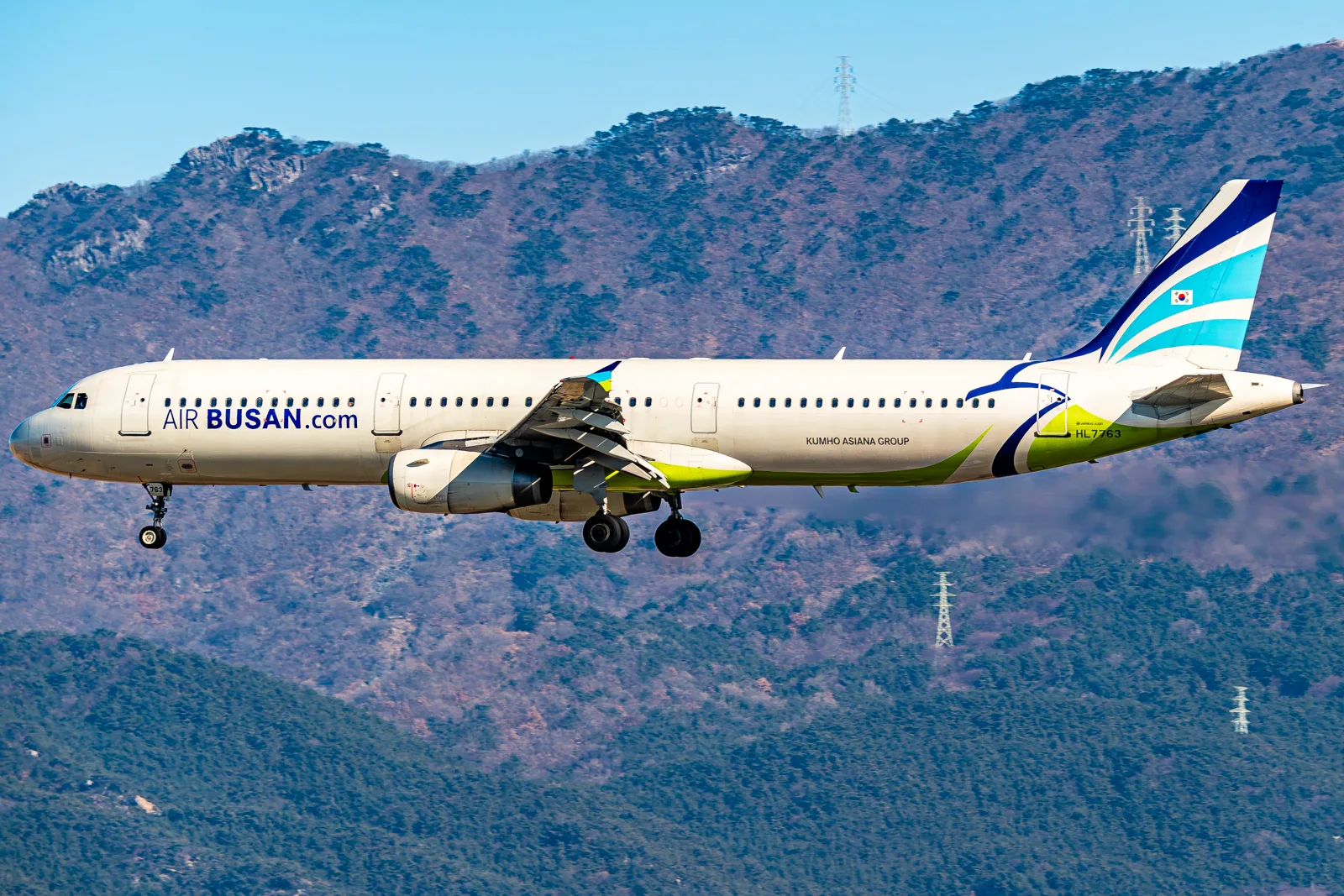
Fares are set by each airline and change with the date and demand, so we have not quoted them. Flying makes most sense if you are already near Gimpo or heading to western Busan or Gimhae, which are close to the airport. The Air Busan plane in the photo here, taken in December 2024, still carried the old Kumho Asiana group name; airline names and liveries may change as Korea’s airline mergers go ahead.
Which one fits your trip
For most first trips, the KTX is the simple choice: city centre to city centre, frequent departures, published fares and an English booking site. If you are staying south of the river, compare Suseo with Seoul Station, since both have Busan trains.
The express bus suits someone who has checked the fare on their date against the KTX’s 54,400 won and does not mind a longer ride, or who is staying near the Seoul Express Bus Terminal. Remember that it arrives at Nopo, the northern end of Line 1, and plan the metro ride on to your hotel.
A flight is worth pricing if you are near Gimpo or heading to western Busan or Gimhae, and if the fare on your date makes up for the airport time. Around Korea’s big holidays, all three fill up: Korail’s 2026 Chuseok pre-sale was open to members only, and both train and bus cancellation fees rise at Seollal and Chuseok, so book early and read the refund rules.
Related on Rank Three: for which station and train to book, see KTX vs SRT vs ITX: SRT is now KTX, so which Korean train should you book?; for walks once you are in Busan, Three Busan waterfront walks: North Port, Gwangalli and Dadaepo; and for the trip back to your flight home, Getting to Incheon Airport: rail, airport bus or taxi.
Our three picks
- KTX: city centre to city centre in just over two and a half hoursKTX from Seoul Station (or Suseo)
Fastest scheduled run 2 h 18 min and about 2 h 44 min typical from Seoul Station, with 49 daily trains from 1 November 2026; 54,400 won standard (52,900 won from Suseo). Book on korail.com or KORAIL+ from 07:00 two months ahead; it ends at Busan Station, two minutes on foot from Metro Line 1.
- Express bus: three seat classes and a longer road tripExpress bus
Premium, deluxe and regular classes from the Gyeongbu side of the Seoul Express Bus Terminal or Dong Seoul to Busan Central Bus Terminal at Nopo. Fare ceilings rose 9% on 1 October 2026; check the current fare and scheduled time on Kobus or the T-money apps, and expect a longer ride than the KTX.
- Flight: about an hour in the air, plus two airportsFlight, Gimpo to Gimhae
About 19 flights on a weekday in October 2026, mostly scheduled at 65 minutes. Add the trip to Gimpo, check-in closing 30 minutes before departure (Korean Air) and the light rail into Busan; worth pricing if you are near Gimpo or heading to western Busan.
Side by side
| What to check | KTX | Express bus | Flight (Gimpo–Gimhae) |
|---|---|---|---|
| Where you leave Seoul | Seoul Station (49 daily to Busan) or Suseo (29 daily); not Yongsan | Seoul Express Bus Terminal, Gyeongbu side (Seocho-gu), or Dong Seoul | Gimpo Airport (Lines 5 and 9, AREX, Gimpo Goldline) |
| Where you arrive in Busan | Busan Station; Line 1 two minutes on foot (Jungang-line KTX-Eum trains go to Bujeon) | Busan Central Bus Terminal, Nopo (Line 1, exit 3) | Gimhae Airport; light rail to Sasang for Line 2, or a limousine bus |
| Scheduled time on board | 2 h 18 min fastest, about 2 h 44 min typical (Seoul Station); about 2 h 36 min typical (Suseo) | Not confirmed (Kobus unreachable); longer than the KTX, and traffic matters | 65 minutes for most flights |
| Time needed before departure | Online sales until departure; machines until 10 min before | The bus leaves on the printed minute | Korean Air check-in closes 30 min before; ID check before security |
| Adult one-way fare (checked 21 Oct 2026) | 54,400 won standard, 78,900 won first (Seoul); 52,900 / 76,700 won (Suseo) | Depends on class; fare ceiling raised 9% on 1 Oct 2026 | Set by airlines; changes by date |
| Booking for visitors | korail.com (English, credit card) or KORAIL+, from 07:00 two months ahead | Kobus, T-money GO / Express Bus T-money apps, counters; the Busan terminal points visitors to Klook | Airline websites and apps |
| Cancelling | Mon–Thu free until 3 h before; Fri–Sun and holidays 400 won until 2 days before, then 5–20% | Free until 2 days before, then 5–20%; 60% after departure | Depends on the fare rules |
| Watch out for | KORAIL PASS on Suseo trains not confirmed; screenshots are not valid tickets | Central City next door is a different terminal (Honam line) | Winter schedule from 25 Oct not yet published; Korean Air domestic economy baggage 20 kg |
| Good for | Most first trips: centre to centre | Travellers who have checked the fare and are not in a hurry | Staying near Gimpo or heading to western Busan |
Where I would start
For a first trip I would take the KTX from Seoul Station. It has 49 departures a day from that station alone, a published fare, English booking two months ahead, and the metro two minutes away when you arrive. Look at the express bus if the fare on your date is clearly lower and a longer road trip does not bother you, and price a Gimpo–Gimhae flight if you are near Gimpo or heading to western Busan. Whichever you choose, check the fare and time on the operator’s own site before you pay, especially around Chuseok and Seollal.


