On a Korean menu, cold noodles come with place names attached: Pyongyang naengmyeon, Hamheung naengmyeon and, in Busan, milmyeon. All three are cold noodles, but the first thing that sets them apart is what the noodles are made of: mainly buckwheat, mainly potato or sweet-potato starch, or mainly wheat. The second is whether they come in a clear chilled broth or tossed in a spicy sauce. This guide is built from the Encyclopedia of Korean Culture, the National Folk Museum of Korea’s encyclopedias, the Korean Food Promotion Institute’s official menu translations, UNESCO, VisitKorea, VisitSeoul, Visit Busan and Busan city, checked on 18 October 2026. It is a dish explainer, not a tasting review or a restaurant ranking, and recipes vary from shop to shop.
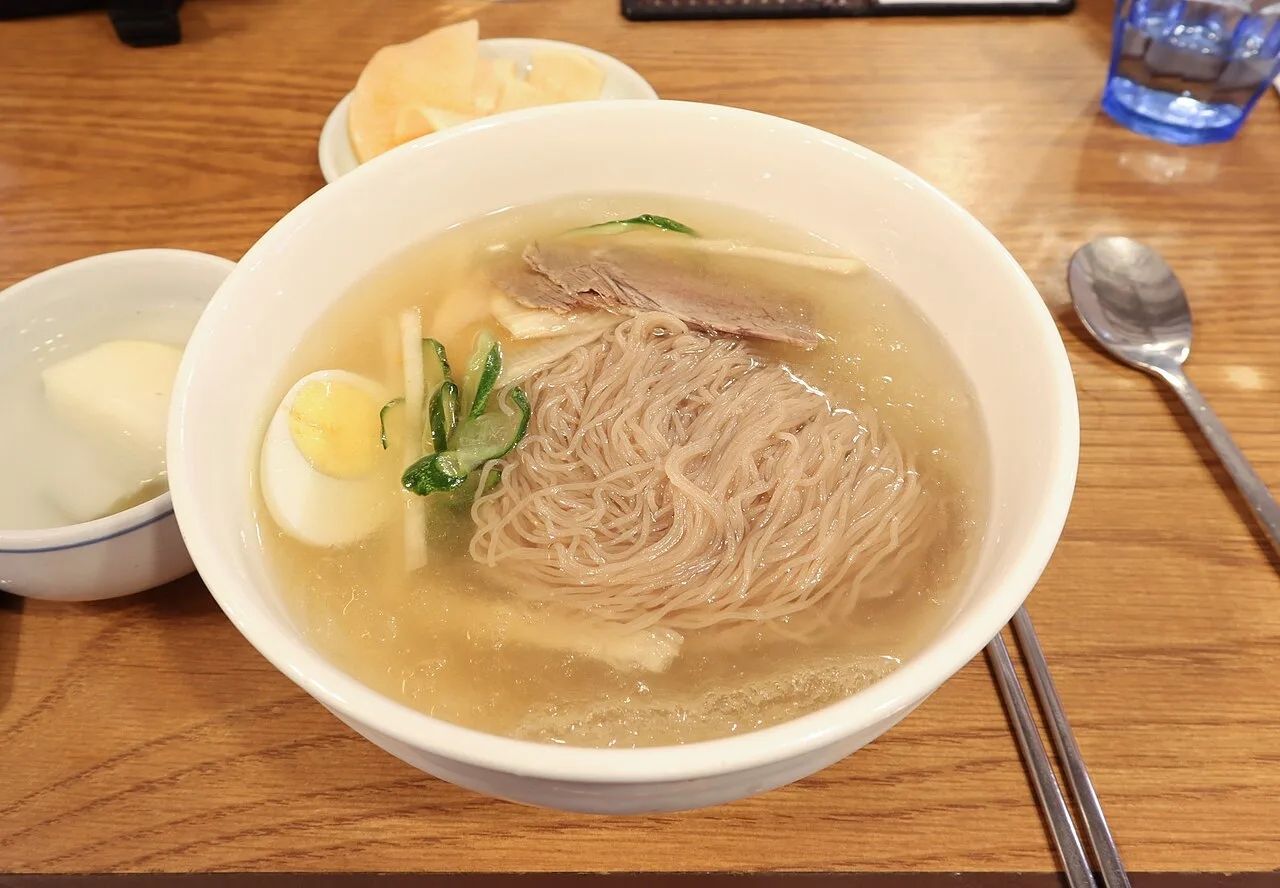
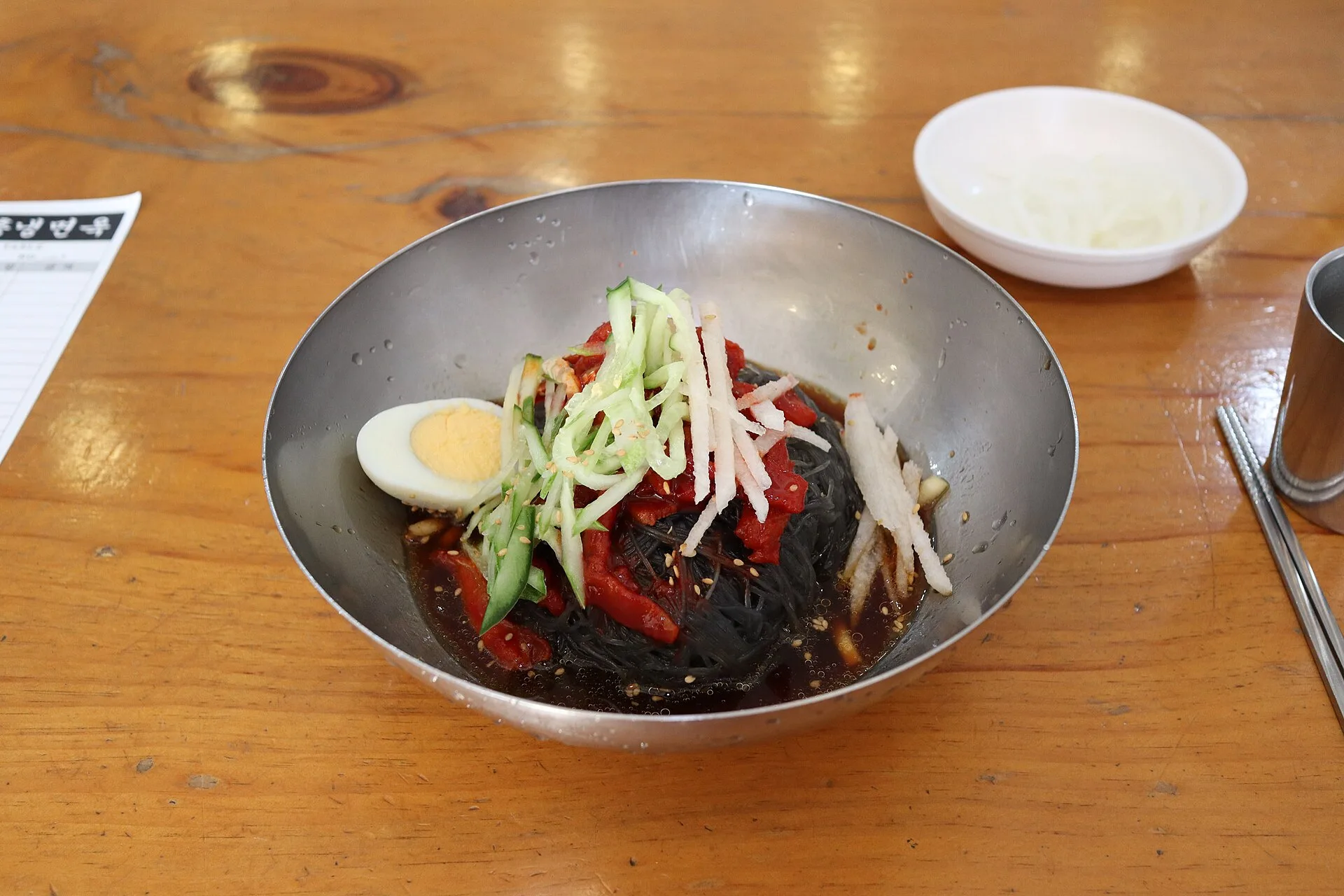
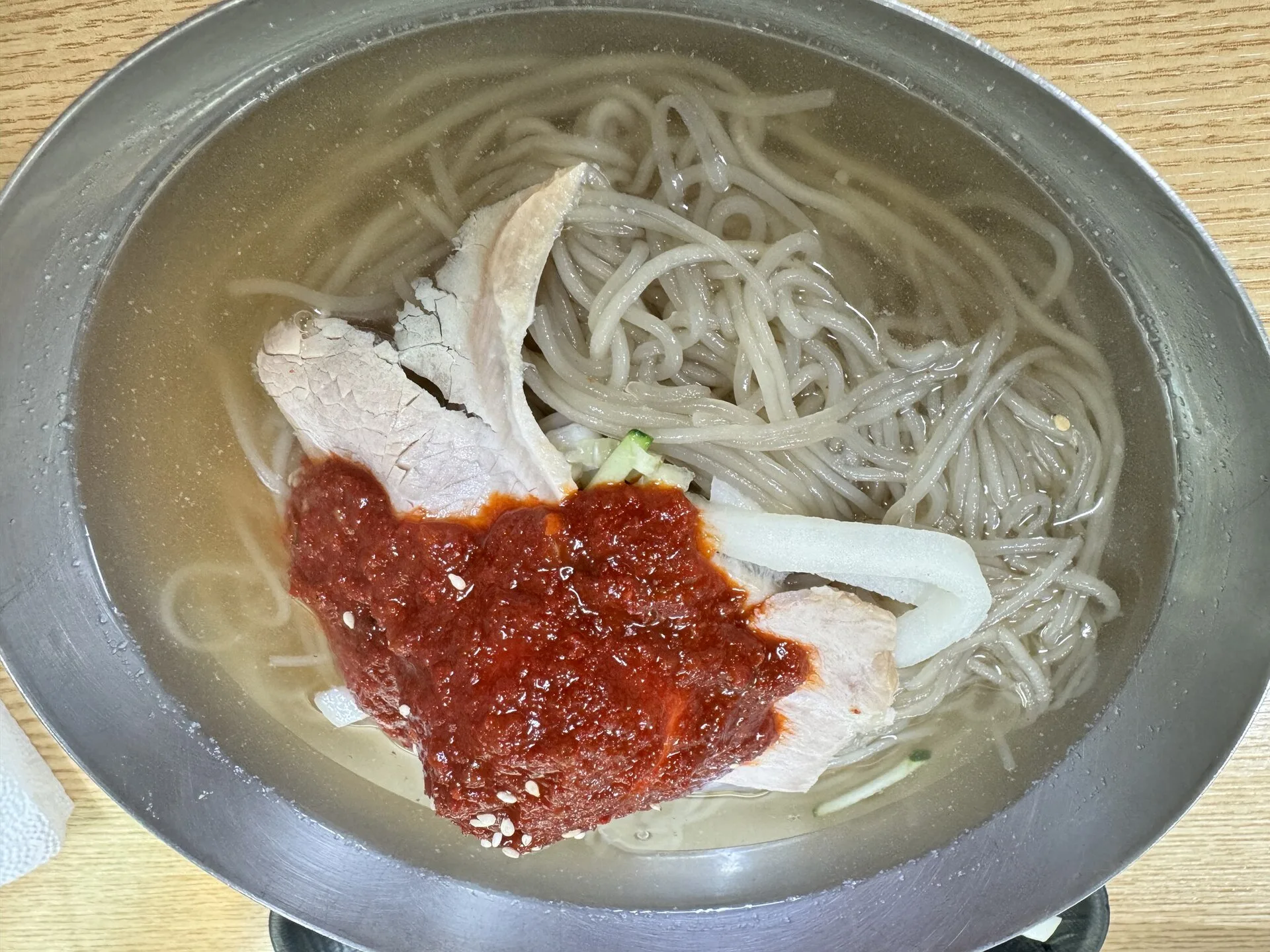
Naengmyeon 101: read the noodles first, then the broth
The Encyclopedia of Korean Culture defines naengmyeon simply as noodles served in chilled broth. The National Folk Museum of Korea casts the net wider: noodles of buckwheat flour, potato starch, arrowroot starch or wheat flour, either in cold broth or mixed with seasoning. So the broth version (mul-naengmyeon) and the mixed, spicy version (bibim-naengmyeon) are both naengmyeon. The dish developed in the buckwheat-growing north of the peninsula and spread across South Korea with people who moved south after the Korean War.
Naengmyeon started life as a winter food. Dongguk Sesigi, a Joseon-era record of seasonal customs, lists it among winter dishes and rates the noodles of Gwanseo (Pyeongan Province) as the best. It became a summer treat in the 1910s, once ice was available, and by the 1920s Seoul, Pyongyang, Hamheung and Haeju naengmyeon were all sold in restaurants as summer specialties. According to the folk museum’s Hallyu dictionary, from the 1970s the two place names came to be used as labels for noodle type: “Pyongyang” for buckwheat noodles and “Hamheung” for potato-starch noodles.
One myth to drop early: “Pyongyang means broth, Hamheung means spicy.” The folk museum calls that a South Korean misconception: in Hamgyeong Province, and in Hamheung-style restaurants in the South, there are broth and raw-fish versions too. On a menu, look first for the style word: mul (물, in cold broth), bibim (비빔, mixed with spicy sauce) or hoe (회, topped with seasoned raw fish). The official English menu names from the Korean Food Promotion Institute are Mulnaengmyeon (Cold Buckwheat Noodles), Bibimnaengmyeon (Spicy Buckwheat Noodles) and Hoenaengmyeon (Cold Buckwheat Noodles with Raw Fish). Note that “buckwheat” appears in these names whatever the noodles are actually made of.
Pyongyang naengmyeon: buckwheat noodles in a clear, mild broth
Pyongyang naengmyeon is a local dish of the Pyongyang area: noodles of buckwheat flour mixed with starch, kneaded with hot water and pressed through a noodle press, then served in cold broth. The Encyclopedia of Korean Culture says the broth was once made from pheasant but now uses beef and beef leg bones, mixed roughly half and half with dongchimi, the brine of radish water kimchi, and seasoned with salt, light soy sauce and vinegar; it goes as far as saying the dongchimi decides the taste. Toppings include sliced meat, kimchi, boiled egg and pear. The official English name is Pyeongyangnaengmyeon (Pyeongyang Cold Buckwheat Noodles).
The point is restraint. The same encyclopedia says Pyongyang cooking favours light seasoning, neither salty nor spicy, and describes the old pleasure of eating ice-cold noodles in a heated ondol room while it was around minus 20°C outside, “fighting cold with cold”. According to the folk museum, the name “Pyongyang naengmyeon” was popularised by cooks from Pyongyang noodle houses who moved to Seoul in the colonial period, and there were about 40 naengmyeon shops north of Cheonggyecheon by the late 1920s. After the war, people from Pyeongan Province opened Pyongyang naengmyeon restaurants from Seoul to Jeju, and it became a year-round dish.
Two modern notes. The folk museum says buckwheat supply could not keep up with demand, so many South Korean “buckwheat” noodles came to contain little buckwheat and a lot of sweet-potato or potato starch. The folk museum’s Hallyu dictionary adds that since the 2010s many young South Koreans have come to see old-style noodles with 60% or more buckwheat flour, in a lightly seasoned broth, as the authentic kind, and that since the 2020s a good number of Japanese tourists have come to Korea to eat it. That 60% is a reported perception, not an official standard. North Korea’s “Pyongyang Raengmyon custom” was inscribed on UNESCO’s Representative List of the Intangible Cultural Heritage of Humanity in 2022; the Korea Heritage Service list in the South showed no naengmyeon designation when I checked on 18 October 2026.
The catch for first-timers is that light seasoning can taste plain on the first spoonful. That restraint is the whole idea, so taste the broth as it comes, then add vinegar and mustard a little at a time.
Hamheung naengmyeon: chewy starch noodles, best known spicy
Hamheung naengmyeon is a local dish of Hamheung, in the north-east. Hamgyeong Province had plenty of potatoes, and its noodles were made from potato starch, chewier, the Encyclopedia of Korean Culture says, than ox tendon. In Hamheung the dish is known as nongma-guksu, nongma being the Hamgyeong word for starch. In the South the potato starch gave way to sweet-potato starch, and the folk museum says Seoul’s Hamheung naengmyeon shops mix sweet-potato starch with buckwheat flour. The official English name, Hamheungnaengmyeon (Hamheung Cold Buckwheat Noodles), still says buckwheat.
It is best known in its spicy forms. The encyclopedia notes that northern cooking is generally not hot, yet this naengmyeon is. Hoe-naengmyeon, topped with raw fish in a red seasoning, is a signature: flatfish caught off the Hamheung coast in the north, and skate in South Korea because it was easier to get. VisitSeoul describes the bowls on Seoul’s Ojang-dong Hamheung naengmyeon street as sour seasoned skate, radish strips and cucumber on sweet-potato-starch noodles, alongside a meat broth long simmered from beef and leg bones; VisitKorea mentions seasoned pollack or raw plaice, so the fish varies by shop. In Hamheung itself, nongma-guksu came both in meat broth and mixed with raw flatfish.
Ojang-dong, in Jung-gu across from the Jungbu Dried Fisheries Market, is where the name took hold. After the Korean War, refugees from Hamgyeong Province settled around Pil-dong and Ojang-dong, and “Hamheung naengmyeon” became widely known. VisitSeoul presents the street as the root of Hamheung naengmyeon in the South; its page, last edited in 2022, counted two naengmyeon restaurants there.
The drawbacks are texture and heat. The noodles are very chewy, the bibim and hoe versions are spicy, and raw fish is not for everyone. The folk museum says naengmyeon restaurants keep food scissors on hand so that staff or diners can cut springy noodles, so ask for them. If the heat worries you, the same restaurants serve a mul version.
Busan milmyeon: wheat noodles born in wartime Busan
Milmyeon is cold noodles made in Busan since 1950 from wheat flour blended with starch. It was first called mil-naengmyeon (wheat naengmyeon), Busan naengmyeon or Gyeongsang-do naengmyeon before the short form stuck. The most widely told origin goes like this: during the Korean War, Busan became the temporary capital and filled with refugees after the January 1951 retreat; northerners who missed their naengmyeon could not get buckwheat, so they mixed relief wheat flour with starch. The Encyclopedia of Korean Culture says, carefully, that this “can be called” the beginning, and the folk museum also records other theories, such as a wheat makguksu renamed after the war or local wheat-noodle naengmyeon merging with the northern dish.
The noodles are mainly wheat with some starch; the folk museum’s Hallyu dictionary gives a 3:1 ratio and says they are softer than naengmyeon noodles, which makes them easy for all ages. According to the encyclopedia, Busan milmyeon uses fresh noodles from a salted dough rested for a day, and the broth is simmered from beef or pork leg bones, chicken bones or beef brisket and shank. Some shops add medicinal herbs and vegetables; Visit Busan names licorice, angelica (dangwi) and cinnamon, added to help digestion. Toppings are stir-fried cucumber, seasoned radish strips, pear, boiled egg and pork.
Its flavour is punchy. A chopped seasoning of garlic, green onion, onion, ginger, chilli powder and more is placed on top as a garnish rather than served on the side, and the encyclopedia describes Busan milmyeon as spicy and salty, made for Gyeongsang tastes. You can have it in broth (mul-milmyeon) or mixed (bibim-milmyeon). Busan city calls it, along with dwaeji-gukbap (pork and rice soup), the Busan food that travellers try at least once, and more of a summer seasonal dish than naengmyeon; Visit Busan says it was designated a Busan local food in 2006. The official English menu name is simply Milmyeon (Wheat Noodles).
The limitation is geography. The folk museum says milmyeon became known nationwide only after the 2000s, and of the three it is the bowl most tied to a trip to Busan. It is wheat-based, so avoid it if you have a wheat allergy.
Ordering tips: vinegar, mustard, scissors and price
There is no single right way to eat any of them. The Encyclopedia of Korean Culture says vinegar, mustard and sugar are added at the table to taste; on a first visit, try the broth or sauce on its own first so you can tell what the additions change. If the noodles are long and chewy, ask staff to cut them or use the scissors yourself. A small bowl after grilled meat is common too: the folk museum says barbecue restaurants have served small dessert-size naengmyeon since the 1990s.
For price, the dining-out figures on the Korea Consumer Agency’s Price Info portal (provided by the Ministry of the Interior and Safety) for September 2026 put the average for one standard serving of naengmyeon at 12,692 won in Seoul, 12,000 won in Busan, 11,917 won in Incheon, 11,750 won in Daegu and 10,931 won in Gyeonggi. The figures are provisional, the shops surveyed can change, and the agency warns that comparing regions may not be appropriate. The data do not separate Pyongyang and Hamheung styles, and milmyeon is not a tracked item; Busan city says it began at about half the price of naengmyeon, but check today’s price at the shop.
If you have food allergies, ask before ordering. Pyongyang-style noodles are buckwheat-based, Seoul’s Hamheung-style shops may mix buckwheat into sweet-potato starch, and milmyeon is made with wheat; the mix differs from shop to shop. For more Korean food guides, and an app to find a noodle shop near you, see the links below.
Related on Rank Three: more Korean food guides in Three Seoul Mandu Stops: Jaha, Gaeseong Koong, and Mandujip and Buying one tub of kimchi: baechu, kkakdugi or geotjeori?; to find a noodle shop, see Naver Map vs KakaoMap vs Google Maps for finding restaurants.
Our three picks
- Pyongyang naengmyeon: buckwheat noodles in a clear, mild brothPyongyang naengmyeon
Mainly buckwheat noodles in a chilled mix of meat broth and dongchimi, seasoned lightly, neither salty nor spicy. It can taste plain at first, so sip the broth before adding vinegar and mustard. The bowl to order if you want to understand what naengmyeon is.
- Hamheung naengmyeon: chewy starch noodles, best known spicyHamheung naengmyeon
Very chewy sweet-potato-starch noodles, best known mixed in a spicy sauce or topped with seasoned raw fish, usually skate in South Korea. For anyone who likes heat and chew; VisitSeoul presents Seoul’s Ojang-dong as its home in the South, and the same shops also serve a broth version.
- Busan milmyeon: wheat noodles born in wartime BusanBusan milmyeon
Softer wheat-and-starch noodles in a bone broth, sometimes with herbs, topped with a spicy chopped seasoning that gives it a punchy, spicy-salty flavour. A summer favourite to pair with dwaeji-gukbap on a Busan trip. Wheat-based, so skip it with a wheat allergy.
Side by side
| Item | Pyongyang naengmyeon | Hamheung naengmyeon | Busan milmyeon |
|---|---|---|---|
| Noodle base | Buckwheat flour mixed with starch (ratio varies by shop) | Potato starch in Hamheung, sweet-potato starch in the South (Seoul shops may add buckwheat); very chewy | Wheat flour with some starch (folk museum: 3:1); softer than naengmyeon noodles |
| Usual order | Mostly in broth (mul) | Best known bibim or hoe; a mul version exists | Mul-milmyeon or bibim-milmyeon |
| Flavour | Light, neither salty nor spicy | Spicy, unusual for northern food | Spicy and salty, punchy |
| Broth or sauce | Beef and bone broth mixed with dongchimi | Spicy chilli seasoning (bibim, hoe); meat broth for mul | Bone broth; some shops add licorice, angelica or cinnamon |
| Typical toppings | Sliced meat, kimchi, boiled egg, pear | Seasoned raw fish (skate in the South), radish, cucumber, egg | Stir-fried cucumber, seasoned radish, pear, egg, pork, chopped seasoning |
| Origin | Pyongyang local dish; spread south with refugees after the war | Hamheung local dish; refugees settled in Seoul’s Pil-dong and Ojang-dong | Wartime Busan, most often told as refugees using relief wheat flour |
| Where to try it (no ranking) | Restaurants from Seoul to Jeju | Ojang-dong in Jung-gu, Seoul, and elsewhere | Busan (a designated Busan local food since 2006) |
| Official English menu name | Pyeongyangnaengmyeon (Pyeongyang Cold Buckwheat Noodles) | Hamheungnaengmyeon (Hamheung Cold Buckwheat Noodles) | Milmyeon (Wheat Noodles) |
| Good for | Learning what naengmyeon tastes like | Fans of spicy food and chewy noodles | Trying a Busan local food |
Which bowl first
For a first bowl I would order Pyongyang-style mul-naengmyeon. The Encyclopedia of Korean Culture describes naengmyeon as buckwheat noodles in a chilled broth, and once you know that taste, the other two make more sense. Taste the broth as it comes before reaching for the vinegar and mustard. If you love heat and chew, a Hamheung-style bibim or hoe-naengmyeon may be the more fun first bowl. And if you are going to Busan, save room for milmyeon, a noodle with a wartime story that means most in the city that made it. Whichever you choose, read the style word (mul, bibim or hoe) before the place name.


