If you have half a day for a museum in Seoul, three very different places are worth comparing first: the National Museum of Korea in Yongsan, which walks you through Korean history in one building; Leeum Museum of Art in Hannam-dong, a private museum that puts Korean ceramics and painting next to contemporary art; and MMCA Seoul, the Seoul venue of the National Museum of Modern and Contemporary Art, a walk from Anguk or Gyeongbokgung Station. They differ on closing days, how much you can see for free and how you book. This is a research piece, not a review of a visit: the facts come from the three museums’ own websites, booking pages, notices and press releases, plus the Korea Heritage Service, checked on 26 October 2026 (US Central time; the morning of 27 October in Korea). Exhibitions and prices change often, so check the official pages again before you go. The three are not ranked; at the end I add my own pick for a half-day visit.
Start with the calendar: closing days, late nights and what is free
Only one of the three closes on Mondays: Leeum. It opens Tuesday to Sunday, 10:00–18:00 (ticket sales end at 17:30), and closes every Monday, on 1 January and on the days of Seollal (Lunar New Year) and Chuseok (the autumn harvest holiday). The National Museum of Korea and MMCA Seoul normally open on Mondays too. Each has one exception before the year ends. The National Museum closes its permanent galleries and Special Exhibition Galleries 1 and 2 on the first Monday of March, June, September and December (the outdoor grounds stay open), which this year means Monday 7 December (the Kunsthaus Zürich page calls it a museum closing day, so check before counting on the restaurants or the Children’s Museum that day). MMCA Seoul used to close only on 1 January, Seollal and Chuseok, but with visitor numbers rising it is trialling extra closure days in 2026 for artwork and building checks; the last one is Tuesday 1 December.
Evenings differ too. The National Museum of Korea opens 9:30–17:30 on Mondays, Tuesdays, Thursdays, Fridays and Sundays (last entry 17:00) and 9:30–21:00 on Wednesdays and Saturdays (last entry 20:30). MMCA Seoul opens 10:00–18:00 and stays open to 21:00 on Wednesdays and Saturdays. Leeum has no late opening. So if your free evening is a Wednesday or Saturday, the National Museum and MMCA Seoul are your options.
The biggest difference is how much you can see for free. At the National Museum of Korea, the permanent galleries, the Children’s Museum and free special exhibitions cost nothing; you pay only for paid special exhibitions. At Leeum, the traditional Korean art galleries (M1) and the Gabriel Orozco Garden outside are free, and the special exhibitions are paid. MMCA Seoul sells a ticket for each exhibition, but entry is free during the Wednesday and Saturday late opening (18:00–21:00) and on “Culture Day”, the last Wednesday of each month. Visitors aged 24 and under or 65 and over, undergraduates and some others also get in free with ID (the Korean page says 24 and under; the English page says “under 24”). On the same last Wednesday, Leeum takes 50% off (no stacking with other discounts). By the calendar, the remaining last Wednesdays of this year are 28 October, 25 November and 30 December.
National Museum of Korea: Korean history in one building, free permanent galleries
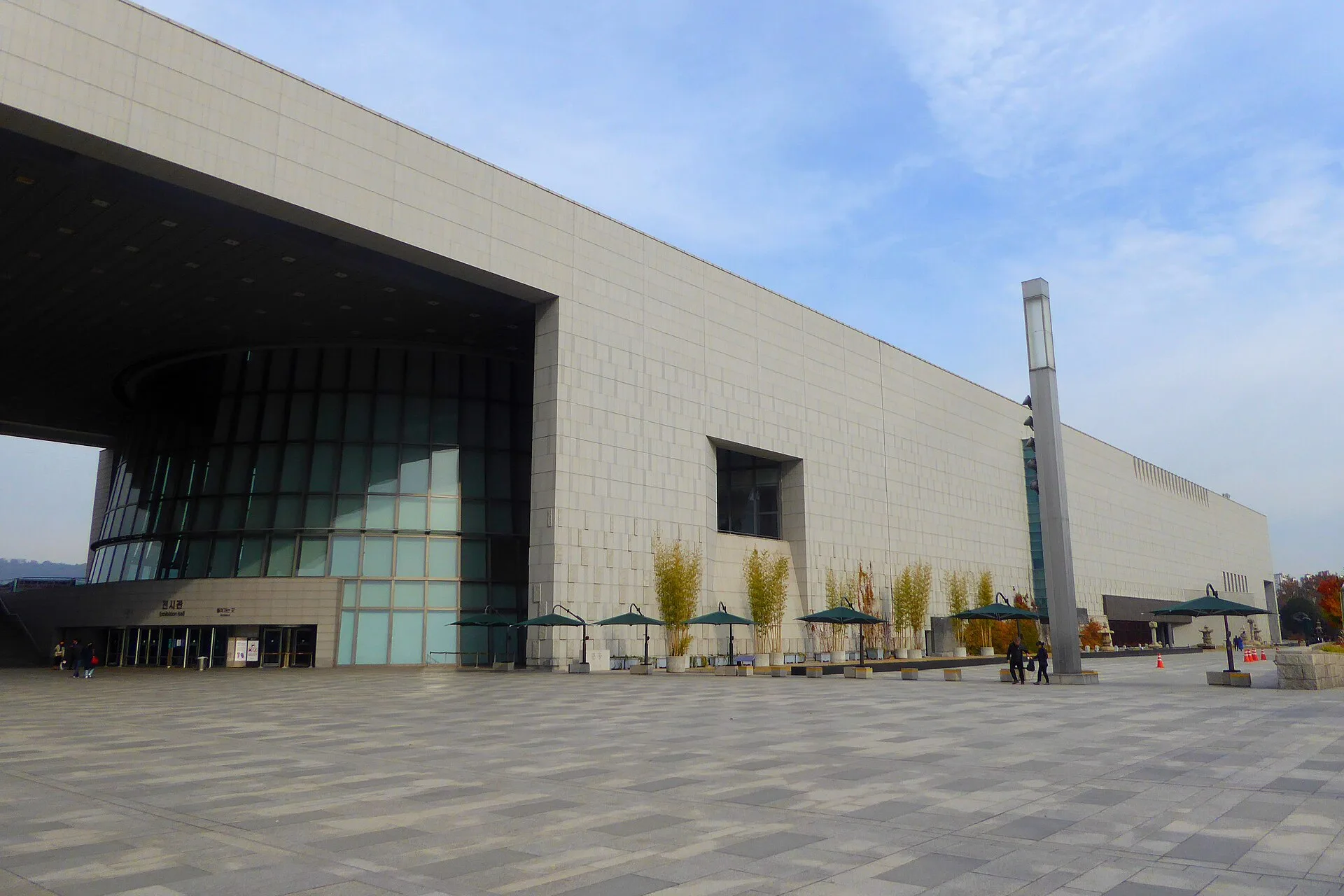
The National Museum of Korea is about a 10-minute walk from Exit 2 of Ichon Station (Line 4 and the Gyeongui–Jungang Line); there are lifts at Exit 1 and along the underground “Museum Nadeulgil” walkway towards Exit 2. Inside, the first-floor history galleries run in order from prehistory and ancient history through the Goryeo and Joseon periods to the Korean Empire (1897–1910); the second floor has calligraphy and painting, donated collections and the Room of Quiet Contemplation, and the third has sculpture and crafts and world art, arranged by subject rather than by period. For me, following Korean history from prehistory to 1910 under one roof is the main reason to come, and all of it is free.
If it is your first visit, make time for the Room of Quiet Contemplation on the second floor. It displays two pensive bodhisattva statues, both National Treasures, made in the late sixth and early seventh centuries, and you reach them through a dark, quiet corridor. The museum asks everyone, guided groups included, to keep silent there. Some galleries are shut for renovation: Buddhist Sculpture (Room 301), Metal Crafts (302), the sensory “Room of Sense”, Buddhist Painting (203) and Wood and Lacquer Crafts (204) since 6 July, and part of Calligraphy and Painting (202-3 and 202-4) since 10 August, all until 28 January 2027, reopening on 29 January. The Celadon Gallery (303), the Buncheong Ware and White Porcelain Gallery (304) and Calligraphy and Painting 202-1 and 202-2 stay open, and the Room of Quiet Contemplation is not on the closure list.
Smaller displays run inside the permanent galleries. In the Central Asia room of the third-floor world art galleries, the museum is giving its own Dunhuang Buddhist manuscripts a special display, from 23 October to 24 January 2027. On the second floor, a display on the scholar-calligrapher Kim Jeonghui and his circle runs to 22 November, and a show of recent donations runs in Donation Room 4 (Room 205) to 15 November; a display of bamboo motifs on ceramics stays in the Buncheong Ware and White Porcelain Gallery to 31 January 2027. All of them sit inside the free permanent galleries.
The big paid show opens on 27 November: 85 paintings and sculptures from Kunsthaus Zürich in Special Exhibition Gallery 1, until 18 April 2027, with works by Monet, Chagall, Matisse, Picasso, Brancusi, Kandinsky, Magritte and Dalí and Swiss artists such as Hodler, Klee and Giacometti. Tickets are 20,000 won for adults and 18,000 won for youths. The 12,000-won early-bird tickets have already sold out, and regular sales are due to open on Friday 6 November; the exhibition page links to Ticketlink and Naver booking, both Korean ticketing sites, and does not say whether foreign cards work. Entry is in 30-minute time slots, and ticketing and entry close at 16:50 (20:20 on Wednesdays and Saturdays).
Going by the museums’ own pages, this one offers foreign visitors the most help. Foreign-language highlights tours meet in front of the Korean Empire room on the first floor at 10:30 and 13:00 on weekdays, and at the same times in English and Japanese at weekends (Chinese at 13:00); the schedule can change from month to month. The museum’s guides and volunteers spend about an hour on the main highlights, and any foreign visitor can join for free at the set times; Korean nationals can join only with a foreign visitor. To explore on your own, the free exhibition app gives location-based commentary in Korean, English, Chinese, Japanese and Vietnamese (bring your own earphones).
A few rules: no photos with flash, tripods, selfie sticks or gimbals, and no commercial photography. Backpacks and school bags go into the lockers on the first floor, and bags have been checked at security screening since 11 June 2024. You do not book to see the permanent galleries; the museum’s booking pages cover things like the Children’s Museum (free, but online booking is required), the VR experience and school groups of 30 or more. The downsides: some galleries, including Buddhist sculpture and metal crafts, are closed until late January, and the big special shows need a timed ticket of their own.
Leeum Museum of Art: Korean ceramics and contemporary art together
Leeum is a private museum in Hannam-dong, Yongsan-gu. From Exit 1 of Hangangjin Station on Line 6, walk 100 m towards Itaewon, turn right into the first alley and climb the hill for about five minutes. Parking is limited, so public transport is recommended.
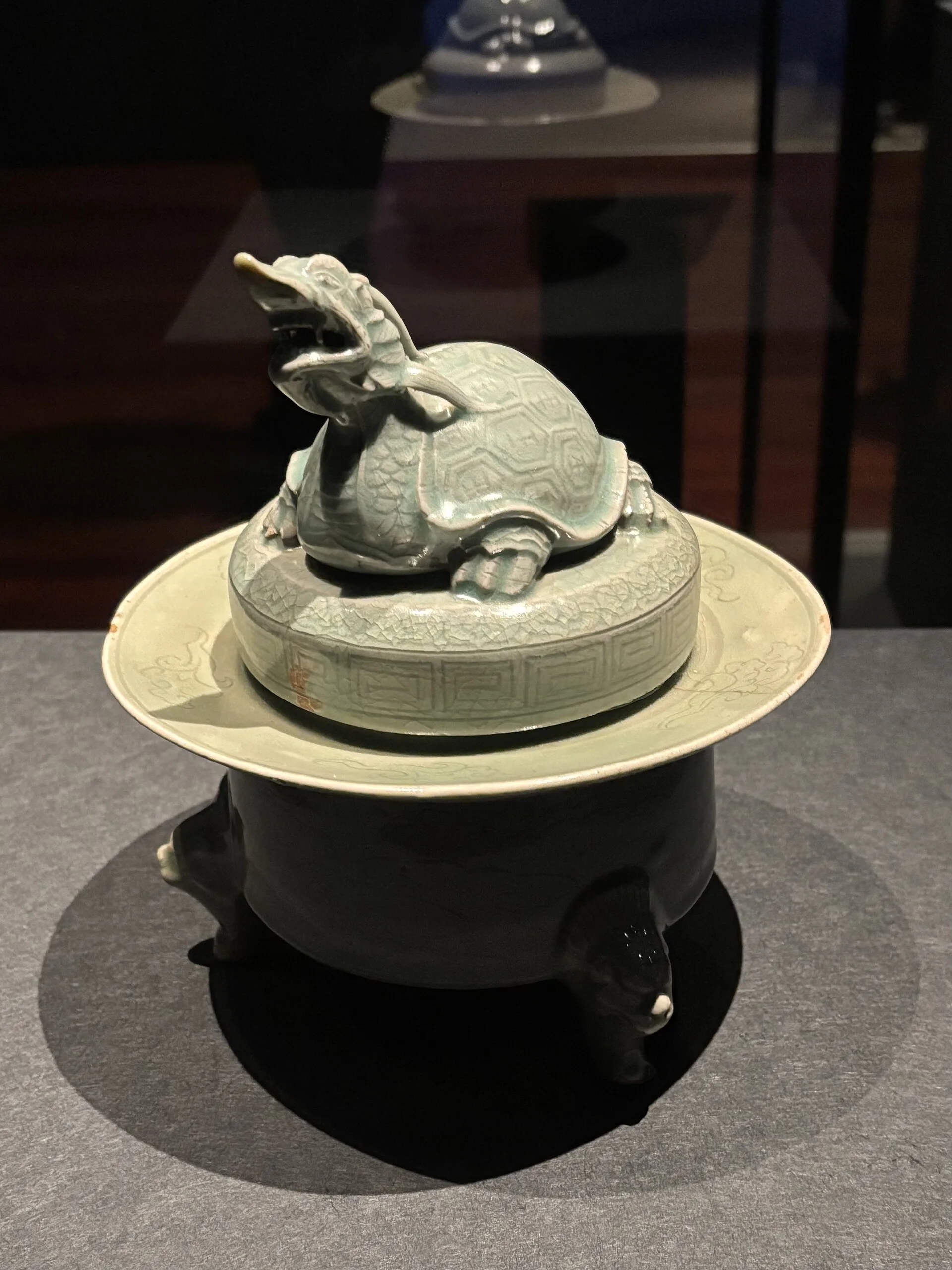
The free traditional art galleries (M1) are the heart of Leeum. Around 120 selected works are arranged by floor: Goryeo celadon on the fourth, buncheong ware and white porcelain on the third, paintings and calligraphy by Joseon masters such as Jeong Seon, Kim Hongdo and Kim Jeonghui on the second, and Buddhist art, metalwork and mother-of-pearl lacquer on the first. Where the National Museum gives you the broad sweep in chronological order, Leeum condenses the story into a selection centred on ceramics and painting. The Korea Heritage Service lists Treasures located at Leeum too, such as the Goryeo celadon incense burner in the photo, though whether a given piece is on display has to be checked separately.
Two paid exhibitions are on now. KOO JEONG A: OUSSSMOS (5 September to 27 December) is the artist’s largest solo show in Korea, with 35 works from the 1990s to new commissions spread across the lobby, M2, the traditional galleries of M1 and spaces outside, so even a ceramics visit brings you face to face with contemporary art. Inside Other Spaces: Environments by Women Artists 1956–1976 (5 May to 29 November) brings together eleven walk-in environments by eleven women artists from Asia, Europe and the Americas in the Black Box and Ground Gallery; Haus der Kunst in Munich first conceived the show in 2023, and Leeum presents it together with Haus der Kunst. You step inside and touch the works: a room full of feathers, rainbow-coloured nylon chambers, a chamber with 40-knot winds.
Each of the two shows costs 18,000 won (M1 included), and the All Exhibition Pass is 25,000 won; Inside Other Spaces closes on 29 November, after which KOO JEONG A is the only paid show. Online booking opens 14 days before your visit, up to four tickets per person, and you can book as a guest without joining. Without a booking you can still buy tickets on the day, but Leeum warns that waits can be long when the galleries are busy and suggests booking if you want a particular time. You can go in from 20 minutes before your booked time. On the last Wednesday of each month (“Culture Day”) tickets are half price.
English help is thinner than at the National Museum. Docent tours are suspended for now; instead Leeum lends a free digital guide in Korean, English, Chinese and Japanese to visitors of primary-school age and up, who leave an ID such as a passport. Only Leeum’s own tours or explanations are allowed in the galleries, so outside guides cannot lead you round. You may take photos without flash except in some special-exhibition spaces or of works marked “No Photos Allowed”; tripods and selfie sticks are banned, and backpacks and anything larger go into a locker (Leeum’s Korean page counts a backpack as too big; the English page is looser).
The downsides are the Monday closure, the lack of any late opening and the uphill walk from the station. It is hard to fit into an evening, and the special exhibitions start at 18,000 won. If they do not interest you, though, you can see the traditional galleries for free and leave it at that.
MMCA Seoul: contemporary art, one ticket per exhibition
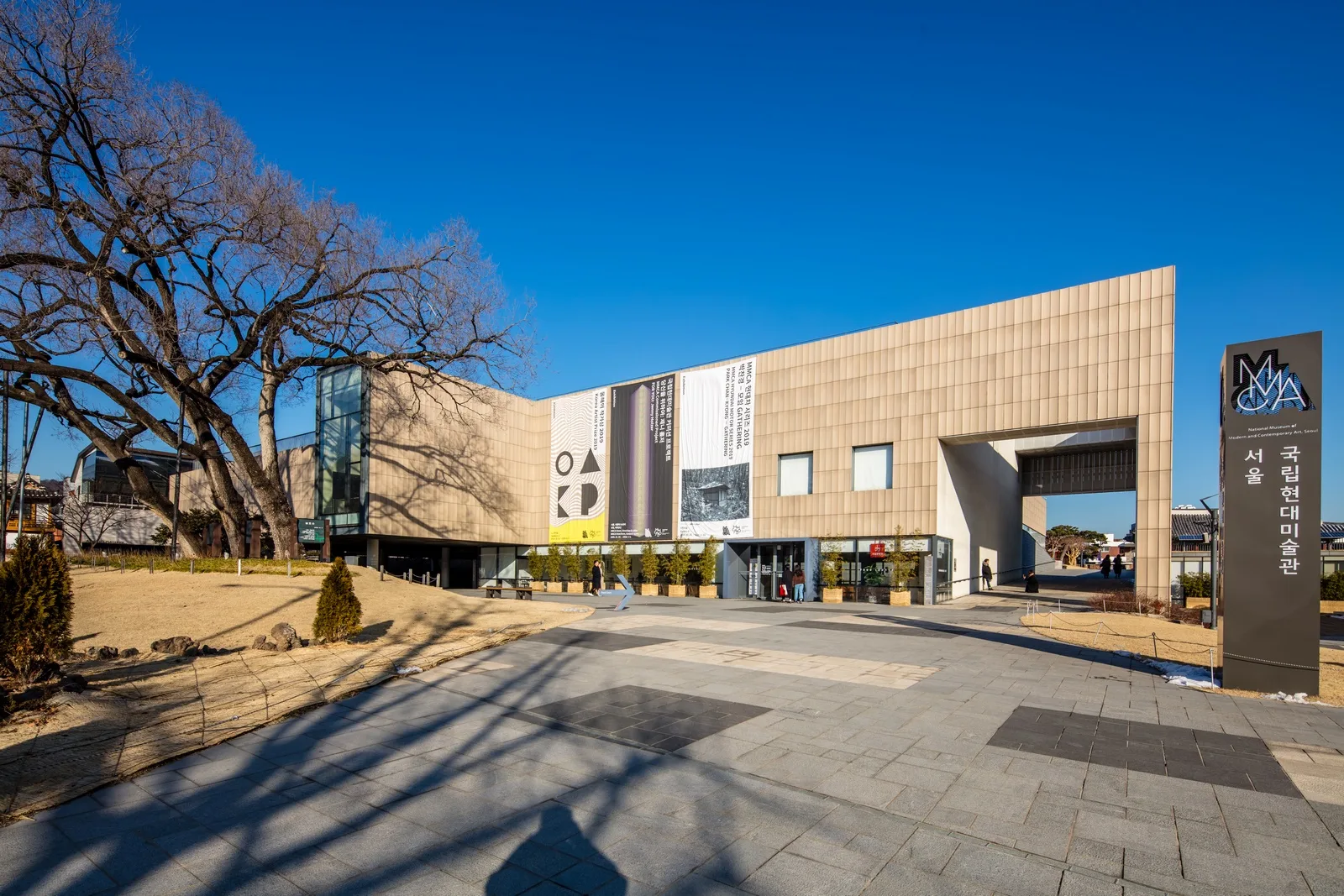
MMCA Seoul, at 30 Samcheong-ro in Jongno-gu, is the Seoul venue of the National Museum of Modern and Contemporary Art. You can walk from Exit 1 of Anguk Station (Line 3), Exit 4 of Gyeongbokgung Station (Line 3) or Exit 2 of Gwanghwamun Station (Line 5); the museum puts the walk at 13–20 minutes from Anguk and 16–25 minutes from Gyeongbokgung. It opens 10:00–18:00 on Mondays, Tuesdays, Thursdays, Fridays and Sundays, and until 21:00 on Wednesdays and Saturdays.
There is no free permanent collection here: the current list for the Seoul venue has no collection display, so you buy a ticket for each exhibition and what you see depends on the shows of the moment. A 10,000-won All Pass is sold only when three or more paid exhibitions are running.
The headline show is Do Ho Suh (27 August to 9 February 2027, 8,000 won). The museum introduces him as Korea’s leading installation artist and calls this a large-scale exhibition spanning early works, major pieces and ongoing projects, in Galleries 3, 4 and 5 on the basement floor and the MMCA Studio on the second floor. Tickets are timed. Online slots open every Monday at 18:00 for the following week; you can enter only in your booked slot, re-entry is not allowed, and infants must be booked too. Even when online tickets are sold out there is a separate pool of same-day tickets on site, but you cannot pick a time, and the museum warns of long waits at weekends and peak hours and strongly recommends booking online.
English tours run on Tuesdays, Wednesdays and Thursdays at 13:30 and 14:30, starting at the entrance to Gallery 3 of the Do Ho Suh show and lasting 40 minutes. They are first come, first served, free with your ticket and limited to 15 people, with no tours on national holidays. The exhibition page also carries an English audio guide.
Two more shows are worth adding. Korea Artist Prize 2026 (to 6 December, 2,000 won), run by MMCA and the SBS Foundation since 2012, presents this year’s four artists, Lee Hai Min Sun, Lee Jungwoo, Jeon Hyunsun and Hong Jin-hwon. In Seoul Box on the basement floor, MMCA×LG OLED Series 2026 shows Christine Sun Kim’s new work Have Many Dumb Fights Against Rock for free until 29 November.
The free Wednesday and Saturday evenings (18:00–21:00) are easy to fit into a day of sightseeing, and MMCA’s 23 September press release said that on the late opening of Wednesday 7 October, Do Ho Suh and other major shows could be seen free from 18:00 to 21:00; it is still a timed show, so check that evening slots are left. The downsides: with no permanent display, the current exhibitions are everything; it is a 13–20-minute walk from Anguk; popular slots can sell out; and the museum is closed on Tuesday 1 December.
How to choose: day of the week, evenings and booking
If you only have time for one, start with the day of the week. On a Monday, Leeum is closed, so choose between the National Museum and MMCA Seoul, and remember that the National Museum’s galleries close on Monday 7 December and MMCA Seoul on Tuesday 1 December. On a Wednesday or Saturday evening, both the National Museum and MMCA Seoul are open until 21:00. The National Museum and Leeum are both in Yongsan-gu but on different subway lines (Ichon on Line 4 and the Gyeongui–Jungang Line, Hangangjin on Line 6).
Then sort out tickets. For the National Museum’s permanent galleries, just walk in; if you want the Kunsthaus Zürich show, watch for regular sales opening on 6 November. At Leeum you can book a time from 14 days ahead. For Do Ho Suh at MMCA Seoul, next week’s slots open every Monday at 18:00, so book then if your plans are fixed.
On a budget, you can combine the National Museum’s permanent galleries, Leeum’s traditional galleries and MMCA Seoul’s free Wednesday and Saturday evenings or its last-Wednesday free day, but what counts as free varies by exhibition, so check at the ticket desk. Exhibitions and prices change often at all three, so the safest step is to look at each museum’s schedule and notices the day before you go.
Related on Rank Three: if you have not chosen a base in Seoul yet, see Myeongdong vs Hongdae vs Gangnam: where to stay on a first trip to Seoul?; to pick a palace near MMCA Seoul, Which Seoul palace first? Gyeongbokgung, Changdeokgung or Deoksugung; and to compare three museums worth a day in Europe, Three Museums Worth a Day: The Louvre, British Museum, and Vatican.
Our three picks
- National Museum of Korea: Korean history in one building, free permanent galleriesNational Museum of Korea
If you only have time for one museum. The permanent galleries, which follow Korean history from prehistory to the Korean Empire, are free, and the Room of Quiet Contemplation shows two pensive bodhisattvas, both National Treasures. Free foreign-language highlights tours (about an hour) start daily at 10:30 and 13:00, and it stays open to 21:00 on Wednesdays and Saturdays. Galleries close on Monday 7 December.
- Leeum Museum of Art: Korean ceramics and contemporary art togetherLeeum Museum of Art
If you want Korean celadon, porcelain and painting and contemporary art in one visit. The traditional galleries (M1) are free; each special exhibition is 18,000 won and the All Exhibition Pass 25,000 won (Inside Other Spaces runs to 29 November). It closes on Mondays and at 18:00; if you want a particular time, book online up to 14 days ahead.
- MMCA Seoul: contemporary art, one ticket per exhibitionMMCA Seoul
If you want contemporary art now. Do Ho Suh (8,000 won, to 9 February 2027) releases next week’s slots every Monday at 18:00, English tours run Tuesday to Thursday at 13:30 and 14:30, and the Wednesday and Saturday evenings (18:00–21:00) are free (for Do Ho Suh, check that evening slots are left). Closed on Tuesday 1 December.
Side by side
| What to check | National Museum of Korea | Leeum Museum of Art | MMCA Seoul |
|---|---|---|---|
| Good for | Korean history and archaeology in one building | Korean ceramics, painting and contemporary art together | Current contemporary art exhibitions |
| Getting there | About 10 min on foot from Ichon Station Exit 2 | 100 m from Hangangjin Station Exit 1, then about 5 min uphill | 13–20 min from Anguk Exit 1; 16–25 min from Gyeongbokgung Exit 4 |
| Hours | 9:30–17:30; Wed and Sat to 21:00 (last entry 30 min before) | Tue–Sun 10:00–18:00 (tickets until 17:30) | 10:00–18:00; Wed and Sat to 21:00 |
| Closed (Oct–Dec) | Galleries closed Mon 7 Dec; some rooms under renovation until 28 Jan 2027 | Every Monday | Tue 1 Dec (temporary closure) |
| Free to see | All permanent galleries (incl. the Room of Quiet Contemplation) and the displays inside them | Traditional art galleries (M1), Gabriel Orozco Garden | Wed and Sat 18:00–21:00 (check Do Ho Suh slots), last Wednesday of the month; 24 and under, 65 and over etc. (ID) |
| Paid shows now (adult) | None now; from 27 Nov: Kunsthaus Zürich show, 20,000 won | Each special exhibition 18,000 won; pass 25,000 won (both shows to 29 Nov) | Do Ho Suh 8,000 won; Korea Artist Prize 2,000 won |
| Booking | None for the permanent galleries; Kunsthaus Zürich show in 30-min slots (sales due 6 Nov) | Online from 14 days ahead; tickets also on site | Do Ho Suh: next week’s slots open Mondays 18:00; separate on-site pool |
| English help | Free foreign-language highlights tours (English, Chinese, Japanese) daily 10:30 and 13:00; app in 5 languages | Free digital guide in 4 languages (ID deposit) | English tours Tue–Thu 13:30 and 14:30 (40 min); English audio guide |
| Watch out for | Some galleries closed for renovation; big special shows need a separate timed ticket | Closed Mondays, no late opening, docent tours suspended | No permanent collection display; popular slots can sell out |
Where I would start
With half a day for one museum in Seoul, I would choose the National Museum of Korea: you walk in without a ticket, follow Korean history from prehistory to the Korean Empire, and the Room of Quiet Contemplation is there too. It has foreign-language tours every day and stays open until 9 p.m. on Wednesdays and Saturdays. If you love Korean ceramics and painting and want a contemporary show as well, I would pick Leeum; if you are spending the day around Anguk and want today’s contemporary art, MMCA Seoul. Wherever you go, check the closing days first (Leeum on Mondays, the National Museum’s galleries on 7 December, MMCA Seoul on 1 December) and when bookings open.


