If you need help while travelling in Korea, there are three things worth knowing: the 1330 Korea Travel Helpline run by the Korea Tourism Organization (KTO); the Emergency Ready App, the foreign-language version of the government’s disaster and safety app; and the emergency numbers 112 (police) and 119 (fire, rescue and ambulance). They do different jobs. 1330 is a helpline for travel information, interpretation and complaints; the app tells you about disasters and shelters; and 112 and 119 send help when there is a crime, a fire, an accident or a medical emergency. This is a research piece, not a review: nobody called these lines or tested the app for it. The facts come from the Korea Tourism Organization, the Ministry of the Interior and Safety, the Korean National Police Agency, the National Fire Agency, the Ministry of Justice, the Korea Disease Control and Prevention Agency, Seoul city, other public pages and the app stores, checked on 26 October 2026 (US Central time; the morning of 27 October in Korea). The three cover different situations, so they are not ranked.
First, match the number to the situation
Start with the emergency numbers. Since October 2016, emergencies in Korea go to 119 (disasters, fire, rescue and ambulance) or 112 (crime), and non-urgent questions to public services go to 110 (120 for local governments). If you reach the wrong agency, your report is passed on with your number, location and what you said, so you do not have to explain it all again. You can dial 112 without any area code.
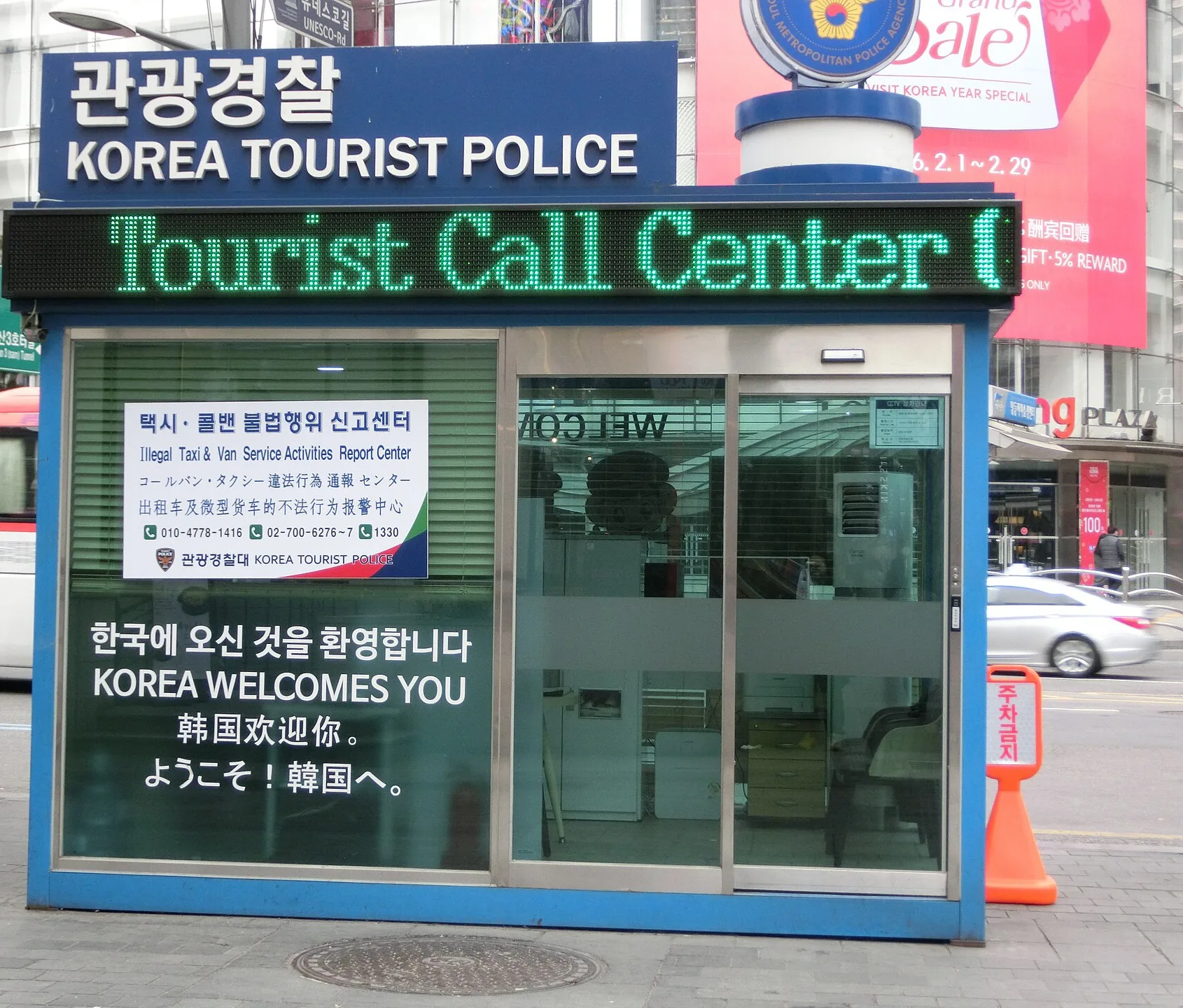
1330 is not an emergency number. It is the Korea Tourism Organization’s call centre for travellers, covering tourist information, interpretation and complaints. For immigration, safety accidents, medical or police matters it connects you to the right agency, such as the Immigration Contact Center (1345), 119 or the Tourist Complaint Center. If someone is hurt or in danger, though, it is better to skip 1330 and call 112 or 119 directly.
The Emergency Ready App is not a phone line but an app: the foreign-language version of 안전디딤돌 (Anjeon Didimdol, “safety stepping stone”), the government’s disaster and safety app run by the Ministry of the Interior and Safety. It shows disaster alerts, what to do, and the nearest shelters, hospitals and embassies in your language. Think of it as your tool for events that hit many people at once, such as earthquakes, typhoons or heatwaves. The three cover different situations, so the point is not to pick one but to know which to use when.
1330 Korea Travel Helpline: travel questions, interpretation, complaints
Inside Korea, dial 1330 from a landline or a mobile with no area code; from abroad, dial +82-2-1330. It runs every day from 7 a.m. to midnight Korea time. The government weekly K-Gonggam (February 2026), the Korea Disease Control and Prevention Agency (page reviewed January 2026) and KTO’s own online-call page all give 07:00–24:00. Some local-government pages, such as that of Yeongdeungpo-gu, a district of Seoul, still say “24 hours”, so plan as if no one will answer between midnight and 7 a.m.
Phone help is available in eight languages including Korean: Korean, English, Japanese, Chinese, Russian, Vietnamese, Thai and Malay/Indonesian. KTO’s customer-service standard (undated) says Russian, Vietnamese, Thai and Malay/Indonesian are phone-only and run from 08:00 to 19:00. Text chat works only in Korean, English, Japanese and Chinese, through 1330 Messenger (TTalk), KakaoTalk, Facebook Messenger and LINE; the English page also lists WhatsApp.
On cost: KTO’s online call (a web app) is free on Wi-Fi, and mobile data charges may apply without it. Yeongdeungpo-gu’s page says 1330 is a public service with no separate information fee. Official pages do not say whether a roaming foreign phone can reach plain “1330”, so if it does not connect, use +82-2-1330 or the online call.
It covers a lot: attractions, transport, accommodation, shopping, festivals and events, and problems that come up on the way. If you lose something at a tourist site, it helps you report the loss and tells you which agency to contact. It also interprets for travellers, and other public bodies use it that way: the Korea Disease Control and Prevention Agency, for example, tells foreigners staying in Korea to use its 1339 line through a three-way call with 1330 or 1345. Complaints about tourism businesses, facilities or transport you used can also be filed directly on the Tourist Complaint Center website (touristcomplaint.or.kr), which has an English version.
The weak spot is the hours: nothing between midnight and 7 a.m., and shorter hours (08:00–19:00) for Russian, Vietnamese, Thai and Malay/Indonesian. It also does not send anyone out. 1330 gives information and connects you, so in danger, 112 and 119 come first.
Emergency Ready App: disaster alerts and shelters in 22 languages
Anjeon Didimdol is the government’s main disaster and safety app, and the Emergency Ready App is its version for foreigners. The Ministry of the Interior and Safety revamped both on 15 June 2026, and the foreign-language app went from three languages (English, Chinese and Japanese) to 22: English, Chinese, Vietnamese, Thai, Japanese, Russian, Uzbek, Nepali, Indonesian, Tagalog, Khmer, Mongolian, Burmese, Sinhala, Bengali, Urdu, French, Arabic, Spanish, German, Portuguese and Hindi. The ministry says this lets 97% of Korea’s roughly 2.87 million foreign residents get disaster and safety information in their own language.
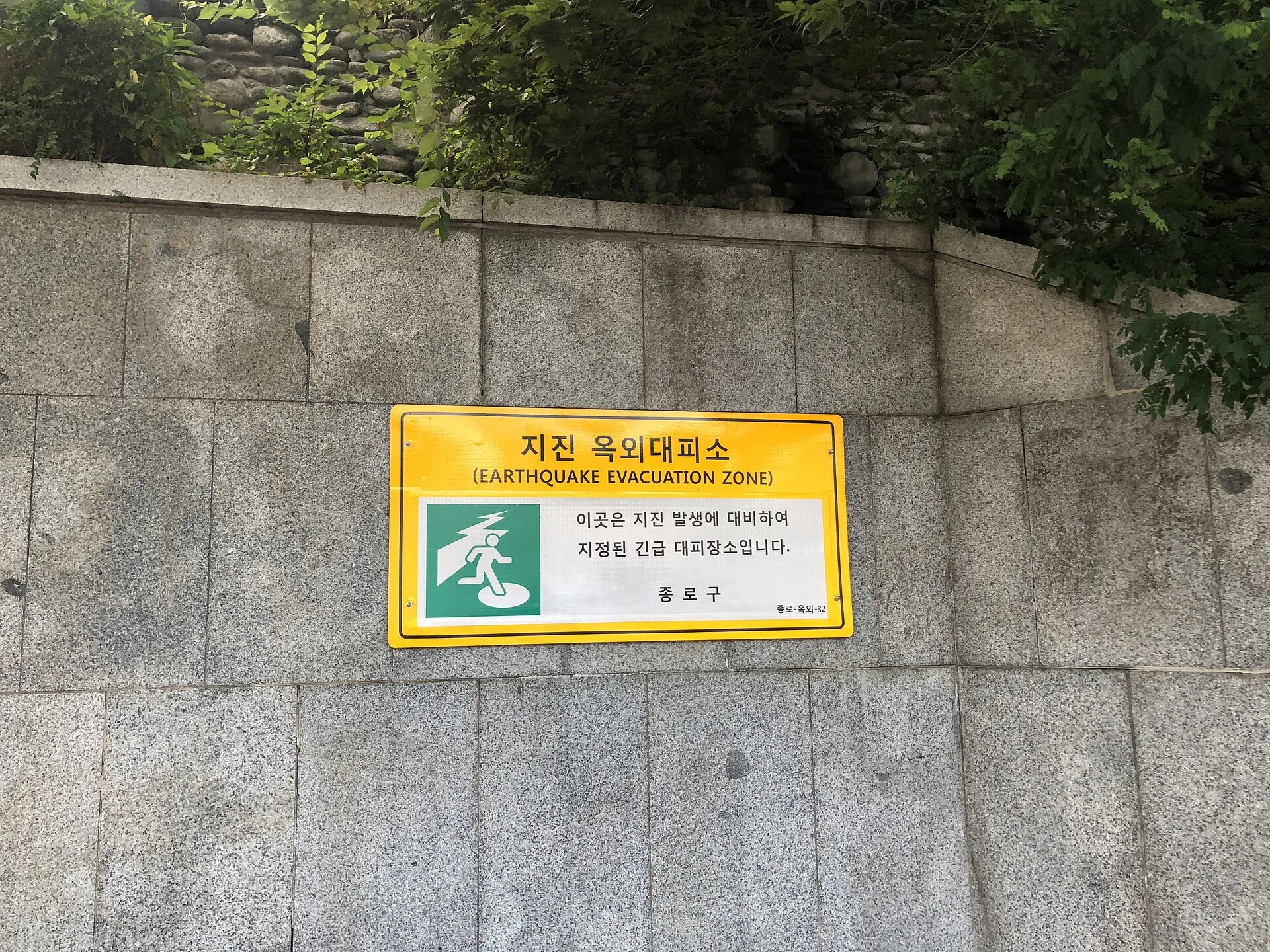
It also does more. Disaster action guides grew from 29 to 77 (24 natural disasters, 34 social disasters, 14 everyday-safety topics and 5 on emergency preparedness), and the facility types you can look up grew from 5 to 20, including civil-defence shelters, earthquake outdoor evacuation sites, tsunami shelters, heat and cold shelters, emergency medical centres, fire and police stations, pharmacies, hospitals and embassies. The store description adds a shelter search, a safety guide with CPR and burn first aid, and a button that calls 119 directly.
Check the name when you install it. The App Store and Google Play list the current “Emergency Ready App” from the Ministry of the Interior and Safety (iPhone version 1.1.15 of 14 September 2026; Android updated 7 September 2026), but the old app is still there too, renamed “(Old)Emergency Ready App”. Pick the one without “(Old)”. The iPhone listing’s language field shows only English, but the ministry says the app supports 22 languages. A 2024 government guide described the settings of the app as it was then (the listing now marked “(Old)”): alert push notifications, cell-tower-based reception and a text-to-speech function that reads alerts aloud. Whether the 2026 app has the same menu and features was not checked for this guide.
Korean phone alerts come in three tiers: the most serious, for national crises such as air raids; urgent alerts for natural and social disasters such as earthquakes and heavy rain; and safety notices; the first two sound an alarm by default. In February 2024 the ministry and the Korea Meteorological Administration announced that alarm-tone alerts would also carry the disaster type in English, such as “Earthquake” or “Heavy rain”, with the magnitude shown as “M”. Official pages do not say whether foreign SIM cards or roaming phones receive these alerts automatically; for alerts in their own language, the government points foreigners to this app.
If you cannot install it, the foreign-language Safe Korea website (eng.safekorea.go.kr) shows current alerts in English next to the Korean original, with links to shelter, fire-station, police-station, emergency-medical-centre and embassy information; it warns that its translation is AI-generated and may contain errors. How accurate the app’s translations are was not checked for this guide. Those are the weak spots: translation quality you cannot count on, and an old listing in the stores that is easy to install by mistake.
112 and 119: police, fire, rescue and ambulance
112 is the police emergency number; it is free and answered around the clock, every day of the year. Since 18 March 2024 it has offered English and Chinese interpretation nationwide, 24 hours a day, through a three-way call between the 112 dispatcher, a 112 interpreter and you. The police said they would add languages such as Japanese and Vietnamese as demand grows, but no notice of that was found. According to a 2023 police release, before police hired their own interpreters, foreign callers got interpretation through three-way calls with outside services such as 1330 and the volunteer interpreters of BBB (1588-5644).
If you cannot talk, you can text. Put 112 as the recipient and send your name, where you are and why you are reporting. Official pages do not say whether texts from foreign or roaming numbers reach 112, or how texts in English or other languages are handled, so call if you can speak. If you cannot make a sound at all, there is “똑똑112” (knock-knock 112): call 112 and, when they answer, press any number key. Police will realise you cannot speak and text you a “보이는 112” (“visible 112”) link; tap it, agree to connect and allow the camera and microphone, and police can see where you are through your phone’s camera. For non-urgent police matters, use 182 (a paid line, also 24 hours), not 112; official pages do not say whether 182 has foreign-language staff, so if Korean is a problem, ask 1330 for help.
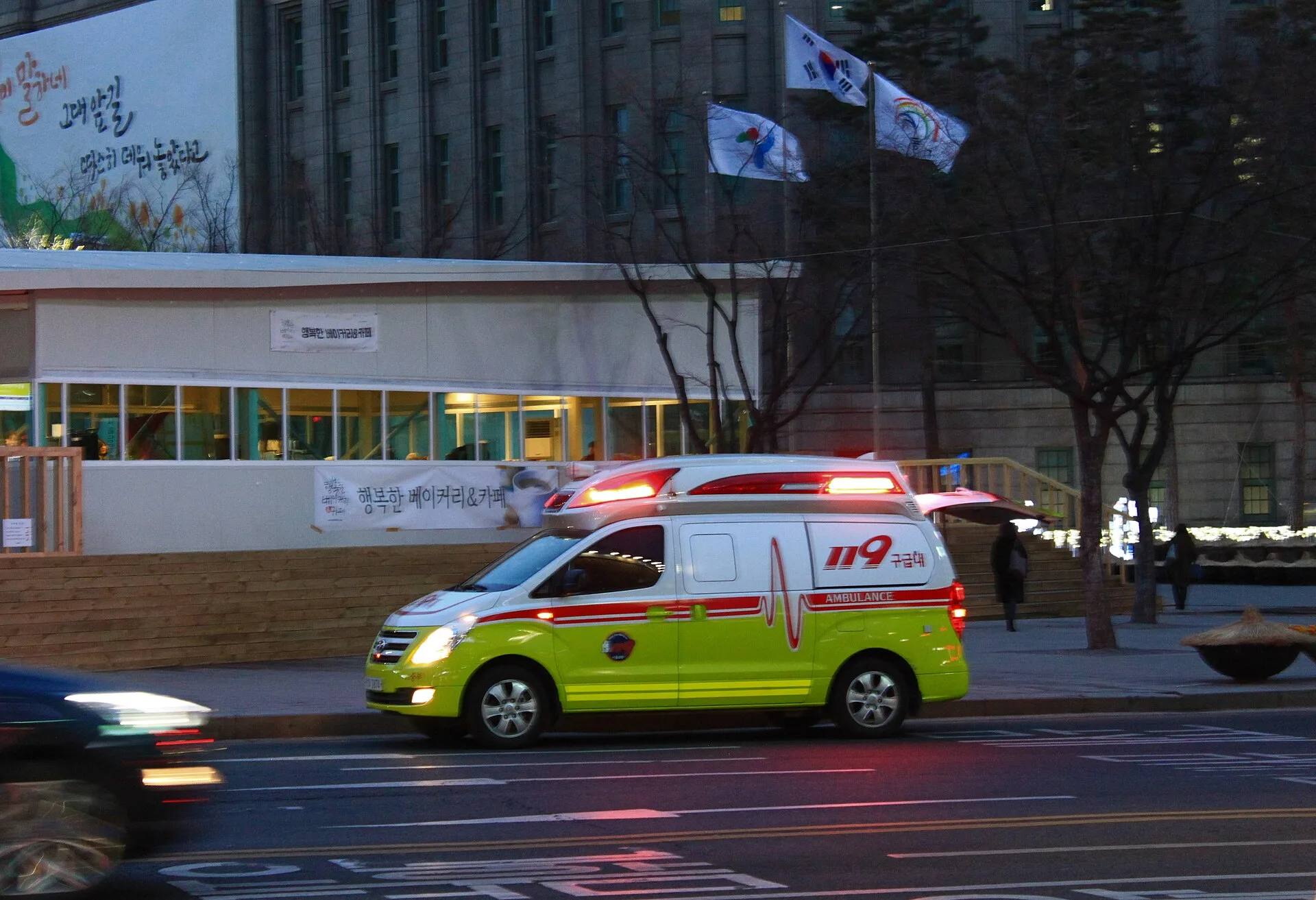
119 handles fire, rescue and ambulances. Besides a voice call, you can report by text, photo message (MMS), the 119 app or video call. The National Fire Agency has offered these “multimedia reports” since 2011, introduced first for people who cannot easily make a voice call, including deaf people and foreigners, and received 896,049 of them in 2023. Its “119신고” (119 Report) app (Google Play listing updated 3 August 2026) sends your location, obtained by GPS or the network, by text message (SMS/MMS), so it does not work on Wi-Fi alone; whether it currently has an English interface was not confirmed.
A call to 119 can also get you first-aid instructions and information on hospitals and pharmacies, which is handy on national holidays when many are closed. The old 1339 emergency medical line was merged into 119 in June 2012. But under the enforcement decree of the 119 Rescue and EMS Act, ambulance crews may turn down non-emergency cases such as a simple toothache, a simple cold (unless there is a fever of 38°C or more or difficulty breathing), a bruise with stable vital signs, or a simple cut or graze without continuous bleeding; the crew still has to assess your symptoms and situation first. An ambulance is for emergencies.
No nationwide list of 119 interpretation languages could be confirmed. Seoul’s foreigner portal (undated) says the ambulance is free, that interpreters are available for people who do not speak Korean, and that hospital information, illness consultation, first-aid advice and interpretation are offered in English, Chinese, Japanese, Mongolian and Vietnamese, 24/7. That describes Seoul; other regions may differ. No official source was found on calling 112 or 119 from a phone without a SIM or credit, or on whether dialling 911 connects. In an emergency, try 112 or 119 anyway; but the safest plan is a phone that can make calls and send texts in Korea, because text reports and the 119 app use SMS/MMS.
Other useful numbers and what to set up before you go
A few more numbers are worth saving. For visas and other immigration matters, call the Immigration Contact Center on 1345: it advises in 20 languages on weekdays from 09:00 to 22:00, with only Korean, English and Chinese after 18:00. It is a paid call, and from abroad the number is +82-2-1345.
In Seoul, the 120 Dasan call centre has foreign-language staff on weekdays from 09:00 to 18:00 (not on holidays): dial 02-120, press 9, then 1 for English, 2 for Chinese, 3 for Japanese, 4 for Vietnamese or 5 for Mongolian. For infectious disease information there is the disease control line 1339 (free, 24 hours), which tells foreigners in Korea to use a three-way call with 1330 or 1345; a medical emergency, though, is 119, not 1339.
Before you travel, the to-do list is short: save 1330, 112 and 119 in your contacts, install the Emergency Ready App (the one without “(Old)”) and turn on its alerts. Keep your accommodation’s address in Korean on your phone so you can give your location by call or text. Calling or texting 112 and 119 needs a phone line that works in Korea, so decide on a SIM or eSIM before you land and check that it includes calls and texts, not just data.
Related on Rank Three: to sort out a phone connection first, see Internet for a Korea trip: physical SIM, eSIM or pocket Wi-Fi?; for help translating on your own when 1330 is closed, Papago vs Google Translate vs DeepL: which translation app for Korea?; and to keep an eye on weather warnings, Checking tomorrow’s weather: KMA, Windy and AccuWeather.
Our three picks
- 1330 Korea Travel Helpline: travel questions, interpretation, complaints1330 Korea Travel Helpline
For non-urgent travel problems: directions, transport, lodging, lost property or a language barrier. Dial 1330 in Korea or +82-2-1330 from abroad; it answers every day from 07:00 to 24:00 (Russian, Vietnamese, Thai and Malay/Indonesian only 08:00–19:00), by phone in eight languages and by chat in four, and the online call is free on Wi-Fi.
- Emergency Ready App: disaster alerts and shelters in 22 languagesEmergency Ready App
For disaster alerts and the nearest shelter in your own language. Since the June 2026 revamp it supports 22 languages with 77 action guides and 20 facility types. Install the Ministry of the Interior and Safety’s app without “(Old)” in its name.
- 112 and 119: police, fire, rescue and ambulance112 and 119
For a crime, a fire, an accident or a medical emergency. 112 offers English and Chinese interpretation 24 hours a day and takes text reports; 119 also takes reports by text, photo, app or video call. Non-urgent police matters go to 182, a paid line.
Side by side
| What to check | 1330 Korea Travel Helpline | Emergency Ready App | 112 and 119 |
|---|---|---|---|
| Use it for | Travel information, interpretation, lost items, complaints | Disaster alerts, shelters, what to do | Crime (112); fire, rescue, ambulance (119) |
| Run by | Korea Tourism Organization | Ministry of the Interior and Safety | Police (112); fire services (119) |
| How to reach it | 1330 in Korea, +82-2-1330 from abroad; online call; chat | Install from the App Store or Google Play | Call or text; 119 also photo, app and video call |
| When | Daily 07:00–24:00 (four languages 08:00–19:00, phone only) | Alerts when they are sent (turn them on) | 24 hours, every day |
| Languages | 8 by phone (incl. Korean), 4 by chat | 22 (June 2026 revamp) | 112: English and Chinese interpretation 24/7; 119: no nationwide list confirmed (Seoul lists 5) |
| Cost | Online call free on Wi-Fi; no extra information fee by phone | Free app | 112 free; police helpline 182 paid; 119 ambulance free (Seoul’s guide) |
| How interpretation works | Staff answer and interpret themselves | App shows content in your language | 112: three-way call with dispatcher and interpreter |
| Telling them where you are | Describe it | App finds facilities near you | Write the place in a text; the 119 app sends your location |
| What it will not do | Send help (it connects you to 1345, 119 and others) | Phone advice | Non-urgent matters (182 police, 110 and 120 public services) |
| Watch out for | Not 24 hours; shorter hours for some languages | An older “(Old)Emergency Ready App” listing is still in the stores; translation quality unverified | 112 interpretation confirmed only in English and Chinese; no official word on calling without a SIM |
What I would set up first
Before landing in Korea, I would do two things: save 1330 in my contacts, and install the Emergency Ready App (the one without “(Old)”) and turn on its alerts. Lost, stuck at a counter with no shared language, or missing a bag? Call 1330. Earthquake or heatwave news? The app. Someone hurt or in danger? Do not hesitate: 112 or 119. And remember that 1330 is closed from midnight to 7 a.m., while 112 and 119 answer 24 hours a day.


